
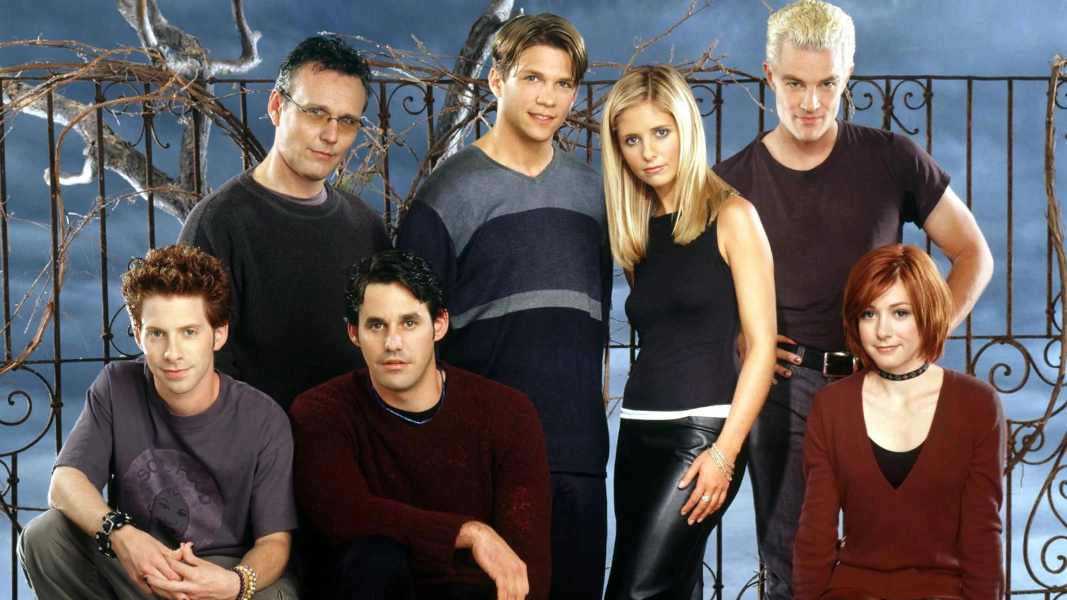
Characterization In The Buffyverse — ‘Buffy The Vampire Slayer’ Season 4, Episode 7
by Benjamin Hall
This is part of a bi-weekly series concerning the characterization of Buffyverse characters. The first installment in this series can be found here. Arguably the best place to begin reading this series is at the beginning, but that is up to each reader. As a reminder this column will cover major and some minor characters from the shows Buffy The Vampire Slayer (1997-2003) and Angel (1999-2004). Other Buffyverse media, such as the graphic novel Spike: Into The Light (2014) are not pertinent to this series. Also there will be no referencing real world events in this bi-weekly series.

This week: Spike (James Marsters) escapes from a mysterious cell. Also, Buffy Summers (Sarah Michelle Gellar) has another encounter with the commandos.
(Warning of spoilers from this point on!)
(Trigger Warning for mentions of sexual assault)
Buffy acts extremely clumsy at the beginning of the episode, but it is only an episodic quality. In light of that, she fails to pick up any lasting traits. The closest she gets is a love of cheese. However, this is more something mentioned by Willow Rosenberg (Alyson Hannigan) that Riley Finn (Marc Blucas) follows up on than something Buffy actually exhibits.
Willow receives little comfort for her depression over her recent break-up in this episode. Instead, she serves to help Spike and Riley with their respective problems — and this means she does not get development.
Xander Harris (Nicholas Brendon) and Rupert Giles (Anthony Stewart Head) are apparently finding life so boring as to actually consider raising supernatural trouble. Yes, they don’t go beyond speaking about it, but that seems only due to Buffy appearing in the middle of their consideration. This scene shows how distant from events and useless they feel currently. Xander still has some military resources and knowledge is his overt development. While Giles having a preference for raspberry fruit punch is the closest he gets to a new trait. Giles’s excellence at art is only episodic.
Spike using a computer to find Buffy’s room suggests that he is, to some extent, up to date with technology. Yet, it is unclear if he has the ability to do hacking. Not so it unclear: how savvy he is. During the scene that seems like an attempt at sexual assault, Spike comes across as having experience in the matter. Considering he is evil at this point, it is arguably not as shocking an action as what he will do in the future (Season 6, Episode 19, ’Seeing Red’). That said, what is shocking is that he views his inability to bite as being equal to erectile dysfunction. While the symbolism is equal for both actions, there isn’t anything else that makes them comparable.
Professor Maggie Walsh (Lindsay Crouse) comes across as heartless toward Willow in a way that is both an example of a stereotypical college professor and yet not. She also displays no logical reason for liking Buffy after Buffy insults her. Although both moments give her development, one can say that they act as foreshadowing of her being a lead villain. Whether one wants to argue that the moment is in this episode, with the reveal of The Initiative, is up to each viewer. Lastly, Walsh seems to show a preference for Riley to be a leader starting with this episode.
Harmony Kendall (Mercedes McNab) is simply the ex-girlfriend to Spike in this episode. At the same time, she gets minor development in the form of being the type to destroy an ex’s property.
Graham Miller (Bailey Chase) and Forrest Gates (Leonard Roberts) are opposites of each other. Miller is rather quiet and respectful while Gates is obviously loud and arrogant. These characteristics also mean they both fit stereotypical action roles: The stoic (Miller) and the hothead (Gates). And though the latter being a hot-head will not change, it will become problematic later in the season. This is due in part to Gates being overtly sexist when it comes to women — as one sees in this episode — and a human supremacist. Finally, since Gates is an African-American who should know of the Tuskegee Study, one would think he would see the obvious problems The Initiative poses.
Parker Abrams (Adam Kaufman) has his final outing as an antagonist in this episode. Yet, he is an antagonist only so far as being a plot device for Riley to suddenly have romantic feelings for Buffy.
Riley, meanwhile, comes off as impulsive by hitting Parker. He also seems to not know his own mind due to his sudden crush on Buffy. There is some foreshadowing of his feelings for Buffy affecting his loyalty to The Initiative. See how he does not want to take Willow in while trying to also capture Spike. He also gains the trait of being a bad dancer.
Tom (Mace Lombard) is a former member of Sunday’s vampire gang (Season 4, Episode 1, ‘The Freshman’). Other than being Spike’s cell mate, and a distraction for Spike to escape, there is no point to his existence.
The two Lab Techs (Raymond Roswell and Michael R. Bowman), a Lab Demon (Lancel Reyes), and Mason (Neil Daly) are just as extraneous as Parker in this episode. Yes, some serve as plot devices, but they are nothing more than that.
This episode features a fair bit of character moments and some development. However, like in a lot of episodes from Buffy The Vampire Slayer and Angel, we only get hints about the histories of characters and organizations. For instance, the amount of technology and funding of Walsh’s Initiative on display raises questions as to how big a budget she has. Presumably, it is more than the prior incarnation that viewers see in Angel within one of the show’s flashbacks (Angel Season 5, Episode 13, ‘Why We Fight’). Thus, there are questions without answers, such as: Does Walsh have ties to one of the former members of the Initiative or the Nazis?
