
Toronto International Film Festival 2023: ‘The Holdovers’ Film Review
by Koom Kankesan
Summary
The Holdovers by Alexander Payne had a screening at the Toronto International Film Festival (TIFF) this past week. The film looks at the tensions between a prep school teacher and a student he must supervise over Christmas break. ‘The Holdovers’ will get a limited release on October 27th and get a wide release on November 10th.

Alexander Payne‘s new film The Holdovers was one of the screenings I looked forward to the most at this year’s Toronto International Film Festival (TIFF). The world premiere of the film was held at the Telluride Film Festival on August 31st but the TIFF screening came only ten days later and the director was present. He introduced the film, quipping that he’d be happy if they just let him continue to make seventies films. I didn’t know exactly what he meant by that – I thought perhaps he was saying that all of his previous films were made in the spirit of the social dramas that were groundbreaking and electric during 70s American cinema.
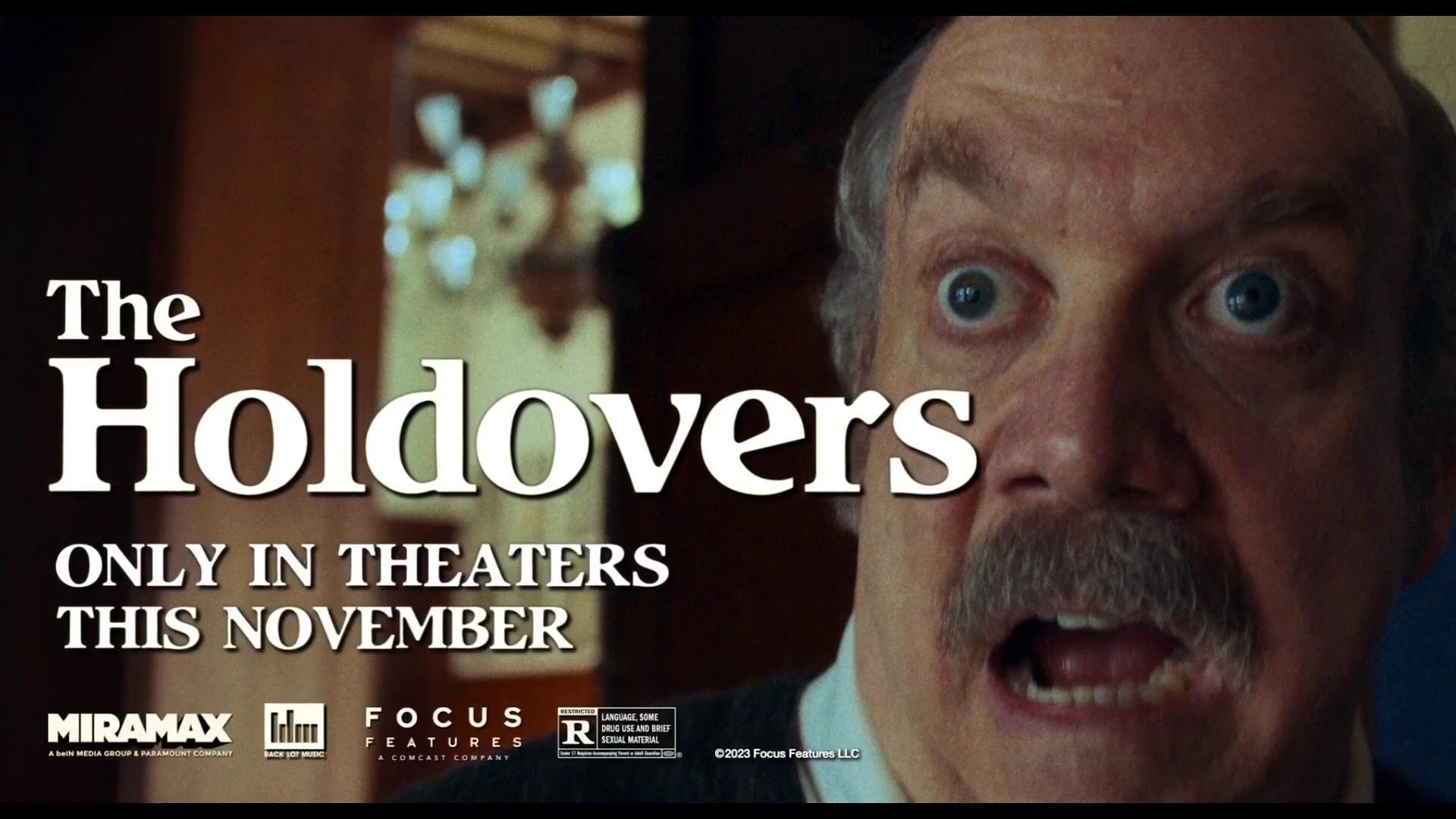
It turns out that the new film is sort of a period film, set in the ’70s. Taking place during the weeks closing out 1970 and beginning 1971, the film is saturated with the browns and earth tones that characterized films of that era. Payne adds other effects such as quick zoom outs and 70s era title cards that add to the sense he is replicating a ’70s film. The story revolves around the struggle between a resentful and wounded prep college instructor called Paul (Paul Giamatti) and a troubled teen called Angus (Dominic Sessa) that Paul must supervise over the Christmas holidays while everyone else has gone home. Accompanying them is Mary (Da’Vine Joy Randolph), the school’s head cook who’s getting over the death of her son (he died in the Vietnam war).

At first, given that Giamatti is again playing a frustrated high school teacher like he did in Payne’s Sideways (2004), I thought it might end up being more of a comedy. However, his character is much more bitter and intense in this film, though he softens on Angus as he gets to know the teen and learns more about his situation (father’s in a mental institution and his mother and stepdad have abandoned Angus for the holidays). Giamatti, at this point in his career, is a force to be reckoned with and people will enjoy his line deliveries which are sometimes funny but always drip with pain and derision. This is usually par for the course for a Payne film (and that’s probably a key reason fans like his work) but there is less humour here than in Sideways or About Schmidt. In fact, the humour’s been losing ground in each of Payne’s subsequent movies and the last one, Downsizing (2017), was his first flop.
The Holdovers will probably divide people since it’s never exactly sure what it is. Even though it has the cosmetic effects of a ’70s film, it doesn’t really feel like one. The acting and the editing and the camera movements make it feel very much like a film from the 21st century. Furthermore, Payne doesn’t seem to be quite sure what he’s doing in this film: the trajectory between Paul and Angus is clear as they bond, but we never quite come to care for either as much as we ought to. Dialing down the humour also seems to mean dialing down the satire and these are the things, along with their vitality and unpredictability, Payne fans will long for. I’m glad I saw the movie because I generally really like what Payne does, but other people will either want a more developed film or one that hearkens back to the ‘sharp funny’ in Payne’s earlier work.

The other actors besides Giamatti are fine too including Dominic Sessa who plays Angus. After the film was over, Payne talked about his process of casting the young actors. He and his casting agent were sent hundreds of auditions but Payne wanted an actor that wasn’t performative in that way, and so Sessa was found in the drama club of one of the five private schools they filmed in. An audience member asked if Payne had gone to a private school himself and he said ‘no’ but that he’d gone to a Jesuit high school that was quite demanding. He also talked about how David Hemingson had become the writer of the film’s screenplay. Payne had been sent a pilot for a show written by Hemingson set in the world of private schools. Payne did not want to direct this pilot but asked Hemingson if he wanted to research and write the idea Payne had that was also set in a similar world. Hemingson worked on Payne’s ideas and The Holdovers came to fruition. Payne did not discuss the absence of his longtime collaborator and co-writer Jim Taylor.

