
It Ticked All The Boxes: Artist Chris Wildgoose Discusses ‘The Hunger And The Dusk’
by Tom Smithyman
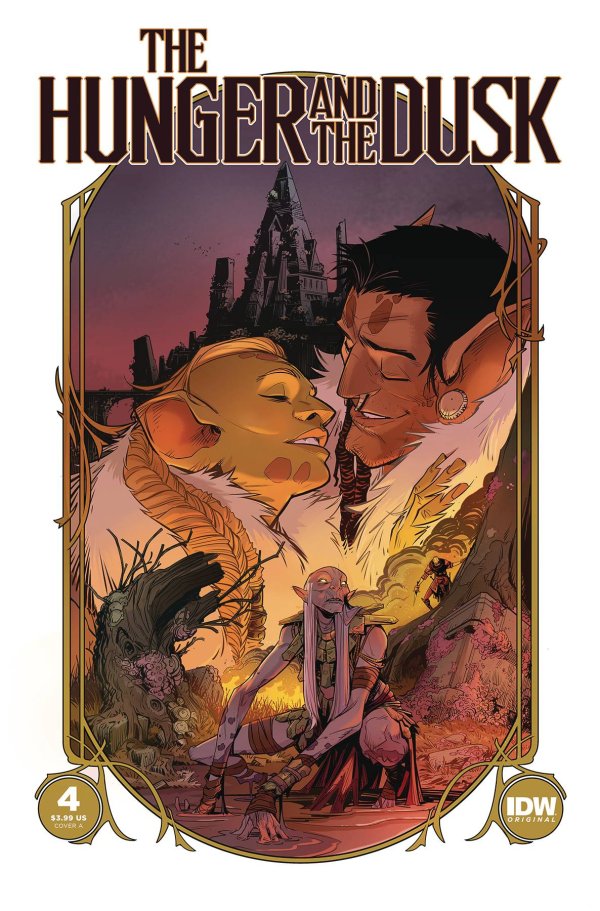
IDW’s The Hunger and the Dusk centers around mortal enemies – humans and Orcs – who must band together when they are threatened by the ruthless Vangol. Artist Chris Wildgoose illustrates the series, which is written by G. Willow Wilson. Issue #4 will be available December 6, 2023. Comicon.com caught up with Wildgoose, who discussed what drew him to the project as well as the challenge of building an entire world and new races.
Tom Smithyman: How did you first learn about The Hunger and the Dusk?
Chris Wildgoose: I was working as a concept artist for a TV show in 2021, when editor Mark Doyle first swooped into my inbox with a couple of irresistible questions: Was I free to join them on a project for IDW? And what genre would I most like to work on? I said I’d been craving some sword and sorcery with a hefty bit of world building that I could sink my teeth into. Low and behold, Mark had Willow’s pitch for The Hunger and the Dusk waiting in the wings and it ticked all the boxes of what I was after.
Smithyman: You have been given the chance to develop a whole new world in this series. How do you approach a challenge of that scale?
Wildgoose: Small steps, bit by bit. Willow had a lot of world building in her original pitch and had written a fair bit more besides. Her bible covered a brief history of the world and its current state, details of the Orc tribes and their religion, lore of the world’s magic, and descriptions of the main cities and settings. So, there was a lot to adapt from the get-go, which for me is a dream way to start a project. Willow and I also share a Pinterest folder that we throw things we like and want to flavor the world with.
For my part, I started with the characters first, which in turn influenced the look of the world. With the Orcs, for example, I originally started with a very typical look. Barbarian-esq, mismatched leather and plate armor, fur trims etc. – just so typical. But then I drew a version of Tara with ancient Mongolian-inspired clothes, which influenced Troth’s look, and then the entire Orc culture.
I tend to get a little obsessed with tiny details. I’ve even worked on a language or an alphabet for Orcs and men. Things we might never use and is probably a mad man level of over-thinking, but it gets me a little more soaked into it and gives me something fun to throw in for the reader who has a keen eye for detail.

Smithyman: Had you worked with Willow before? How does her style mesh with yours?
Wildgoose: No, this is my first time working with Willow, and she is the perfect co-creator. She has such beautifully written scripts with really nice touches of detail, but is also open to how I adapt her story. She’s very chill with me adding in character beats or tweaking things to help the page along. And it works both ways. I’ll happily make any changes Willow would like to see. It’s felt like a very natural fit.
Smithyman: What or who are your creative influences, both for this series and the others you’ve worked on?
Wildgoose: To me, my work is an obvious mix of all my favorite artists. In particular, I’m a big fan of Sara Pichelli and how she makes her characters act and emote. In my layouts, I can spot influences from Sean Gordon Murphy. Not so much artistic style, but perhaps how he uses the page or frames a detailed scene. I’m also a big fan of Isola by Karl Kerschl, Brenden Fletcher and Michele Assarasakorn. The stars happily aligned when Michele jumped aboard to work her coloring magic on the interiors and my covers. So a direct influence is actually working on the book!
I think the finished look of The Hunger and the Dusk, a mix of the full team’s creative efforts, has a sort of Ghibli flavour to it. We didn’t want this tale to be a cold and depressing grey mush. Even as their world is dying, it needed to be full of life. Vibrant characters and landscapes, with a punch of brutality when the swords came out.

Smithyman: You put a lot of detail into every panel you draw. The demands of illustrating a monthly comic are significant. Are you ever tempted to cut corners to meet your ever-looming deadlines?
Wildgoose: I certainly should cut back a lot more than I do. I can almost hear the screams of my editors at IDW from across the pond as I write this. They have been so, so generous with the time they have given me on this series, and I have certainly eaten up every bit of it and then some. But I’ve gone into this series thinking it may very well be the last comic I ever draw, so I’ve over indulged for sure. But above all, I just want it to look the best it can and hopefully have that little something extra that readers will want to return to.

Smithyman: Let’s hope it’s not the last for you! What are you working on when Hunger wraps after issue #12?
Wildgoose: Right now, I’ve purposefully kept myself open after I wrap on issue #12. I’m all Orcs all the time right now. Ideally I’d like to return to film projects for a while, to recharge my comic art batteries. I LOVE this job, but when I’m on a project like this, it’s an all-consuming thing for me. At the very least, I just want some time off when I wrap on issue #12! But I’m also keeping a hope, that if people love the series and it does well, that we’ll be able to continue this world we’ve built and explore the whole story that Willow has planned out.
Smithyman: You’ve had the opportunity to live life as a human. Now that you’ve created a look for Orcs and the Vangol, would you like to try living as one of them or are you set the way you are?
Wildgoose: Ha! The Vangol is a hard no. These guys just aren’t happy. Absolutely not.
The Orcs could make for a nice change of pace, though. Often tall, strong, and living in the beautiful overgrown ruins of the Silent Shores City, learning magic – I’d be pretty happy with that!
Smithyman: An Orc it is! Good luck with the rest of the series as well as whatever comes next for you.

