
‘Star Trek’ Evolved Alongside The Medium Of Television
by Frank Martin

It will shock no one to learn that storytelling changes in terms of format and medium. But even within a medium itself, the format is always changing. This is especially true of mediums that are heavily reliant on technology such as television and film. Very rarely is it possible to see a franchise evolve along with a medium. It takes years and even decades for technology to progress enough for it to affect various forms of storytelling, but fortunately, Star Trek has been around for a large swatch of that technological revolution. So it’s interesting to see how it evolved along with the changing landscape of television.
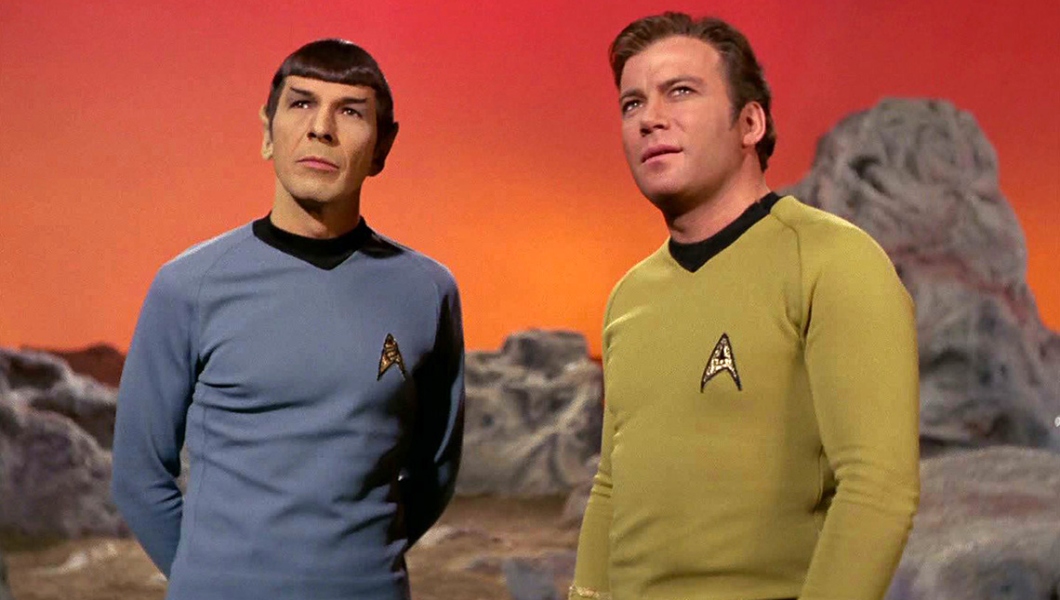
Although it happened a little bit at a time, the stark contrast between eras can be seen when viewing different Star Trek shows from different generations. In the beginning, the original Star Trek series starring Will Shatner follows the format for standard television programming of the time. Episodes were an 50-minutes long and more or less standalone. There were no character arcs or multi-episode narratives that carried through a season. Essentially, they were one-offs, allowing the episodes to air in any order.
Fast forward to the 1990s, where Star Trek: Deep Space Nine reinvented the Trek formula by placing the story on a space station rather than a traveling ship. Television had changed a bit since the ’60s, and now episodes were 45-minutes long, which allowed for much brisker pacing. Starring Avery Brooks, the stories were a little bit serialized. Each one focused on its own plot. But the characters had much longer arcs and story threads from one episode could lead into another. There was a level of continuity that the original series didn’t take into consideration.
This trend of continuity only grew over time and led fans right into the era of streaming with Star Trek: Discovery, which stars Sonequa Martin-Green. Without commercials, these episodes actually increase in running time over DS9, but there was a trade-off. The production value and expectations for a streaming series are much higher than a network or syndicated one. So seasons were essentially cut in half while ramping up the action, suspense, and drama in each episode. They are hyper-versions of what Star Trek used to be, which is fine. This format perfectly caters to today’s audience, which expects a lot from its media. Things move quickly and follow a long form of storytelling that Deep Space Nine only touched upon. Very rarely does a franchise serve as a case study for how a medium evolved. Star Trek audiences and fans of television in general can learn a lot by analyzing that evolution.
Star Trek is now streaming on Paramount+.