
An Interview With ‘Horror’s Greatest’ Showrunner Kurt Sayenga
by Rachel Bellwoar
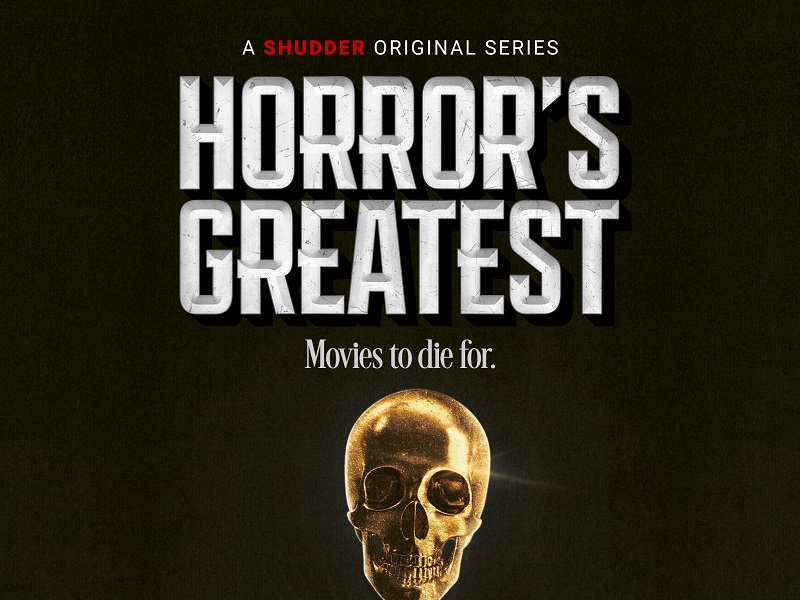
Whether you’re a fan of slashers or prefer your horror on the gothic side, there’s no one way to love horror movies. In Shudder’s upcoming docuseries, Horror’s Greatest, everything from Japanese horror films to horror comedies are getting the deep dive treatment — the better to single out some prime examples. For more on the series, check out this interview with showrunner and executive producer Kurt Sayenga below:

Rachel Bellwoar: Was this a project Shudder approached you about or had you been wanting to create a series like this for a while?
Kurt Sayenga: After the success of The 101 Scariest Horror Movie Moments of All Time, the people at Shudder and I kicked around a number of ideas. “Horror’s Greatest” emerged as the best platform for a wide-ranging examination and celebration of the genre. The format is flexible enough to accommodate subgenre surveys and high concept ideas. And yes, I have wanted to make a horror series with this overall look and feel for some time.
Bellwoar: When did your love of horror begin?
Sayenga: My older brothers loved monster movies, so I was exposed to them from a very early age. I watched anything on TV related to horror and science fiction. I also snuck into theaters to watch age-inappropriate movies; one of the first and most memorable was The Exorcist. Over the years my passion for horror has held steady.
Bellwoar: Having worked on a number of documentaries (including The 101 Scariest Horror Movie Moments of All Time), who were the people you knew you wanted to bring on for this series and did you get to work with any new collaborators?
Sayenga: I have a strong roster of professionals to call on when I need to build a team. I knew my longtime cinematographer Bret Curry and his crew would get the look I was aiming for. Then I gathered a heavy-hitting lineup of editors with a deep knowledge of film history and assigned them episodes tailored to their strengths. (For instance, I gave Asako Ushio ‘Giant Monsters’ and ‘Japanese Horror’ to cut because she is a brilliant editor and a native Japanese speaker.) I have worked with all the editors many times, so I knew they could tolerate my vampiric schedule, idiosyncratic scriptwriting, and habitual disdain for deadlines. Producers Joe Freed and Allison Berkley, who I first worked with on Eli Roth’s History of Horror, came in to handle business affairs and logistics. But there are always new people in the mix, which keeps things fresh. The set designer I usually work with was off directing a film, so I brought in Martina Buckley, who did a fantastic job creating the graveyard set.
Bellwoar: Was availability a factor in who you chose to interview for each episode or did you always want to spotlight the voices of film scholars and critics? Not that there aren’t actors and directors involved, too, like Mick Garris (Sleepwalkers) and Tom Holland (Fright Night).
Sayenga: Availability and scheduling are always difficult when you’re dealing with people in the film industry. Matters were complicated by the strikes, which prohibited writers and actors from participating during our first block of shooting. (We had a post-strike week of shooting to redress the balance.) But from the beginning, the plan was to include as broad a group of interviewees as possible, not just film professionals. The horror community is a diverse and passionate bunch who have plenty to say about the genre. My ultimate concern is the quality of the commentary. I’d rather have a smart soundbite coming from a lesser-known person than a dumb soundbite from a celebrity.
Bellwoar: The problem with talking in terms of “greatest” is sometimes the same titles come up every time. Were you conscious of wanting to bring up some lesser sung masterpieces, too, like Ride with the Devil, and give equal screentime to classic and recent horror movies?
Sayenga: The word “greatest” has a lot of latitude. In my view it means films that are successful on their own terms. They may or may not be universally loved or technically perfect, but they are great examples of the topic we are exploring. This approach allows us to offer a mix of popular, cult, and lesser-known or forgotten films that I hope will entertain horror fans of every stripe, from casual viewers to hardcore cinephiles.
Bellwoar: You could really make a whole series just about tropes and clichés. Why did you decide to make that the subject of the first episode and start with a broader topic?
Sayenga: ‘Tropes and Clichés’ was an ideal episode to kick off the series because it embodies the approach we want to take: it references dozens of genre classics and deep cut films in service of a theme that immediately connects with horror fans. It also has a sense of humor that I hope carries through the series. We may tease but we never mock any of these films – we’re looking at what connects them. Sometimes it’s their unique qualities; sometimes it’s the fact that they deliver exactly what the audience expects. (Sometimes you want to dine at a nice new restaurant, and sometimes you want McDonald’s.)
Bellwoar: For the Giant Monsters episode, most of those films could also be categorized as sci-fi. Why did you want to present them in a horror context?
Sayenga: Is a romantic comedy a romance or a comedy? It’s both. Genre mash-ups have been with us since the birth of cinema. Same with monster movies, of which there are many kinds. Some monsters are supernatural, some are more science-based, but they all are born out of horror. Godzilla is a prime example. Se7en and The Silence of the Lambs are crime films, but they’re also horror movies. Quite a few movies straddle categories. If we disqualified them, there wouldn’t be many movies left.
Reductive labels are slapped on movies by nervous marketing departments. Until recently, the word “horror” was poison to studios and distributors. This is how we wound up with “chillers” and “psychological thrillers” and “elevated horror.” Anything to avoid or soften the h-word.
Bellwoar: For the Japanese Horror episode, was accessibility a factor you had to consider and how many horror films do you think English-speaking audiences are missing out on because they’re not available internationally or with subtitles?
Sayenga: We miss out on quite a few, but the more financially successful titles tend to get released in some form with English subtitles, though they rarely stay in print. If you can’t find a Japanese horror title, it’s usually for the same reasons films go out of print in the US – problems with rights, distributors going out of business, studios going bankrupt or being bought out by bigger studios that don’t care about their back catalog, etc. Most everything we reference in the series is available on Blu-ray or DVDs and can be tracked down if you’re persistent. Hard-to-find films often surface through companies like Kino Lorber, Severin, Imprint, and Arrow. If you have Shudder you have access to a thoughtfully curated selection of horror films from around the world.
Bellwoar: Each episode also includes top 5 lists on different subtopics. Why do you think lists are such a helpful way of packaging films to people?
Sayenga: The brain looks for patterns in the flood of information it processes from moment to moment. It’s easier to understand a broad topic if you are able to separate it into parts grouped by commonality. Thus, “Top 5 Giant Monster Fighters” is a subset of “Giant Monsters.” Actually, none of the sublists are numerically ranked – we didn’t want this to be a countdown show. The sublists are just a way of including more topics of interest and more films that we hope people will check out.
Bellwoar: Did you know in advance that the puppet in the opening titles next to your credit would bear a passing resemblance to you?
Sayenga: Yes. The graveyard interview set and the title sequence all sprang from my desire to give the series a timeless look rooted in classic horror, but with a modern sense of fun and theatricality. I brought in Laura Plansker and Gary Smith, two skilled filmmakers who do everything by hand with miniatures and puppets – no CGI, no AI – to create the open. Their work is incredible. There’s nothing quite like it. They had the idea of a corpse’s head rolling off at the end, and I suggested making it my head. It’s my version of a Hitchcock cameo.
Bellwoar: Thanks for agreeing to this interview, Kurt!
Horror’s Greatest premieres August 27th on Shudder.
