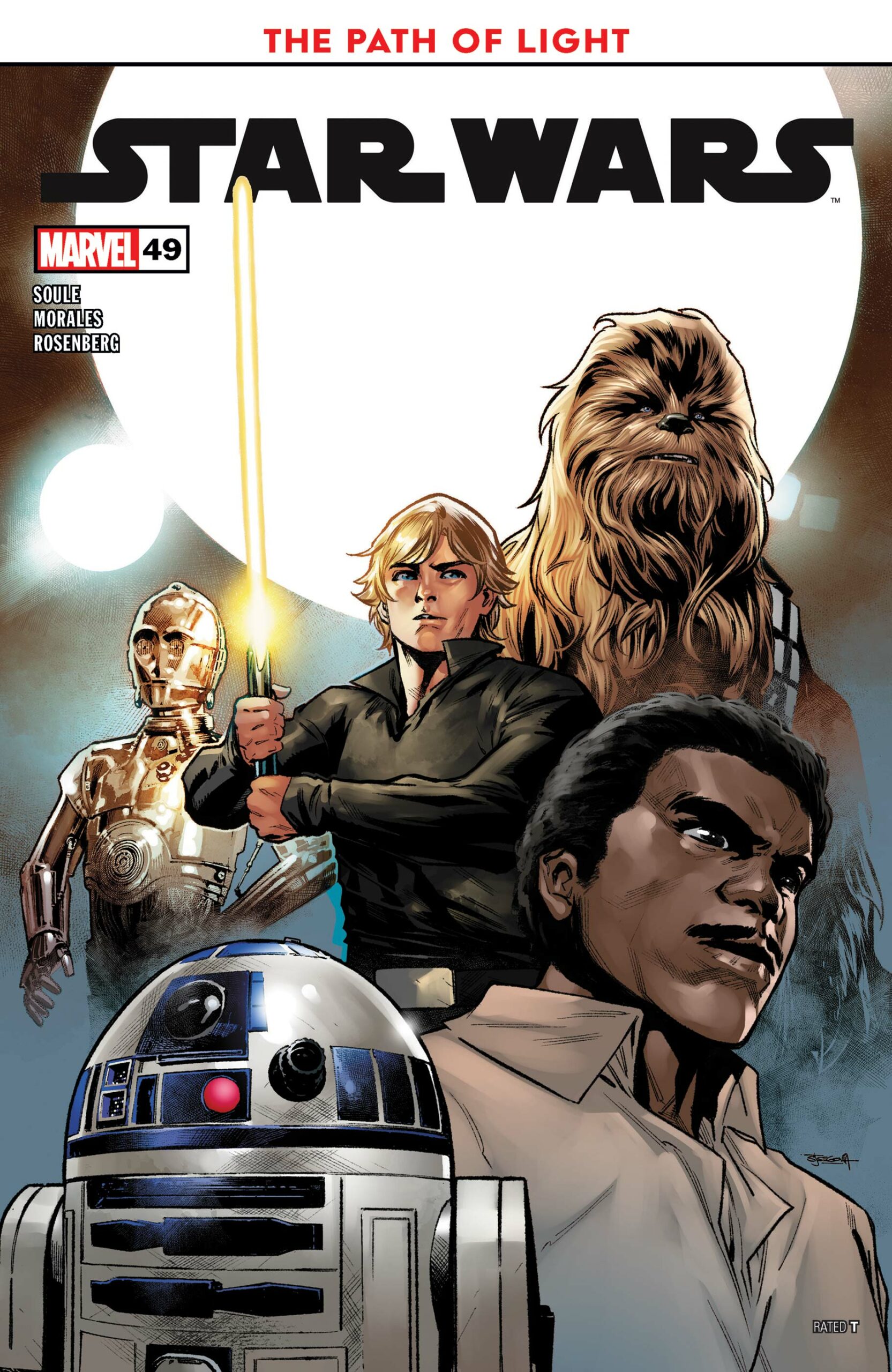
Striking the Right Work/Life Balance in ‘Star Wars’ #49 — Review
by Austin Gorton
Overview
With the series set to conclude with some more sweeping, time-jumping stories next issue, Star Wars #49 likely stands as the climax of this iteration of the book. As such, something a little bigger and more monumental would have been appreciated, but the end result is still effective, if smaller.
Overall
6/10Launching a new story just a couple issues removed from the end of this iteration of the series, as the previous issue did, was always going to result in a brief, rushed climax to the events it set up. Which is to say the fact that Star Wars #49 represents a brief, rushed climax to the story isn’t entirely its fault; it’s a victim of its circumstances. Yet despite that, there’s still some good material here as the series heads into its conclusion.
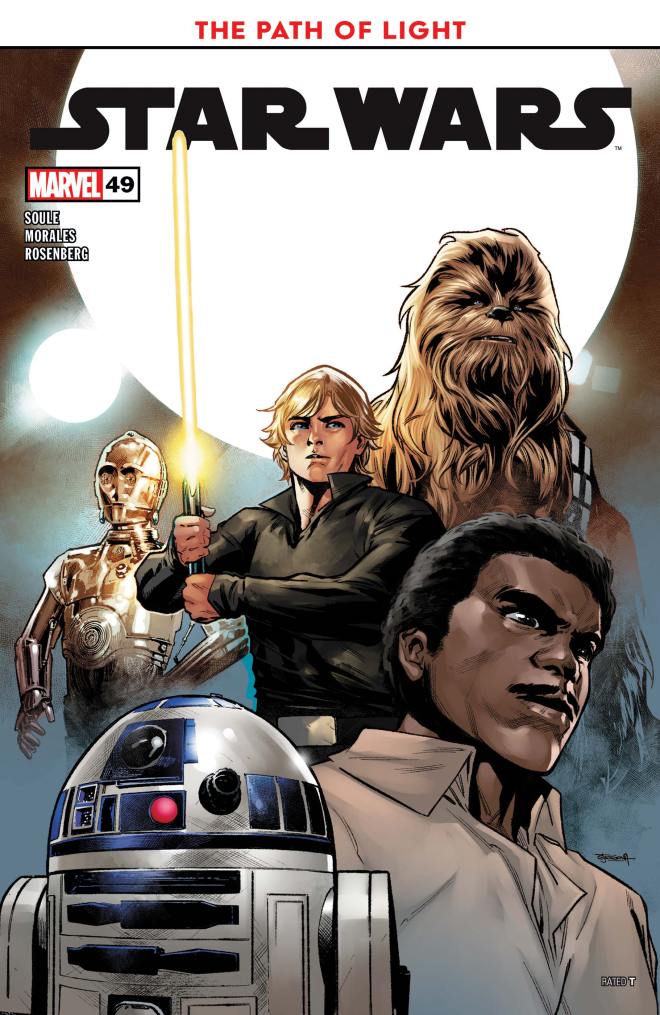
For one thing, the issue pays off the promise of the previous one by keeping Leia at the center of the story. Luke is around. He does some cool stuff that is perhaps meant to to showcase his increased Jedi skills with Return of the Jedi on the horizon. But thanks to her conflict with Zahra, Leia remains the driver of the action. She is the character on an arc, using the time-tested comic book narrative device of extreme violence to facilitate character growth. Realizing she needs to strike a better work/life balance in the wake of her conflict with Zahra, Leia finally decides to make her move and rescue Han.

Obviously, this is the setup for the “infiltrate Jabba’s palace” portion of Return of the Jedi. It’s not quite exactly the answer to the question of “why did it take Leia until the start of the next movie to attempt Han’s rescue?” The series has already answered that, to various extents, between the combination of the scramble to unite the fleet after Hoth, the events of “War of the Bounty Hunters”, etc. This is more about getting Leia into the right mental and emotional state to make the decision to go after Han despite more pressing Alliance business (like a new Death Star). As such, it’s a smaller beat — perhaps too small of one on which to close out the series’ RotJ setup — but still a mostly effective one.
Less effective is the portrayal of Zahra, who has gone from a scheming, arch, Tarkin-protege to a more one-dimensional raving villain. Given that writer Charles Soule is responsible for both interpretations of the character, this is likely another victim of the shorter story. There’s simply not enough space to bring Zahra back (especially as an issue-ending reveal), outline the details of her survival, and craft a nuanced portrayal of her conflict with Leia in the space allotted. It makes it hard not to feel like the approaching end of the series came about sooner than expected, or at least without Soule’s full knowledge.

Given the way this book has such a specific endpoint, it would have been nice to see a grander build up to it, a sweeping narrative that weaves all the various arcs of the series — Luke’s emergence as a Jedi, Leia’s search for Han, Lando’s transition from loveable cad to steadfast Rebel, to say nothing of the Pathfinders and the second Death Star — into an exciting climax. Perhaps that’ll occur in issue #50. But if that couldn’t happen, for whatever reason, centering Leia in a smaller story that is nevertheless impactful to her isn’t the worst alternative.