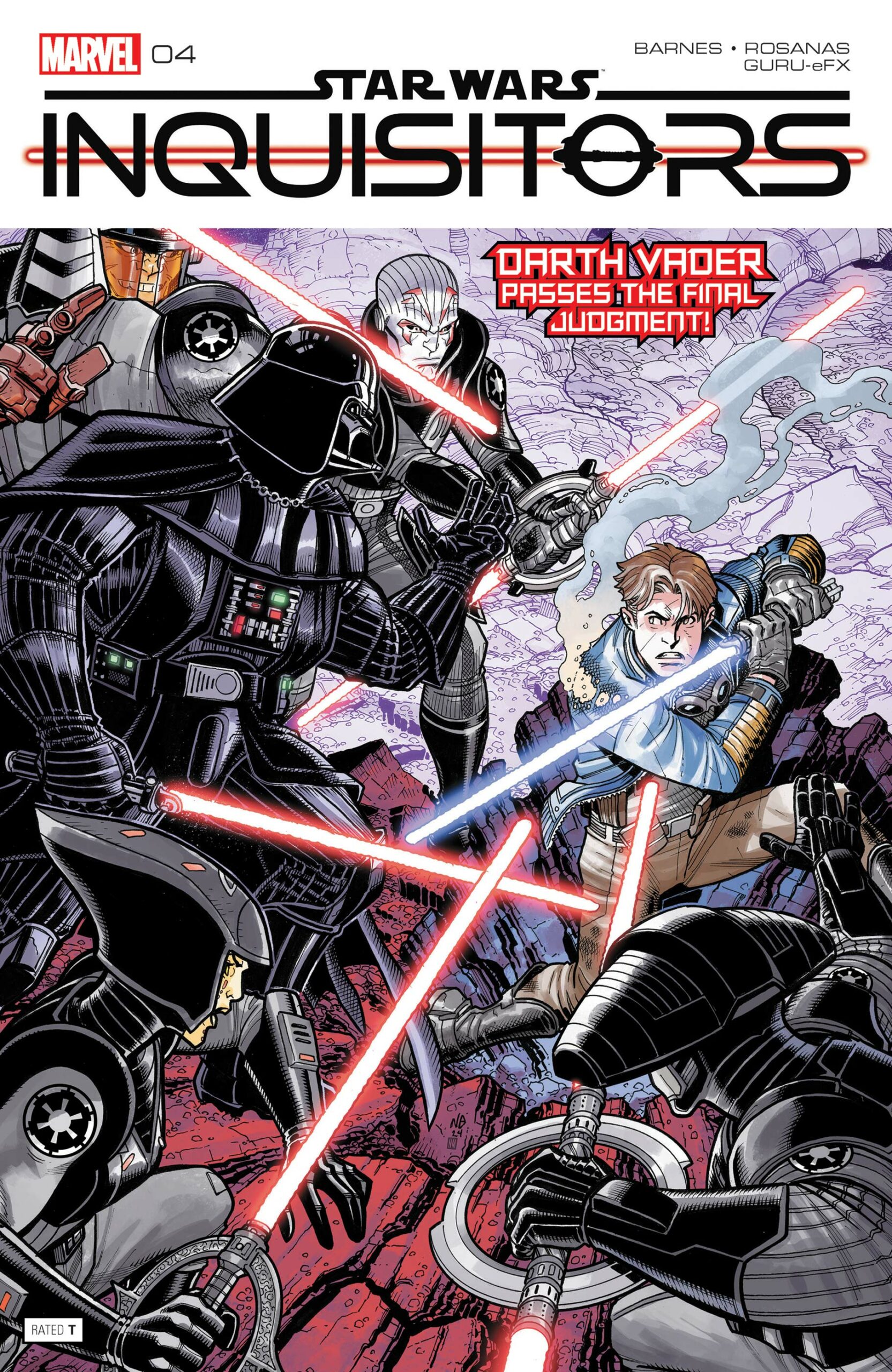
‘Star Wars Inquisitors’ #4 Review — No Favors From Darth Vader
by Austin Gorton
Overview
The Saga of Tensu Run concludes in Star Wars Inquisitors #4 in the most expected ways possible – including the continued poor showing of the title characters, who get even more overshadowed by their boss.
Overall
4/10Going all the way back to their debut in Star Wars: Rebels, the Inquisitors have had a problem. It’s one this series seemed designed to address, but Star Wars Inquisitors #4 not only concludes the series without effectively tackling the problem — Darth Vader — it also doubles down on it.
The Inquisitors, by their very nature, are glorified henchmen. They are the Koopa kids you have to fight in Super Mario Bros. 3 to get to Browser. They are characters designed to stand in for bigger, more prestigious and less available villains (like Vader) to give the heroes an obstacle, but never actually succeed (or even strike a major blow) because that is reserved for their boss.
They’re jobbers designed to lose. They work best when they’re allowed to operate in a segregated corner of the Star Wars galaxy with limited input from their boss. If they can exist on their own, they can be a threat. When they’re constantly getting beat by their targets and yelled at by Vader, they become vastly less threatening.

Yet, that’s largely how this series has deployed them, and it is amplified in Star Wars Inquisitors #4 by taking Vader off the sidelines and inserting him directly into the action. The most compelling thing about this series has been Tensu Run, the Jedi character it introduced as the foil to the Inquisitors. In the glimpses of Tensu’s past and the details of the small coterie of allies he’s assembled, the series created a feeling similar to one found in the original Star Wars: a wider narrative world with a rich history just beyond the details being presented on page, waiting to be told.
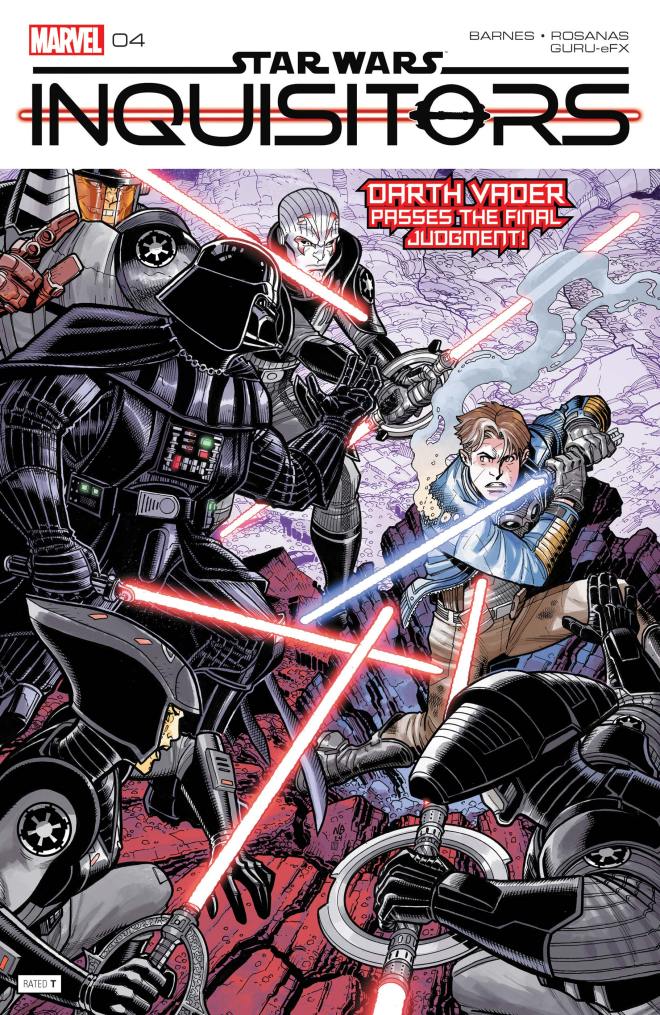
One by one, an assortment of Inquisitors attempted, on Vader’s orders, to take down Tensu Run, and one by one, they failed, and his legend grew, in-universe and in the mind of readers. In the climax of the series, in the wake of the Inquisitors ongoing ineptitude, Vader finally sighs, stands up, and decides to take action himself.
It’s not a good look for the Inquisitors, getting put in their place by their boss in their title series, especially because Tensu Run, as an original character, doesn’t have the same plot armor as, say, Luke or Obi-Wan. Unfortunately, it’s also not a terribly entertaining comic. That Vader prevails, and Tensu Run is defeated, is hardly a spoiler — or all that surprising. More surprising is how lifeless the final confrontation turns out to be. Artist Ramon Rosanas delivers reliably strong work. Panels are rich in details, the action crisp and easy to follow. But Rodney Barnes‘ plot is perfunctory.
The Inquisitors attack en masse, Tensu and his followers fight back (in one fun moment, the Inquisitors get attacked by a small army of reprogrammed battle droids, though once again, this just underscores their henchmen status). Eventually, Tensu stands alone, and faces off against Vader. There’s no surprises, no twists, nor even a particularly evocative depiction of an expected story beat.

One issue can rarely salvage a series, and the outcome depicted in Star Wars Inquisitors #4 was put in motion well ahead of this issue. But it’s still unfortunate that the issue failed to do the expected in an unexpected way; to craft an electrifying finale even if its title characters were going to be overshadowed by both their boss and their antagonist.
Should this series have any lasting legacy, it will likely come in the form of Tensu Run, its proto-Luke Skywalker, and his very own band of merry rebels, a character built of tropes which hint at a deeper, even more involved story just below the surface. If so, that might make the Star Wars galaxy a little more interesting, but would still be a bad look for its title characters, who fail to take advantage of the opportunity to step out of the shadow of their boss and become more than sinister-looking jobbers.