
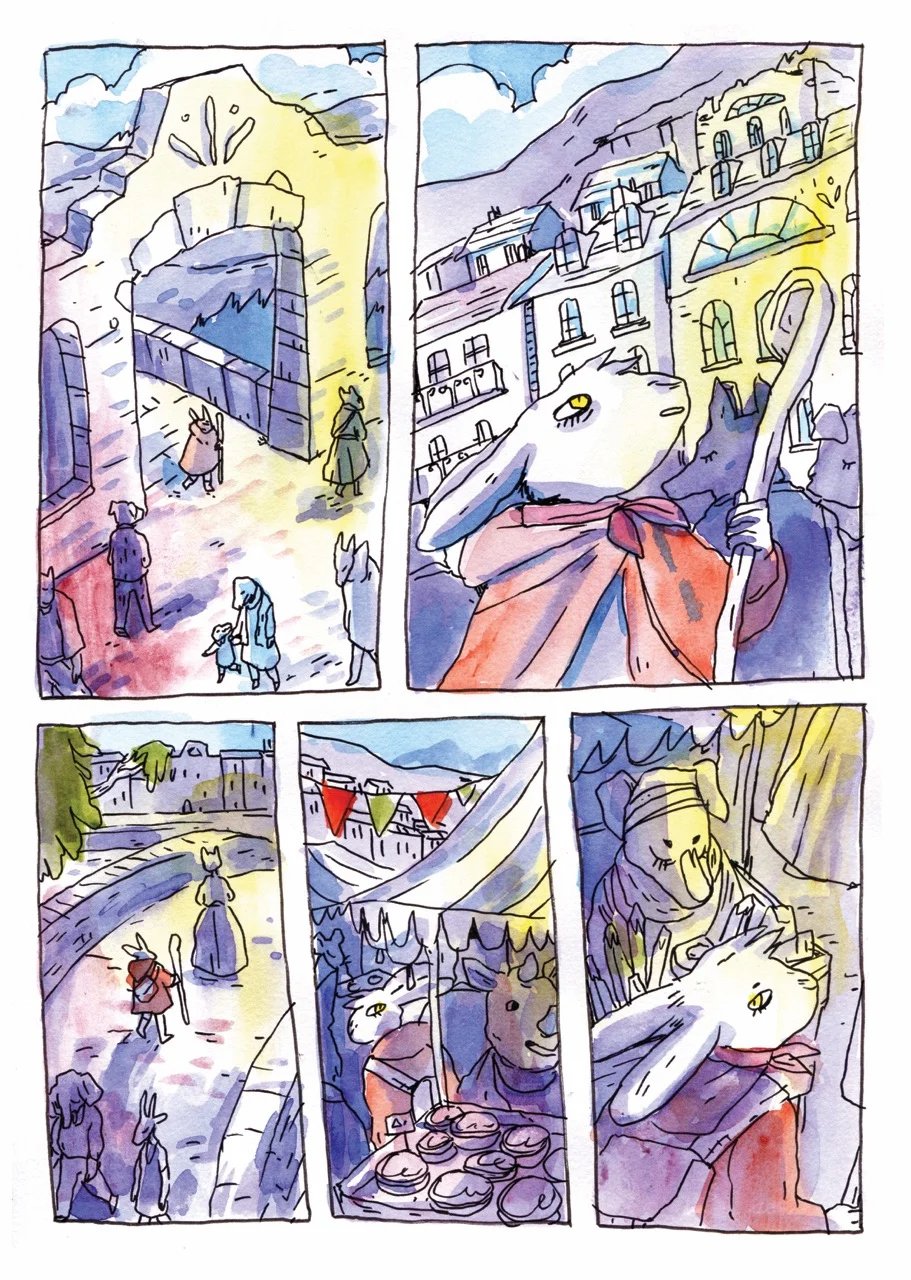
Thought Bubble 2024: In Stars And Shadows – Folklore And Mythology In Comics
by Olly MacNamee
Myths, legends and folklore have always interested me. And so a panel on that subject was always going to be on my dancecard at this year’s Thought Bubble comic convention. Featuring panelists B. Mure, Kieron Gillen and Juni Ba with Gillen taking the lead, here’s what I learnt – or rather what I was able to type up as all three panelists chatted back and forth – about folklore in comics in a panel so packed I had to cover it sitting on the floor:

Q. What was the first bit of folklore you came across?
Juni Ba was taught a genie would come and get him if he went outside in Senegal. Really, it was because it was too hot.
Kieron Gillen was told you must always crush the egg shells otherwise witches could use them to fly in.
Q. What folklore inspires you?
B. Mure – common folklore like counting magpies, or not stepping on the crack on paving stones.
Juni Ba – folklore is a part of everyone’s cultural identity with stories changing from country to country.
Kieron Gillen – King Arthur is a politically complicated character depending on which era you find him in. King Arthur was a Celtic figure with a hatred of the Anglo-Saxons, for example, in Gillen’s Once and Future series. You only need to read my Arthurian Annotations here to learn more about those inspiration. Or pick up the Once and Future collection which includes an abridged version.
In The Wicked + Divine Gillen is careful not to include a particular pantheon of gods incase he corrupted the idea of this pantheon for his readers.
B. Mure – lives in Nottingham, so she is surrounded by legends and reminders of Robin Hood. But also Ned Ludd, who was supposed to have broken his father’s weaving machine. A highly symbolic tale that led to the Luddites borrowing his name for their moment. But, at the heart of that story is the idea that the bourgeoise, for want of a better term, want to automate jobs and do away with the working classes. A sentiment clearly relevant to the modern era especially.
Juni Ba brings up The Joker movie. a character owned by a corporation. He wonders out loud what happens when these contemporary folk heroes – and he used V for Vendetta as another prime example – do own them? Superman is owned by a corporation and so his original socialist ideals were soon whitewashed out. Corporations controlling culture can be problematic. Although, there are plenty of examples of these same characters being subverted by the public.
Gillen is not a big believer that super heroes are a modern mythology, believing this complicates the issue. But he did not have time, or the desire, to dominate the panel by elaborating on this.
A lively and informative panel we were also given a number of examples of folklore, particularly from Juni Ba; one involving a flying ostrich, a witch and eggs that acted as bombs when laid. Stories may change, or transition and transform, but one thing that is universal is that folklore can be downright bizarre and bonkers.
Gillen summed up the differences between folklore and mythology, suggesting that the former is more playful while latter is far more about world-building. And that just about sums up the panel too.
And that’s me done for the day. I’ll be back tomorrow with more from Thought Bubble, but for now, enjoy your Saturday!

