
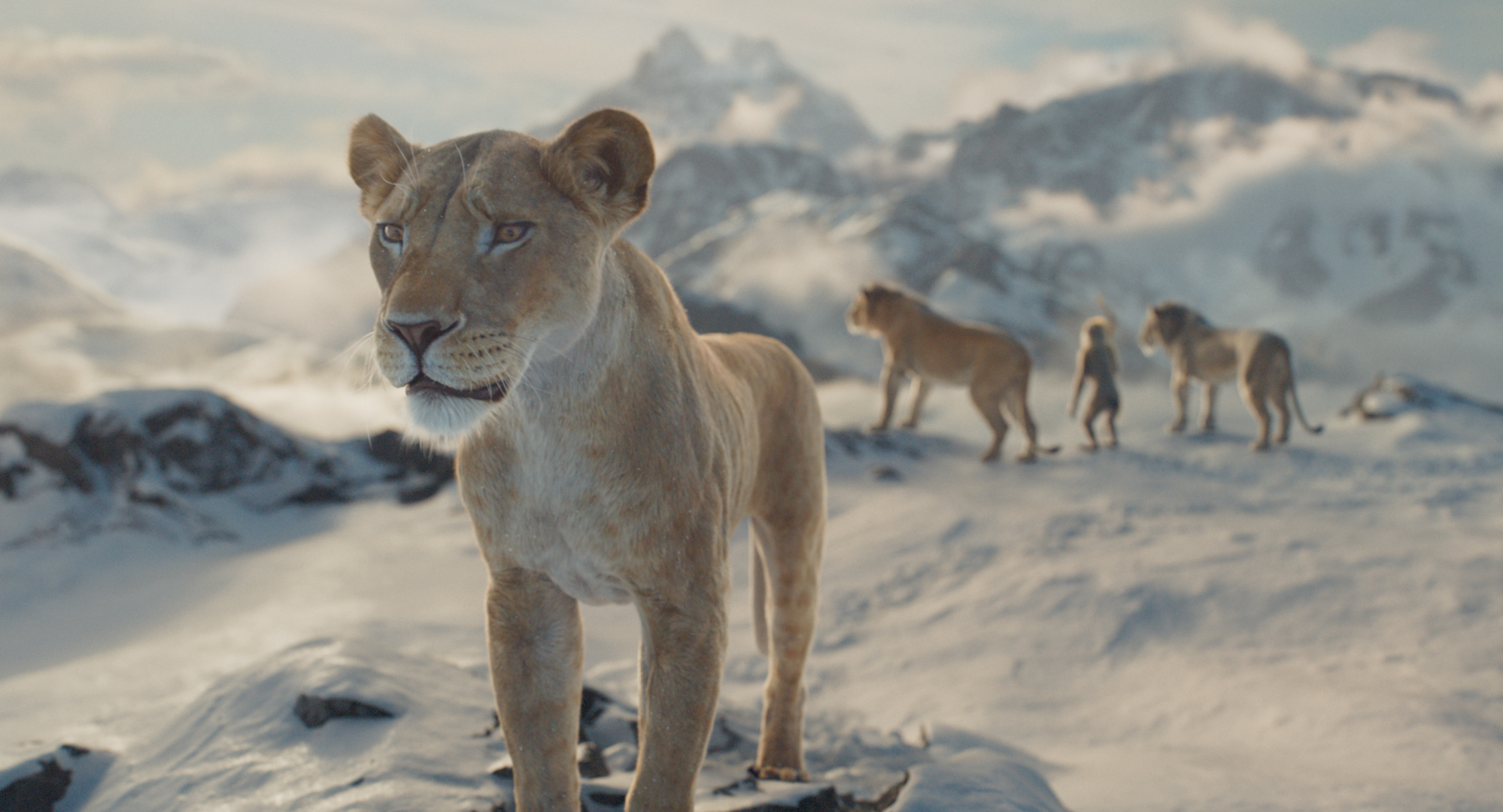
Review: ‘Mufasa: The Lion King’ Will Thrill Movie Series Fans With Stunning Animal Animation
by Erik Amaya

As any comic book or Star Wars fan will tell you, prequels are tough.
With Mufasa: The Lion King, Disney is making an attempt to prequel-ize some of its own mythology in the live action space (that isn’t quite live action). Taking its cues from John Faverau‘s remake of The Lion King, director Barry Jenkins and screenwriter Jeff Nathanson set out to tell a new tale about the old king, while also giving fans of Faverau’s feature a glimpse at one comes next. It’s an ambitious order that more or less delivers provided you are in the right frame of mind.
Which, this reviewer has to admit, is not exactly the wavelength he operates from. Being roughly four years too old for the Disney Renaissance — the period in which the original animated Lion King was made — all of the films and spinoffs from that era fail to connect with me. That’s not a value judgement at all. Just by the way each film was marketed and made, I was not the target audience. Where was I at the time? Reading volume 4 of The Legion of Superheroes and listening to post-punk bands like Joy Division.
You can see how movies like The Lion King might have limited appeal despite its literary allusions to Hamlet.
Nonetheless, there is something even for me to like in Mufasa. Chief among them is the quality of craft. Unlike the clips I’ve watched of Favreau’s Lion King, the facial animation here is damn near flawless. Sure, cracks might appear on closer inspection, but the reality of the characters is never in doubt. That’s important considering the plot’s quest nature and the cutaways to post-Lion King situations and characters. As presented, the film is a tale told to Simba’s (Donald Glover) daughter, Kiara (Blue Ivy Carter) — a hat-tip to Disney’s direct-to-video animated sequels from the 1990s — by Rafiki (John Kani). In the story, she learns her grandfather was a foundling separated from his birth family by a sudden flood. Begrudgingly taken in by the royal family of another pride, he grows up learning the ways of the female lions. His adoptive brother, Taka (Kelvin Harrison Jr.), meanwhile, learns a different set of lessons from his xenophobic father.
But all of that is upended when a rival pride of white lions (a strange reference to Kimba the White Lion, perhaps?) attack, forcing Mufasa and Taka to seek refuge in a legendary land of peace. The journey changes them both for good and ill.
All the building blocks are there — including a truly splendid vocal performance by Aaron Pierre as the titular character — but for someone without a real emotional investment in Mufasa or Scar, it is tough to interface with the characters despite Jenkins and his team creating a completely believable world of talking animals. I freely admit this is my own bias as I’ve never been able to build a rapport with The Lion King in either its animated or live action forms. Add to that, though, some incredibly annoying fourth-wall-breaking interludes courtesy of Timon (Billy Eichner) and Pumbaa (Seth Rogen), and the film puts me at a greater distance even as those character look remarkable and completely believable.
For someone with built-in affection for the characters or children new to the story, I imagine the marvelous craft on display will transport them and offer a thrilling new tale of the Pride Lands. That is a credit to the filmmaking involved and an exponential evolution in the technology used to make the characters since Favreau’s Lion King. Those on the movie’s wavelength will also likely enjoy the songs provided by Lin-Manuel Miranda.
With that in mind, I still think Mufasa: The Lion King is a wonderful example of what this technology can do in the live action space. With care and craft, a world like the Pride Lands becomes so real, one can feel as though it is a place that can be visited. And although the story and songs left me still feeling like an outsider to that world, those more in tune with it will find plenty to enjoy.