

New Year, New Comics: Diving Into ‘Uncanny X-Men’ And The Claremont Run
by Tony Thornley

Hello out there, internet land! Now that all the chaos of the holidays and the beginning of the year has settled, the Comicon.com team wanted to share their new comics resolutions for the year. This could be a series or run we’ve never read. A story that we loved and want to revisit. Or something we want to give a second chance. So come back here every day this week to see what our comic goals are this year.

I’ve long said that I’m a huge X-Men fan, even calling myself an X-Men guru in some circles. But really, my X-Men fandom (really pretty much all my fandom) starts in the 1990s moving forward. I’ve never really looked backwards. So this year, I’m resolving to at least start the fabled and beloved Chris Claremont run of Uncanny X-Men.
Now this isn’t to say I haven’t read any of the Claremont run. I’ve read the big stories — Dark Phoenix Saga, Inferno, Days of Future Past, God Loves Man Kills — and key issues. But I’ve not sat down and read Claremont’s years-long saga from beginning to end.
X-Men is beloved as a franchise because of the its longform storytelling. The most memorable stories are not the short runs, but the sagas that have time to breathe, build plots, and develop characters. This is absolutely pointing directly back to Claremont and his work with his amazing collaborators like Dave Cockrum, John Byrne, Paul Smith, John Romita Jr, Marc Silvestri, and Jim Lee.
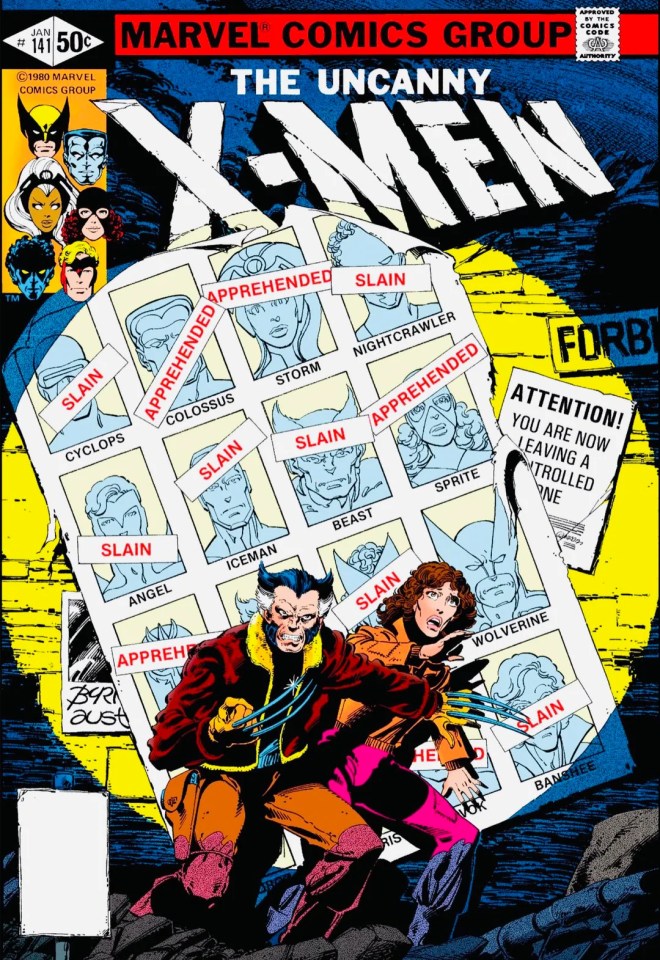
Uncanny X-Men became known as a superhero soap opera. Intermixed with the time travel, alien invasions, and world-ending crises, was an epic story about people falling in love, growing up, facing heartbreak, dealing with loss, and so much more. We saw characters like Kitty Pryde and Rogue come of age. Wolverine and Cyclops developed from bare sketches of gruff manly heroes in their own ways to complex and endearing characters full of flaws, tragedies, and triumphs.
This era of Uncanny X-Men set the standard for Marvel. Through the Claremont run, we received such endearing concepts as Wolverine and The New Mutants, which would later give birth to X-Factor, X-Force, Cable, Gambit and a full micro-industry of X-Men comics and other lines like Spider-Man and The Avengers. Its impact didn’t stop at Marvel — it influenced the entirety of the comics industry! The soap operatic Triangle Era of Superman wouldn’t exist as it is without it.

The biggest names in comics art wouldn’t exist without it either. Cockrum and Smith are revered for their work on the franchise, and Romita still is one of the biggest pencillers in comics. Fully half of the Image founders were best known for their X-Men work, both with Claremont and in the spin-off titles.
And yet, outside of the big stories, I haven’t read it.

So this year, I’m making sure I’m using my Marvel Unlimited subscription to make it all the way through, from Giant-Size X-Men (which yes, I know was written by Len Wein) to “Mutant Genesis.” It’s time.


