
Interview: Severin Films’ David Gregory On The Label’s 4K Russ Meyer Releases And 20th Anniversary Plans
by David Lewis
Russ Meyer is the indie multi-hyphenate behind such sex-crazed cult films as Faster, Pussycat! Kill! Kill! (1964) and Beyond the Valley of the Dolls (1970). His most famous films featured a mix of colorful camp, broad satire, cartoonishly over-the-top sex scenes, and most prominently, a parade of busty leading women. But for years, three of his most characteristic films remained virtually impossible to see in any type of decent presentation.
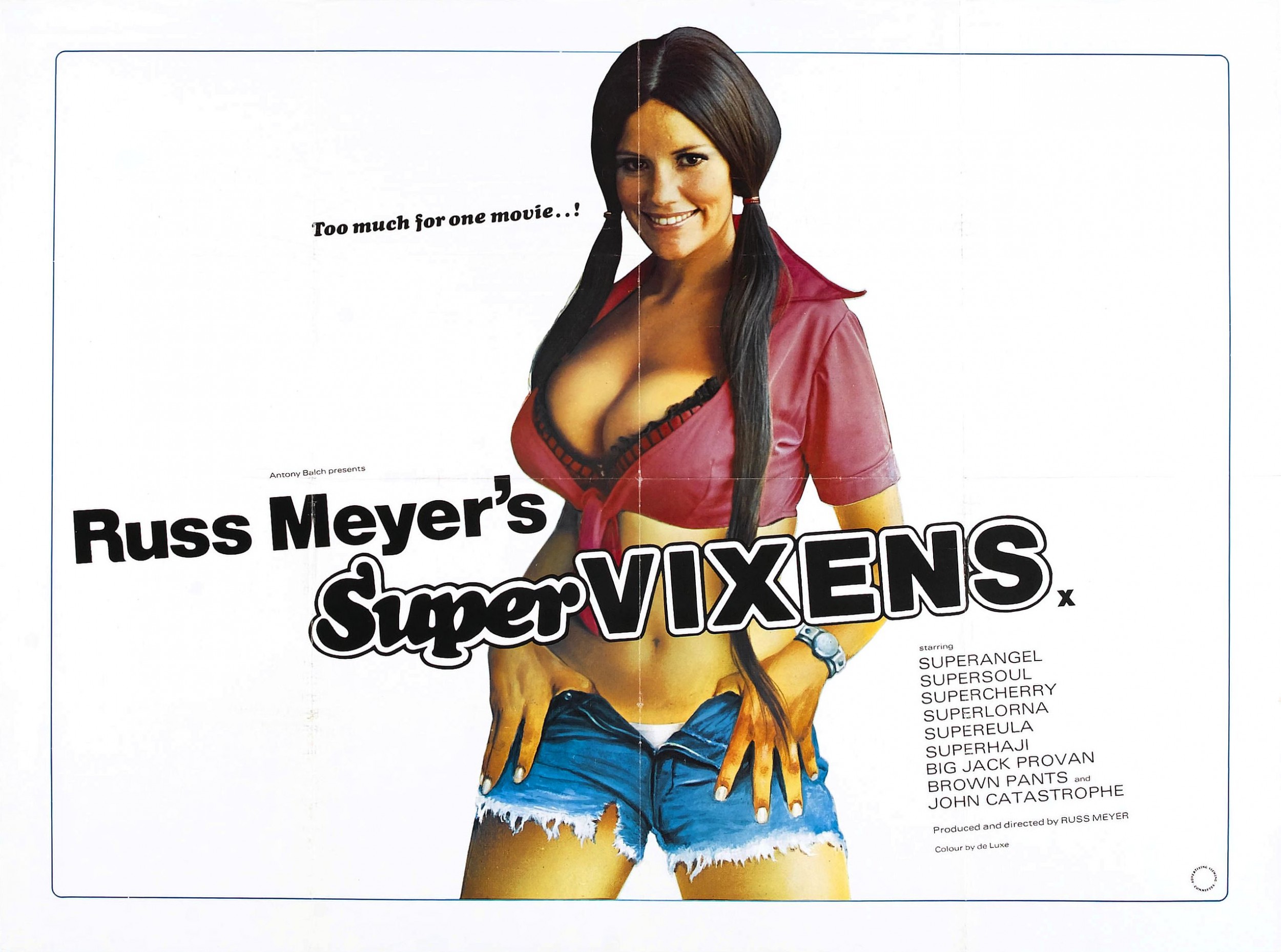
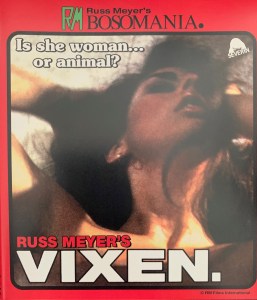
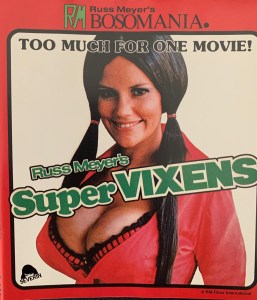
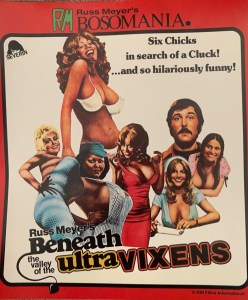
Which bring us to Meyer’s Vixen trilogy. These films — Vixen (1968), Supervixens (1975), and Beneath the Valley of the Ultra-Vixens (1979) — were easy to find in the 1990s with Meyer himself manning the distribution on VHS and laserdisc. Since then, they’ve only been released in the UK as part of a long out-of-print boxset from Arrow Video.
Boutique disc label Severin Films — working with the Russ Meyer Trust — have finally corrected that oversight to cult cinema, releasing all three films on newly-restored 4K UHD and Blu-ray.
We chatted with Severin Films co-founder and CEO David Gregory over Zoom to find out more about the films’ restoration and release, as well as some of Severin’s plans for their upcoming 20th anniversary.
Gregory previously worked for fan favorite DVD labels Anchor Bay and Blue Underground, mainly producing their special features, including the ones found on the aforementioned Arrow Video box set. He joined Carl Daft and John Cregan to launch Severin in 2006, initially concentrating on ’70s sexploitation films like the Black Emmanuelle and Felicity franchises, before expanding to include horror (especially Italian Gialli) and other genres. At this point, Severin is home to hundreds of genre titles, including some rare films that hadn’t seen the light of day since the VHS era, and more that were previously unavailable in any home video format.
To make the Vixen trilogy releases happen, Severin worked closely with the Meyer Trust’s Janice Cowart, who was the filmmaker’s longtime executive assistant and is now the sole remaining trustee responsible for preservation efforts following Meyer’s 2004 death. The Trust had been waiting for the right opportunity to re-introduce the films to the public.
As Gregory explained, “The Meyer Trust has been basically holding out because they want to do something that would respect the legacy of Russ, and they didn’t necessarily know what that looked like but they knew that it looked like the way Russ would’ve done it were he still around. So we had to make a case for why we’re the right people to do that. We met with Janice and basically everything went swimmingly from there.”
Severin wasn’t sure what to expect when it came to the condition of the films, which had gone untouched for decades.
“The rumor over the years was that the film elements were either gone or deteriorated,” Gregory revealed. “[Meyer] was still alive when I was first doing the research for those [Arrow Video] interviews and nobody at that time knew what was really happening to his film elements because he famously did everything himself. He distributed his own movies. So, we didn’t know if they were protected in an archive or anything. For all those years in between, everyone’s like ‘oh, they’ve rotted away or they threw them in the trash or they threw them in the LA River’ or whatever. There was a lot of rumor-mongering going on about what happened to the films, but it turned out very early on in the discussions with the Trust, all the negatives were in a safe place, either in the Museum of Modern Art or the Academy here in Los Angeles. So they’re in proper condition.
“They used to be kept on Russ’ property, [which] was up in the hills of Los Angeles, not ideal to keep them in a shed there,” laughed Gregory. “But thankfully, for the most part, they’re all in immaculate condition, with just minimal restoration of dirt and specks and things like that. Minimal scratching. So on Vixen and Supervixens, the restoration was a matter of doing the best possible scan and color correction we could do. Just going to extra lengths that we do on quite a lot of our films just because of how important how the films are. We do restorations on absolutely everything we put out.”
Gregory explained that scanning a feature film typically takes only a few hours, but that the restoration of the negative and the color correction can take weeks and weeks, depending on the condition of the materials.
“Ultra-Vixens was the most problematic,” he explained. “That was the one that actually had water damage so that means that the frames themselves have different deterioration on every frame. Scenes were affected by that, so we had to out in a few 100 hours extra on that one. While there still are a couple of blemishes in a couple of scenes, it’s pretty immaculate. It all comes down to the negative and how well the film was shot. Of course, Russ Meyer was an amazing cinematographer. So that was not gonna be an issue. And it’s the original negative, not an interpositive or a print, so therefore it’s as good in terms of definition that you could possibly get. It was just a matter of making sure you’ve got the best scanner to scan those frames.”
Gregory feels the releases will help Meyer gain some newfound critical respect. “He’s a proper American independent auteur,” he said. “He’s probably not what they had in mind when Cahiers Du Cinéma was coming up with ‘auteur,’ but he actually fits the definition. The themes of the films are very much him. You can see he was in control of the process as much as any filmmaker in history. Right through the distribution [and] answering the phone when you wanted to order videotapes. I can’t think of any other filmmaker where that is the case. He is absolutely worthy of appreciation as an American artist.”
Read the review: The Vixen trilogy Blu-rays
The loosely connected trilogy is a key component to the Meyer filmography. The writer-director-producer-editor-distributor had dabbled in studio filmmaking, but was only able to fully unleash his perverse id in these films, running into all kinds of censorship battles and being accused of indecency. Infamously, Vixen was the first film to garner the new X rating, but the three films also allowed Meyer to satirize American sexual mores, and even poke fun at his own style and content.
“He started to deconstruct what a Russ Meyer film meant,” Gregory said. “Vixen was such a huge, huge success that it made Russ Meyer a famous name and a brand. You knew what you were getting. After that, he did a couple of studio movies, then came back and did Supervixens, Up, Ultra-Vixens, and a couple of others, and basically he’s playing. He sold them as ‘you know what you’re getting with Russ Meyer. Here’s Russ Meyer back to what he does best.'”
“It’s funny how he hides behind this kind of veneer where he’s like ‘I don’t really care, I’m just into big boobs,’ but you know there’s a lot more seriousness behind this,” he continued. “He has a very specific view on life, and American life in particular, and he certainly doesn’t like to be told to censor things or tone things down. That’s a very un-American way to approach things and he will challenge that. He spent his career and an awful lot of money fighting that kind of moralism and censorship.”
Despite the X rating, criticism from religious groups, and an outright ban in Cincinnati, Meyer’s films continued to get wilder, weirder, and more sexually graphic. As Gregory tells it, “it became almost a parody by the time he got to Ultra-Vixens, even though other explicit sex films had moved on quite a bit by then. He’s being like a naughty boy with the way he’s handling it, but it’s kind of like a Roadrunner cartoon. It’s in the desert, there’s explosions, there’s fast cutting, wacky situations and silly noises and all that kind of stuff that amuses him and, in turn, amuses his audience. It’s almost like he’s sitting there saying, ‘it’s just sex, guys. Everybody does it. You’re getting so uptight about it.’ So he’s almost pushing that to the ultimate extreme.”
Cult movie collectors know that Severin’s special features are usually worth repeat viewings even when the movie itself might not be. “We take our special features very seriously,” Gregory explained. “Sometimes there are labels who would rather have stuff to list on the back [of the case] than a quality piece of work. For us, because of how I started in the business, I don’t want to have subpar extras. Sometimes it’ll be one documentary with many people in it, which takes a lot more work, effort, and budget than it does to have seven interviews with individuals that are barely edited. But it comes out with a better product and you get much more information out of it.”
The Vixen trilogy doesn’t disappoint on that front. Vintage audio commentaries from Meyer extend the feeling that the filmmaker is guiding viewers, making it feel like you’re watching the films alongside him. There’s also a interesting doc looking at Meyer’s challenge against various censor boards, especially the one in Cincinnati, where the films are still officially “banned.”
An interview with legendary character actor and Supervixens star Charles Napier was actually commissioned for the Arrow DVD set, but was left off. Gregory and co. held onto it until they got the Supervixens rights, and the candid interview is practically worth the price of admission on its own.
Another highlight is a clip from the late ’70s featuring Meyer being interviewed by local access talk show host Ellen Adelstein in Tucson, Arizona, where the director hilariously defends his artistic choices and his predilection for bosomy women in a most articulate and deadpan way. Severin found the clip on YouTube, and tracked the retired Adelstein down. She still had the master tape, and brought it to the Severin offices, where, Gregory revealed, she “told us a very funny story which you would not expect coming from the mouth of this nice little old lady from Tucson. And so I was like well we have to interview you about your show and about getting Russ on the show.”
Severin has also announced 4K releases of two more Russ Meyer films — Motorpsycho (1965) and Up (1976) — last week. “We hope to do more,” said Gregory. “Like I say, we seem to have gotten along well so far so hopefully it continues onto more.”
According to Gregory, the label is also starting to make plans for its 20th anniversary next year. Severin’s annual summer festival in Los Angeles, where they typically reveal three new titles, will be be done “in a bigger way.” He also promised more book projects, and special surprise film releases.
When asked about dream releases, Gregory seemed pretty happy with the fact they got to tackle Russ Meyer, adding that he also “never thought we’d get Blood For Dracula (1974), which was my bucket list title. So being able to get that was a big deal for us.”
There are still plenty of films Severin would like to put out, and hopefully can. Without giving anything away, Gregory smiled and said, “There’s still a few white whales we’re working on.”
Vixen, Supervixens, and Beneath the Valley of the Ultra-Vixens are are now available on 4K UHD and Blu-ray.
