
Home Video Review — ‘Doctor Who: The War Games In Colour’ Offers Marvelous Colorization But A Choppy Story
by Erik Amaya
Two weeks ago, at the annual Gallifrey One convention in Los Angeles, North American fans were treated to a screening of “The War Games In Colour”, the second of Doctor Who‘s attempts to bring some of its longer, black-and-white stories to younger audiences via cut-down versions colorized by amazing technology. But is it a worthy replacement for the full version of “The War Games”? Comicon.com editor-in-chief Erik Amaya went to Gallifrey One with watching the story in mind and now he returns from the Spacetime Vortex with a review.

Let’s start with something important, the original version of “The War Games” — written by Terrence Dicks and Malcolm Hulke — is a long story. By virtue of a production environment running out of time and acceptable scripts, the two writers were tasked with creating a tale that would encompass the final 10 episodes of 1969’s Season 6. And they did an admirable job with a mystery The Doctor (Patrick Troughton), Jamie (Frazer Hines), and Zoe (Wendy Padbury) can not immediately deduce as it involves time travel and a final episode that not only brings the story to a shocking end, but rounds out the Second Doctor’s time on the show. Nevertheless, that 10-episode length — roughly five hours of plot and characters — is a huge barrier to entry. It also means this version of “The War Games” faced a mammoth challenge in condensing that material down to just 90 minutes. Truth be told, I don’t think it succeeds.
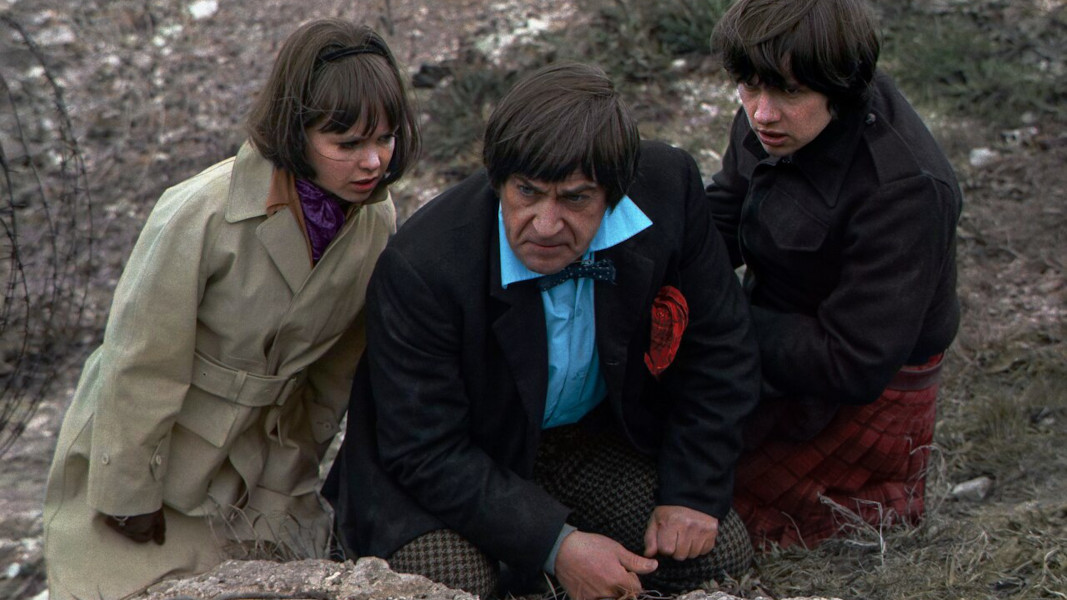
But let’s discuss the colorization. It is always a controversial topic because it, ultimately, alters the original vision in a fundamental way — doubly so if the filmmakers are not alive or welcomed to participate. And, to be frank, even as late as 2023’s “The Daleks In Colour”, the technology still seemed ill-equipped to offer what the current Doctor Who production team wants from these cut-down special version of classic serials. “The War Games In Colour”, by contrast, proves the technology can work if you have a clear understanding of how the color should appear in the finished product. The team tasked with the colorization looked to Season 7, Jon Pertwee‘s first year as The Doctor and the first to be produced in color, as a touchstone for the look and feel of the BBC studios for interior scenes. The results are startling as the actors, sets, props, and even the studio floor all feel natural and in continuity with the following season. Here in the US, we’d call it a “soap opera” look and it fits “The War Games” incredibly well. A number of color photos from the original production also exist to help guide the process, but the overall approach to match the look of episodes shot just a few months later leads to a remarkably great colorization. We hope the 2025 color special, whatever it may be, continues this trend or uses a contemporaneous color production to assist in creating a that consistency of presentation.

In fact, if the edit of “The War Games” also used a consistent philosophy or feel, I’d be singing its praises to the heavens and beyond. Sadly, though, the original 10-episode tale is just too much for the editors and it leaves the colorized version feeling more like a highlight reel — and that’s even considering the back-and-forth nature of the story as The Doctor, Jamie, and Zoe keep traveling between three or four locations throughout. What ends up lost is a lot of the characters and nuance Dicks and Hulke included to make the longer story more entertaining.
Chief among the lost character beats is the tension between the War Chief (Edward Brayshaw) and the Security Chief (James Bree). Both are members of the antagonist faction The Doctor must defeat, and the dislike between the characters — established as they first appear together — is key to the way they are ultimately undone. Unfortunately, much of their enmity is left on the cutting room floor and the Security Chief ends up a less-realized character. The War Chief — acknowledge as a member of The Doctor’s race earlier on — gets a change in his status via the use of musical stings associated with The Doctor’s subsequent rival, The Master. While one moment using the character’s musical sting from the 1970s is well-timed and genuinely funny, the more constant use of The Master’s modern musical cue is far less effective. Additionally, as someone who grew up viewing The Master and the War Chief as separate characters, linking them beyond a one-off gag is less than satisfying.
Other characters, like Mexican freedom fighter Arturo Villar (Michael Napier Brown) — present in the tale for timey wimey reasons — never get a proper introduction. But, in the case with Villar, the story behaves as though you have seen his earlier scenes and retains the conflict he brings to the story. And as the screening was late on Saturday at Gallifrey One, it did leave me wondering if, perhaps, I had fallen asleep and missed his first scene. Those around me assured me that I had not, which points to the underlying problem of the colorized version: the original is just too much story for a 90-minute cut-down. See also characters like Lady Jennifer Buckingham (Jane Sherwin), anyone in the American Civil War Zone, and even the true villain of the piece, the War Lord (Philip Madoc). His cool, measured performance is lost in favor of latter scenes, during which his chillier mood comes unraveled.
The overall effect, like “The Daleks In Colour” before it, is a dreamlike presentation that will leave you wondering if you slept through important scenes.
The edit works, however, in combining the first two parts into a well-paced 15 minute intro. It also does an amazing job cutting down Part 10 into its most important and emotionally resonant scenes. Removing the War Lord’s attack on Gallifrey (although it would be another five years before that name is ever uttered) and some portions of The Doctor’s attempt to flee the Time Lords means his goodbye to his friends and his subsequent trial before a Time Lord tribunal get every bit of screentime they deserve. A Second-to-Third Doctor regeneration scene provided by YouTube collective The Confession Dial is less successful as it uses the modern visual effects and sounds of regeneration to smooth over its use of extant Troughton and Pertwee material.

All of which means the “… In Colour” range of classic Doctor Who stories is still very much an experiment. While the technology and technique of colorization has absolutely passed a milestone into, literally, “ready for broadcast” quality, editing down longer stories into 90 minutes continues to be the primary stumbling block. Of course, the team behind these versions will never have to contend with another story beyond six episodes in length again, so they may do better with a colorized, cut-down version of “The Aztecs” or, maybe, they’ll actually lick the pacing issues of the six-part “The Web Planet” into something that will keep the audience awake if they attempt it in one sitting.
So, while I am glad there is an effort being made to turn these l0nger tales into something more accessible, I am definitely happy to know that I will always have the original black-and-white versions to rely upon for future viewings.

