
When Friendship Conflicts With Justice: ‘Audie Murphy Collection V’ Reviewed
by Rachel Bellwoar
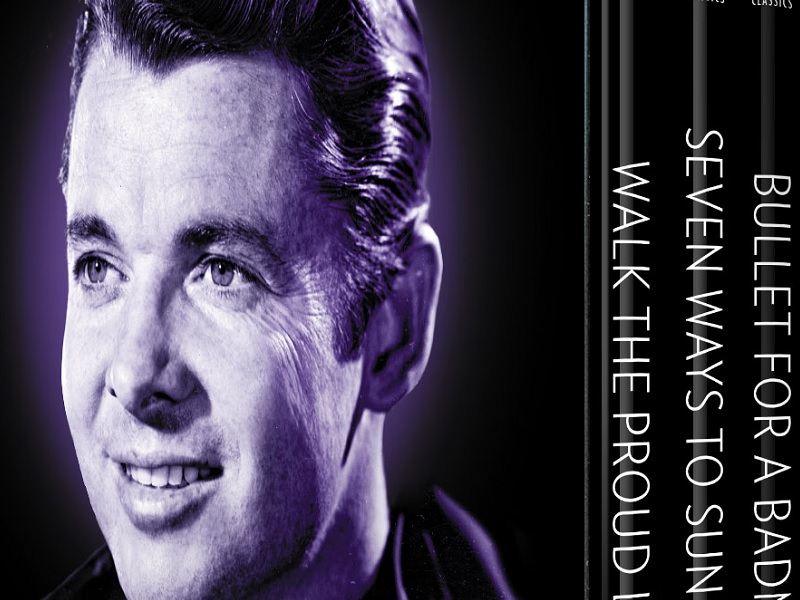
Audie Murphy is torn between the law and outlaw/racist forces in this box set from Kino Lorber:

Jesse Hibbs‘ Walk the Proud Land (1956)

John Clum (Murphy) was a real person who was sent by Washington to speak up for the Native Americans living on the San Carlos Apache Reservation. Walk the Proud Land is based on a book written by Clum’s son about his father (it’s also why the film begins with a narrator, though that conceit gets dropped immediately as film historian Gary Gerani explains in his commentary and as the subtitles tipoff by identifying the narrator as Wordsworth, though he never introduces himself – OK, he explains that he’s Clum’s son but whether viewers will realize he’s a real person at this point is questionable and the framing of the story as his account of events is never repeated).
Clum’s bio is likely a fascinating one but, given when this film came out and the source material, it’s very much a blanket white savior movie. A vast majority of the actors playing Native Anericans (with the exception of Jay Silverheels as Geronimo) are wearing brownface, including Anne Bancroft. For some reason the film insists that all Apache wear colorful headbands. Even overlooking the brownface, the love triangle in this movie has no pulse. It’s a watchable movie but at the same time, it’s not great having to listen to Clum say “my Apache” all the time (and he probably would’ve used that possessive pronoun but this movie offers no balanced critique of his actions). It’s trying to do better and correct some of the villainization of Indigenous people by other westerns, but without the input of Indigenous people.
Harry Keller‘s Seven Ways from Sundown (1960)

All any box set needs is one great movie to make it worth purchasing and that movie in Audie Murphy Collection V is Seven Ways from Sundown. Clair Huffaker is definitely a name to look out for – besides Seven Ways from Sundown he also wrote the Audie Murphy western Posse from Hell and Flaming Star (which sorry film historian Toby Roan, who did the commentary for this movie, but Flaming Star is the second best Elvis Presley movie – King Creole is the first). Huffaker was asked to adapt one of his own books for the screenplay and you need only appreciate the title to grasp his genius. “Seven” is a reference to Audie Murphy’s character’s name – Seven Jones. His parents named his siblings after numbers and his mother liked to give them nicknames. His brother, Two Jones (nickname: “Two for the Show”), was a Texas ranger. Now Seven wants to follow in his brother’s footsteps but his first assignment is a suicide mission – find and capture the charming outlaw Jim Flood (Barry Sullivan).
“Charming” is the key word here, too, because what’s great about Sullivan’s performance and the writing is how much his charm really comes into play and explains how he’s been able to avoid the rangers this long. Sullivan and Murphy have a great chemistry that makes their inconvenient friendship all the more entertaining. They truly feel evenly matched as they constantly one-up each other. The supporting cast is strong as well (especially John McIntire), as is the production design (like when Seven arrives late for dinner and you can tell the dining room has gone through a stampede).
R.G. Springsteen‘s Bullet for a Badman (1964)

The “average” film from this box set, Bullet for a Badman takes the outlaw-lawman friendship from Seven Ways from Sundown and adds in some prejudiced encounters with Native Americans. It’s like tonal whiplash when you’ve just seen Murphy play John Clum, plus it never matters how outnumbered “the white men” are in these movies – you can always count on the Apache being the ones who will retreat.
Darren McGavin doesn’t make half the impression Sullivan did in Seven Ways from Sundown as the escaped convict who’s got history with Murphy’s retired ranger. There are a few more female characters in Bullet for a Badman. I especially wish we could’ve seen more of Cece Whitney‘s saloon girl. The production code would’ve been on its last legs by 1964 but that doesn’t stop the film from going the promiscuous-women-must-be-punished route. Surprisingly, this film can be quite brutal, which is one of its strengths, like poking holes in the impression that a posse will be inherently noble. Roan is back for another commentary. I do wish he would sometimes acknowledge what’s happening on screen more than focus so much on each actor’s credits (which is part of the job but not all of it).
Audie Murphy Collection 5 is available on Blu-Ray from Kino Lorber.

