
Force Matters — ‘Star Wars: Tales From The Nightlands’ #3 Finds Hope In A Hopeless Era
by Austin Gorton
All the notes on Star Wars comics released December 10th — from the penultimate issue of the Hunt for the Falcon to the conclusions of a pair of Dark Horse miniseries!
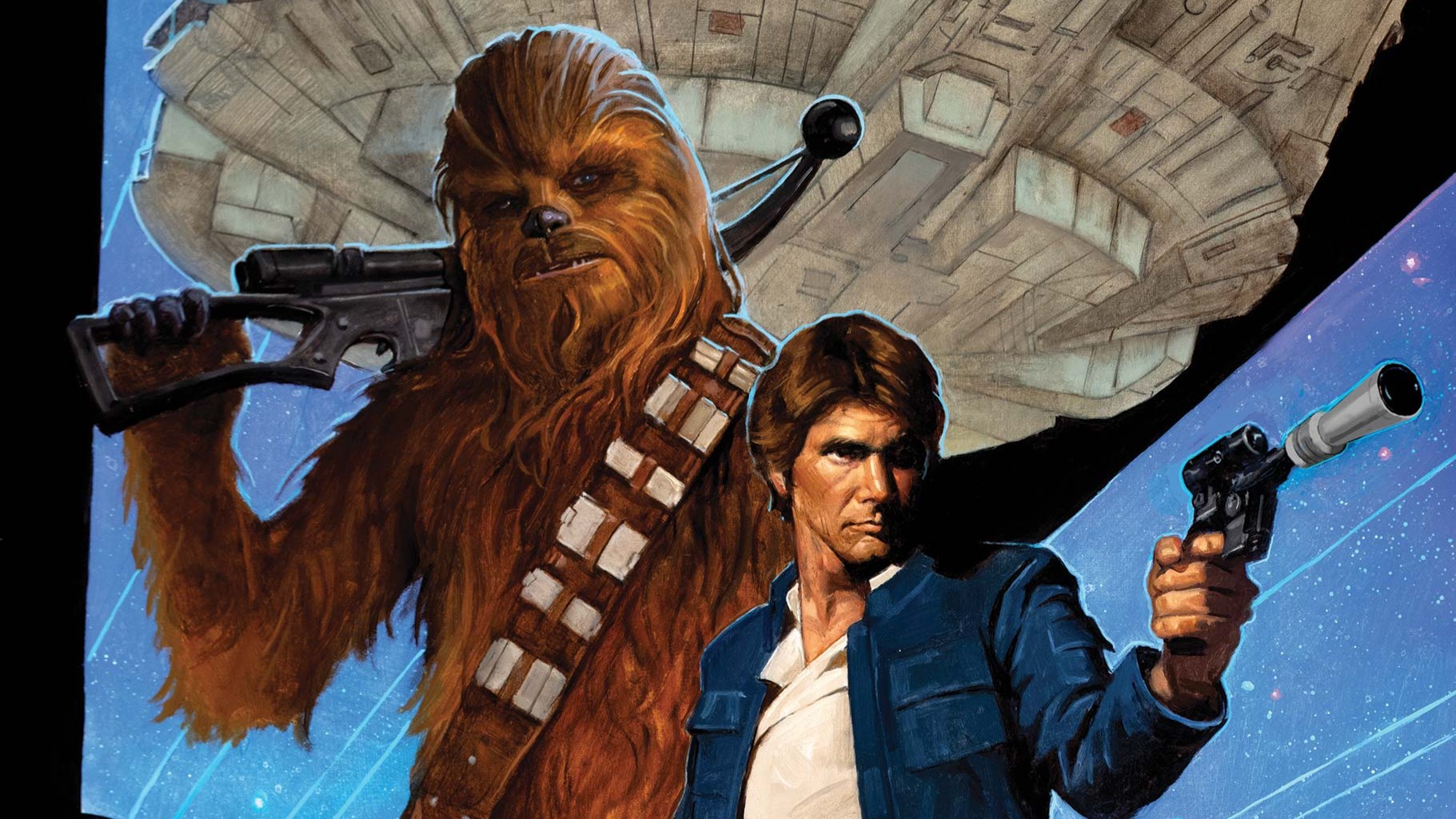
Star Wars: Han Solo — Hunt for the Falcon #4
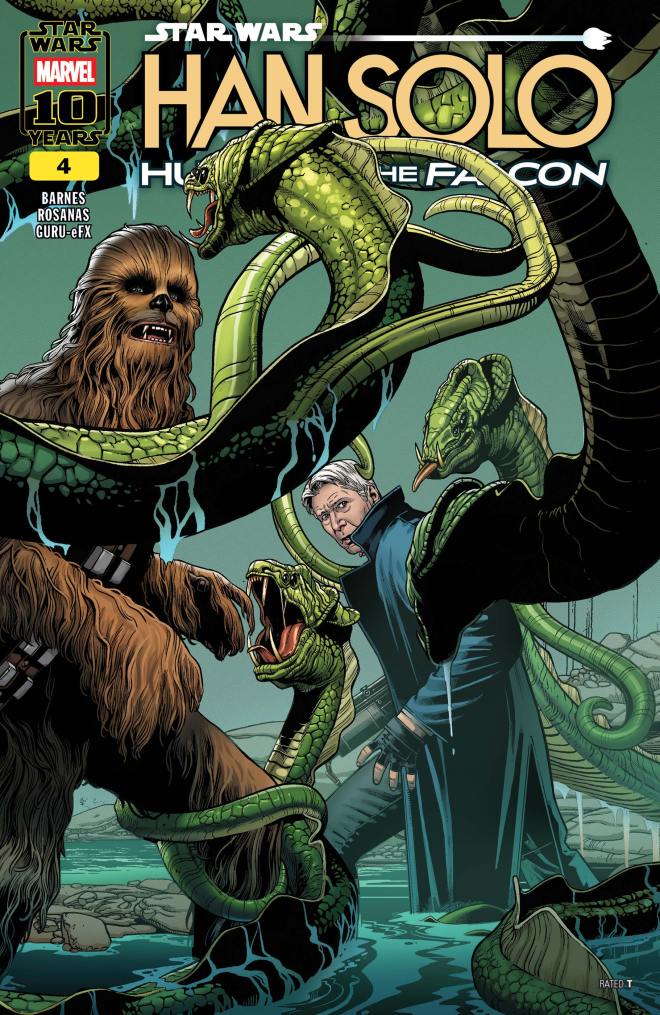
by Rodney Barnes & Ramon Rosanas
Han and Chewbacca escape from Unkar Plutt.
- Unkar’s security droids include an IG model, as well as an EV model (like EV-9D9 from Jabba’s palace).
- This is the first appearance of the Vorill serpents the duo fight in this issue.
- Luggabeasts first appeared in Star Wars: The Force Awakens (Teedo is riding one when trying to abduct BB-8 shortly before Rey rescues the droid).
Moreso than any previous issue, this feels the most like padding to get the mini to five issues instead of four. It doesn’t help that the big emotional moment — Han realizing he dragged Chewie away from his solid family life in service of, essentially, a mid-life crisis — is somewhat robbed of its impact by only one side of the argument being legible to readers.
Star Wars: Hyperspace Stories — Codebreaker #4

by Ethan Sacks & Marc Yarza
Poe defeats the Banshee of Bestine to secure a future for the Codebreaker.
- Z-95 Headhunter, the two-winged prototype X-wings, always make me think of the old Expanded Universe, which seemed lousy with them as an available example of proto-technology pre-Prequels.
- At one point Poe uses the idiom “Camtono of bolts”, replacing “bucket” with its Star Wars equivalent, which is one of those things Star Wars writers are wildly inconsistent about (there are plenty of English idioms throughout the saga — Han telling the deck officer he’ll “see him in Hell” in The Empire Strikes Back is my go-to example of that — yet sometimes, we get something like this, where they try to “Star Wars up” an idiom by replacing a key word or phrase with something Star Wars-specific).
- The dogfight sequence at the end is, unfortunately, a bit hard to follow, with the panels zoomed in so close it muddies the broader strokes.
Poe’s solution for the fate of the codebreaker — fake their death and deny their skills to both the First Order and the Resistance in the name of letting them live a normal life — is where this was always headed as a resolution, but I’m glad that in the end, Poe didn’t even tell Leia the truth (though she presumably has sussed it out herself), which gives the conclusion a little bit of extra zip.
Star Wars: Tales from the Nightlands #3 — Book of the Week

By Cavan Scott & Robert Hack
The Nightlander comes closer than ever to victory as it finds a host in the despondent Finn.
- This concludes the three issue, Halloween-centric, miniseries, having set one issue apiece in each of the saga’s three main trilogy eras.
- The planet Aaloth was first mentioned in the audio drama Tempest Runner, part of the High Republic imprint, and was also written by Scott. It is the homeworld of Lourna Dee, one of the chief High Republic villains. This is the first time it’s appeared visually.
- Hetzal, the source of the grain the Resistance is delivering, is another High Republic planet, the site of the Great Hyperspace Disaster which kicked off that storyline.
- This story is set between Star Wars: The Last Jedi and The Rise of Skywalker, which is really the only place any Resistance story involving the combination of Finn, Rey and Leia can take place.
- The Nightlander is more successful in this era than any other as its said hope is at its lowest point in the galaxy, which seems like an odd statement given the omnipresence of the Empire at its height, but even then, there were larger pockets of resistance scattered throughout the galaxy, whereas in the post-Last Jedi era, the entirety of the organized Resistance to the First Order can fit inside the Falcon.
Visually speaking, this is probably the least of the three issues (or at least, the less stylistic of the three), but the art certainly isn’t bad, and while the whole story is relatively straightforward (Nightlander tempts, era-specific main character resists, lather, rinse repeat), turning over each issue to a different artist helps bring some visual variety to the mix to make up for the narrative similarities. It also helps that at three issues/three eras, it gets in, does what it needs to do, and gets out (something other era-spanning stories have struggled to do). All in all, this miniseries on the whole is a success.

