
Robert Altman’s Take On Teen Comedy: ‘O.C. And Stiggs’ Reviewed
by Rachel Bellwoar
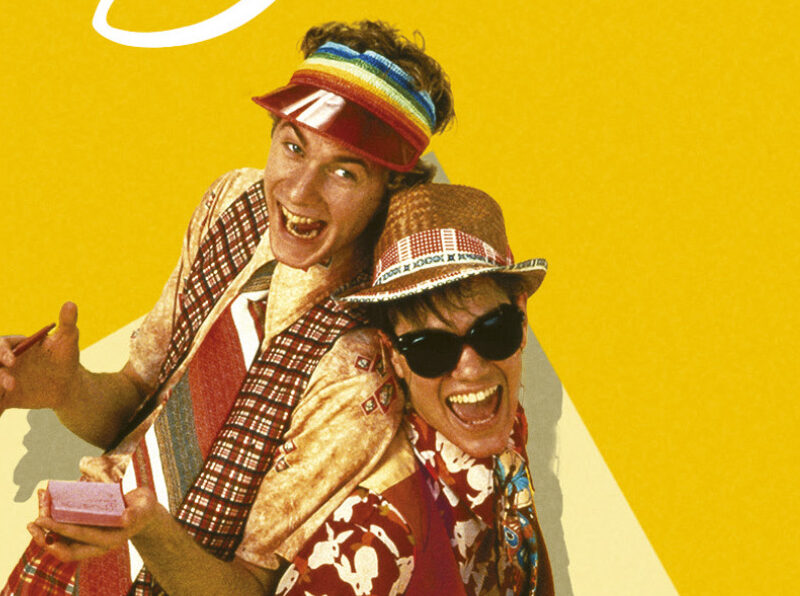
At one point in Hunter Stephenson‘s feature length oral history on Robert Altman‘s O.C. and Stiggs, Neill Barry (who played Stiggs) describes the film as “anti-John Hughes.” Altman himself admits to hating teen movies in an excerpt from a 2006 interview included in Radiance’s essay booklet.

Based on a series of stories that ran in National Lampoon magazine about two best friends living in Phoenix, Arizona, O.C. and Stiggs was co-written by National Lampoon‘s Tod Carroll and Ted Mann. Stephenson includes a quote from Mann in his documentary as well — Carroll had his name taken off the picture while Mann didn’t feel the finished film reflected his vision.
Altman may have hated teen movies, but he clearly was familiar with the tropes, even casting Pretty in Pink‘s Jon Cryer as one of the Schwabs. A family led by insurance man Randolph Schwab (Paul Dooley), who O.C. (Daniel Jenkins) and Stiggs have made it their identity to terrorize, it’s because of Schwab senior that O.C.’s grandfather (Ray Walston) doesn’t have the insurance money that might’ve allowed him to stay in his home. Now, grandpa’s set to move into a nursing home and, instead of getting to spend their senior year of high school together, O.C. and Stiggs are looking at a future where O.C. is sent to live with his uncle.
So on the one hand the film does give O.C. and Stiggs a motive for their campaign against the Schwabs, but is it merely an excuse?
Whether O.C. and Stiggs are really being class-conscious when they antagonize the Schwabs is probably giving them too much credit. Still, while the film on a surface level has all of the tasteless elements you’d expect from a teen movie and revels in chaos for chaos’ sake (like Stiggs telling a guidance counselor to call him Stiggs just because, “It sounds more ridiculous”), it also finds ways of subverting the crudeness and addressing societal ills in ways not expected from teen movie fare.
At various points, O.C. and Stiggs spend time with Vietnam vets and the homeless. One of the vets is played by Dennis Hopper, while directing great, great Melvin Van Peebles, plays Wino Bob (a name that would raise eyebrows if the character didn’t choose it for himself). Those are the little, subversive touches (along with casting Van Peebles) that flip certain scenes on their head and add layers to moments MGM clearly wanted to be more straightforward (as their delayed and limited distribution of the film indicates).
That isn’t to say O.C. and Stiggs should be let off the hook. Author Brad Stevens definitely comes down harder on them in his booklet essay (and arguably rightfully so as Stevens tries to differentiate between the intent of the film and their deplorable behavior) but this is a film that is working on a lot of different levels, mixing high art (like references to Fred and Ginger and musical performances by King Sunny Adé) with cartoon antics and sound effects.
It’s through these absurd twists and situations, like suggesting O.C. and Stiggs traveled to Mexico by inner-tube, that the film is able to scorch its own rebellious path, and the cast (including a particularly on fire Jane Curtin) is typical of the caliber actor Altman was able to attract. I don’t particularly remember how other films have dealt with Altman’s overlapping dialogue, but the subtitles on Radiance’s Blu-ray are often abridged or single out certain conversations. Maybe that’s to help with readability (cutting out words so viewers can keep up) but the subtitles feel incomplete.
As already mentioned, Radiance’s Blu-ray includes Stevenson’s documentary, which is longer than the film itself and includes audio with cast members like Barry, Jenkins, and Tiffany Helm. A commentary would’ve been great as well to touch on scenes like when O.C. and Stiggs visit a car dealership. When they first arrive, all of the cars on the lot are for kids, but then they’re suddenly real cars when they leave. Was that a budgetary choice? A creative decision? I’d love to know more.
Radiance’s Blu-ray also includes an interview with camera operator (and one of Altman’s sons) Robert Reed Altman. Another of Altman’s sons, Stephen, can be heard in the documentary and was an artistic consultant on O.C. and Stiggs. The best part is that for the interview, Robert Reed is wearing a 3 Women hat and Long Goodbye t-shirt, completely repping his father’s movies.
O.C. and Stiggs is available on Blu-ray from Radiance Films. It’s definitely not John Hughes, like Barry said, but that means it’s not as cringey either.
