
Snap Into Marvel: ‘Origins Of Apocalypse’ Plumbs The Past For New Objectives
by Austin Gorton
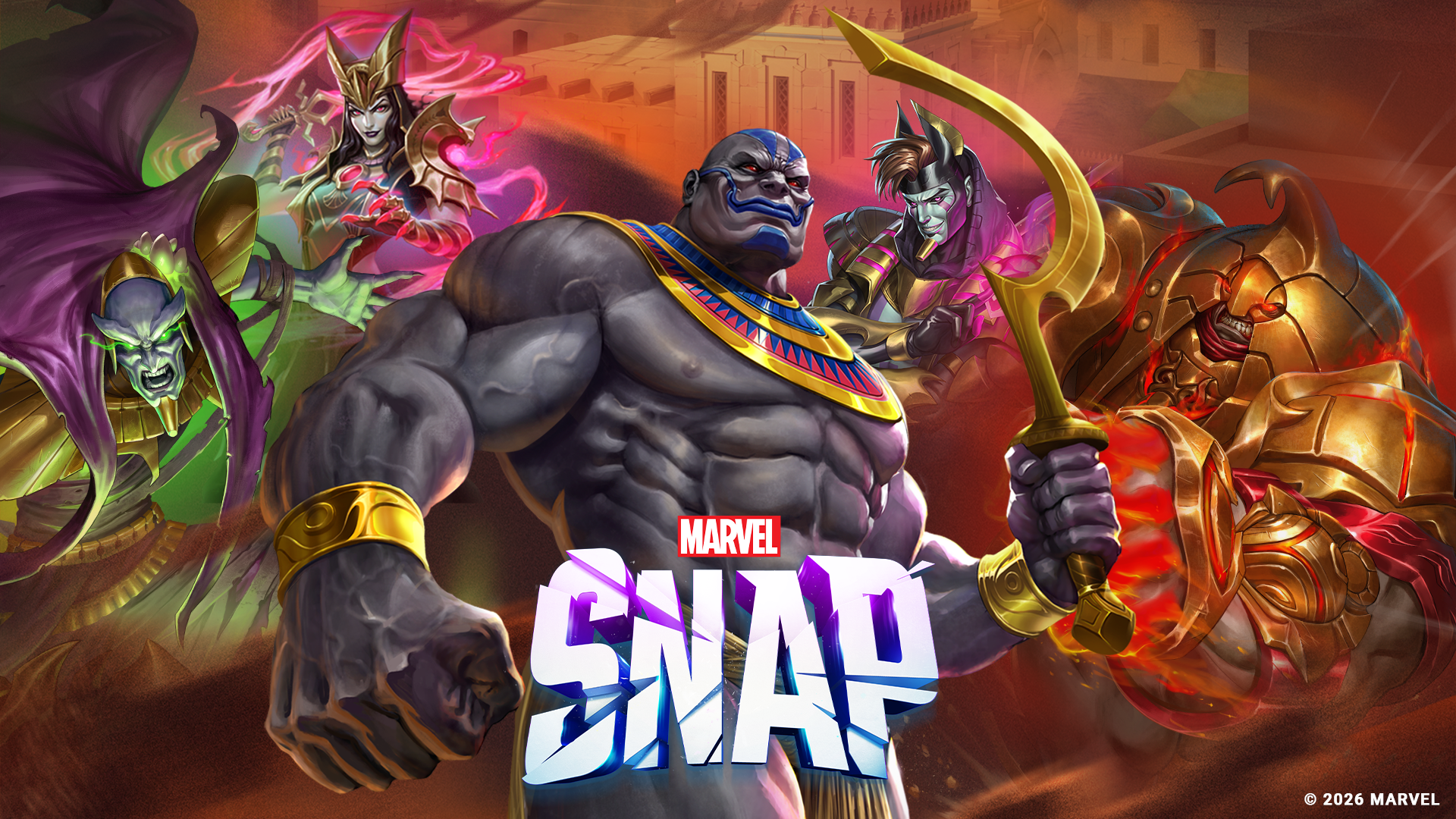
The new season of Marvel Snap brings with it the usual influx of new characters — this time, pulled from Apocalypse’s origins, from Arrako to ancient Egypt to an assemblage of Horsemen — but perhaps more importantly, a new game mechanic: Objectives.

Objectives are essentially time-delayed On Reveals or Activates. An effect happens, but only when certain conditions are met. It’s a clever way to add a new dimension to the game – now, not only do you need to clock what deck your opponent is playing, and predict where they’re likely to play expected cards, but keep track of if and when they may meet the an Objective (thankfully, the Objective cards have a little icon that is visible to both players which helps in this area).
Will this push Snap into becoming even more of a cerebral game where you have to be constantly playing Fourth Dimensional chess with your opponent vs. just slamming down some fun cards with cool powers to win? Possibly! Only time will tell, and appropriately enough, Apocalypse is nothing if not patient.
On the new character front, this batch continues Marvel Snap’s recent approach of mixing in new characters with new versions of existing characters. Isca the Unbeaten, Caliban, Ozymandias and Rama-Tut are all new characters to the game, while Juggernaut, Gambit and Selene get new cards as Horsemen. Curiously, while Caliban and Gambit both have a comic book history serving as Horsemen of Apocalypse, neither Juggernaut nor Selene do, making their inclusion as such here unique to the game (leading some to speculate we may see them as Horsemen in the upcoming second season of X-Men ’97).
Also of note, Caliban is getting a “character variant” before receiving a “baseline” card – while Caliban has served as both Horseman of Death and Pestilence at various times, he debuted before Apocalypse and has a history that predates his later association with Apocalypse. Hopefully we’ll get a “regular” Caliban card someday as well.

In terms of gameplay, here’s where I’d rank the new cards.
- Isca – One week into the season and this card has already singlehandedly revived the End of Turn archetype. It can win a lane on its own, is utterly broke if it gets doubled, and has value outside of dedicated End of Turn decks.
- Sandstorm – Under reasonable conditions, this can result in two 1/6 cards in hand, better than the Kate Bishop arrows, and that’s before Victoria Hand or the next card get involved.
- Ozymandias – This is one of those cards that is going to be great with Sandstorm and little else, but it can become a monster card with Sandstorm. It is theoretically capable of reaching 27 with the stones, and being an Ongoing gives it a little flexibility.
- Gambit: Horseman of Death – A slightly more targeted version of Gambit 1.0 in exchange for a slightly cludgey triggering Objective. Okay on its own, dangerous when doubled. This is a card you’re going to enjoy when you’re playing it, and hate when it’s played against you.
- Caliban: Horseman of Pestilence – This one beats out Selene for having an immediate home in the revived Doom 2099 archetype, but Omega Sentinel already does what this card does without all the Objective hoops, so it’s not a game-breaker or anything.
- Selene: Horseman of Famine – There’s some synergy here with Sandstorm and Ozymandias, and it might help give a boost to Clog decks. But even 4/9 isn’t that strong.
- Rama-Tut – A total crapshoot of a card in terms of winning games, but this is one of the game’s best examples of translating a character’s comic book schtick into a card ability, and I love it for that. It’s okay for a card to just be fun.
- En Sabah Nur – Our entry point to the world of Objectives, En Sabah Nur is a bit like Rama-Tut in that he’s fun and unpredictable, but there’s easier ways to deal with low powered cards (Merlin, Misery) you want to clear out.
- Juggernaut: Horseman of War – Eight power is nothing to sneeze at in a 2 cost, but the terms of its Objective means it can’t just be dropped into any deck and may prove too confining to gameplay in later rounds than the points are worth.
Generally speaking, a weak Season Pass card (which sticks out even more after the consecutive meta disrupting releases of Shou-Lou and Star-Lord 2) obscures a pretty solid batch of cards. It’s a low-ceiling, high-floor kind of season: there’s not a ton of “must play” here, but also, very few cards that are objectively bad.

