
Commentary: ‘Swapped’ Works Because Of Its Fantastical Conceit
by Frank Martin

Fantasy is a very powerful tool for a story. It allows plot and characters to extend beyond the natural world. When that’s the case, it sets the audience up for profound leaps of logic making the story easier to navigate. Plenty of children’s films utilize anthropomorphic characters; these are everyday animals such as birds and chipmunks that talk and act like regular people. Swapped feels very much like this kind of story, but its animals exist in an entirely fantasy world, which not only makes its magical plot feel believable, but also provides more strength to its thematic message.
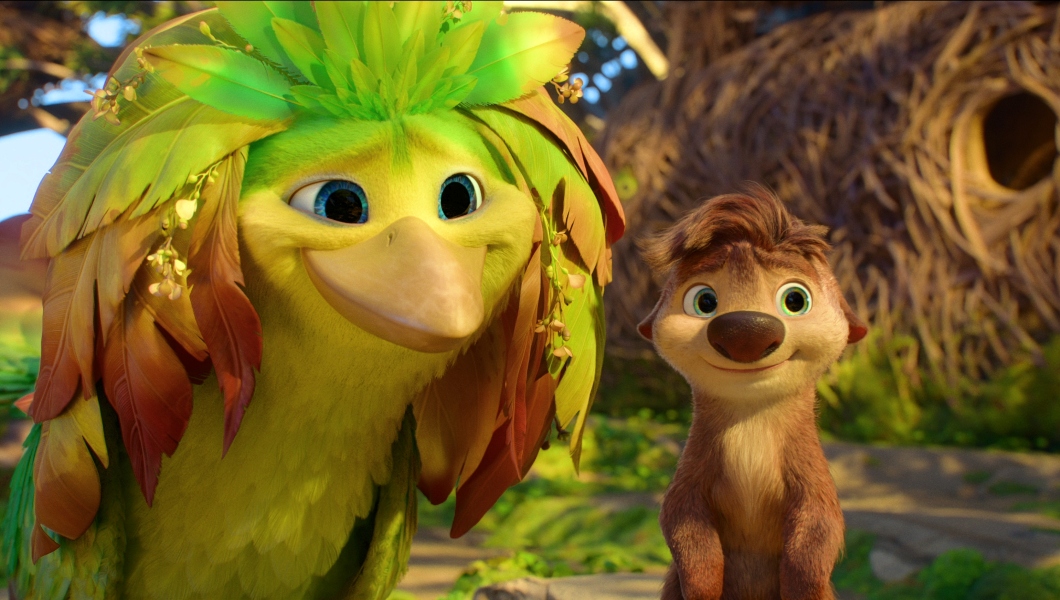
The story centers on Ollie (Michael B. Jordan) — a small rodent creature named a Pookoo — and Ivy (Juno Temple) — a bird called a Javin. Both species live in a valley tormented by an angry beast called the Fire Wolf. With the help of a fish named Boogle (Tracy Morgan), they find pods that allow creatures to become a different species. Swapping bodies causes the different animals to see the world in a different way, thus easing the tensions between them and allowing them to live together rather than at odds with one another.
Setting the story in a fantasy world obviously works well with the magical aspect of the pods allowing the animals to swap species. At the same time, the fantasy world wasn’t absolutely necessary. It’s perfectly plausible to have set this story in the real world with real animals and just create a magical or pseudo-science element that could do the swapping. But the fantasy world serves another purpose; a major theme of the film is unity and understanding the perspective of another. This would have been very difficult to pull off with real world foils of the animals such as a hawk and a squirrel. Instead, the story’s theme becomes easier to grasp in a world rooted in fantasy with imaginary creatures.
Swapped is now streaming on Netflix.