
More Like Impossible Nightmare: An Interview With ‘La Mancha’ Writer Christopher Sebela
by Rachel Bellwoar
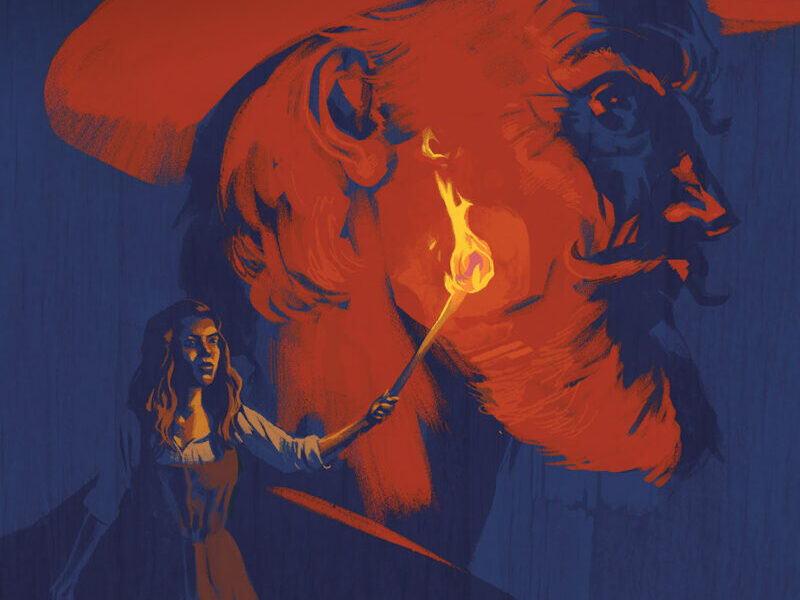
Readers expecting the Don Quixote who sings “The Impossible Dream,” be warned: there is nothing inspirational about the bloodshed being caused by this knight errant in writer Christopher Sebela and artist Ibrahim Moustafa‘s new series, La Mancha. With colors by Brad Simpson and letters by Joe Sabino, here’s what Sebela had to say about adapting Cervantes’ novel and going the horror route with this story:

Rachel Bellwoar: As someone who came to this series as a fan of the musical, how did you first encounter the stories of Don Quixote?
Christopher Sebela: My first real exposure to the story was via the musical, in a roundabout way. There was an episode of Quantum Leap where Sam leaps into the Don Quixote understudy in the Man of La Mancha musical. I saw that as a kid and got those songs stuck in my head basically for the rest of my life. Which set me up for when I got older, to finally dive into the actual book. Managing to find my way to this classic of literature and theater by way of a cheesy 1980s sci-fi show feels like the ideal Me story.
Bellwoar: While the title of the musical, Man of La Mancha, centers the “man,” was it a deliberate choice to make the title of this comic a place (La Mancha) instead?
Sebela: For a while, I was calling it “Madman of La Mancha” as a placeholder. Which I still think is a cool title, but probably more fitting for a 1970s drive-in exploitation film. When Mad Cave proposed the title, it made sense because it isn’t just the setting; it’s also the thing Quixote claims he’s doing all this insane stuff for — to save La Mancha. It’s what Sancho signs up for, too. Dulcinea has hardly seen any of this land outside of her farm and her village, so this idea of venturing out into La Mancha is scary both for the newness and all the stuff out there that’s a threat either physically or to her acceptance of this life she’s inherited. La Mancha is a symbol to each of them that means something completely different.
Bellwoar: In the first issue, we get to see more of the impact Don Quixote’s obsession with Dulcinea has on her. How was it getting to highlight her experience of these events?
Sebela: Dulcinea is who I immediately thought about when I was getting my initial ideas about the book. In the original novel, Quixote is loudly telling anyone that everything he does is for her, no matter how insane or harmful, but we never see the actual Dulcinea. I was curious more than anything to see what her actual life is beyond this imaginary figure Quixote has in his head and how she’d react to being dragged out of her normal life and forced to be someone’s murder muse. That’s what excited me most when I began figuring things out, so she and her experience are really the heart and soul of the book for me.
Bellwoar: The tone of other adaptations of this work is sometimes whimsical or silly (the man who sees dragons instead of windmills), or sad, in terms of the treatment of Don Quixote, but this version is very much a dark and violent tale. Why did you choose that approach to the material?
Sebela: That approach of Quixote as a serial murderer who is being hunted by Dulcinea came from Mad Cave, who asked if I’d be interested in pitching my take on the idea. Right away, I got excited as someone who’d read the novel and also spent way too much time in my teens reading about serial killers. The idea of one running around in the 1600s was the kind of twist that made the idea of writing about them seem really interesting in a way that writing about some modern-day monster could never be. Taking Quixote from this comedically delusional knight who is his own worst enemy to a terrifyingly delusional knight who is everyone in La Mancha’s worst enemy made sense, so I chased it to see how far down and how dark I could take things.
Bellwoar: Class has always been an aspect of this story, but one I didn’t necessarily pay as much attention to before. Why did you feel it was important to underline Don Quixote’s standing as a hidalgo in this story (it certainly seems to impact Sancho’s willingness to travel with him)?
Sebela: When I was refreshing myself on Quixote, his role as a hidalgo really caught my attention. They were a protected class who had their own court system, didn’t pay taxes and couldn’t be put to death unless the King specifically asked for it, but at the same time a lot of them didn’t have titles or any real power. That instantly made a lot of who Quixote is make sense to me, and how his spree could go on without being put down by some average lawman. But also, we have been living in this era of people with a little status getting away with things that everyday folks without the protections of wealth or fame could never expect on their luckiest day, and this felt pretty similar, so it became fertile material to sprinkle in amongst the mayhem and bloodshed.
Bellwoar: Of the many books you’ve written, High Crimes is probably still my favorite. What made you choose to make this project the one you reunited with artist Ibrahim Moustafa on?
Sebela: Ibrahim and I have been talking about working together on something new for a while now. When La Mancha popped up and we were looking for artists, I couldn’t resist thinking of him first, not just because I really wanted to collaborate again, but, as a fan, it had a lot of things in it I hadn’t seen him tackle before, and I was giddily curious to see what it would look like. Selfishly, I might’ve been a little nervous about this book and having a partner by your side who you know you’ve made good art with before takes a lot of the anxiety out of the equation.
Bellwoar: Thanks for agreeing to this interview, Christopher!
La Mancha #1 goes on sale December 16th from Mad Cave Studios.
