
‘Bergman Island’ Is A Dear John Letter To The Great Director
by Koom Kankesan
Bergman Island Is a Dear John Letter To The Great Director
Summary
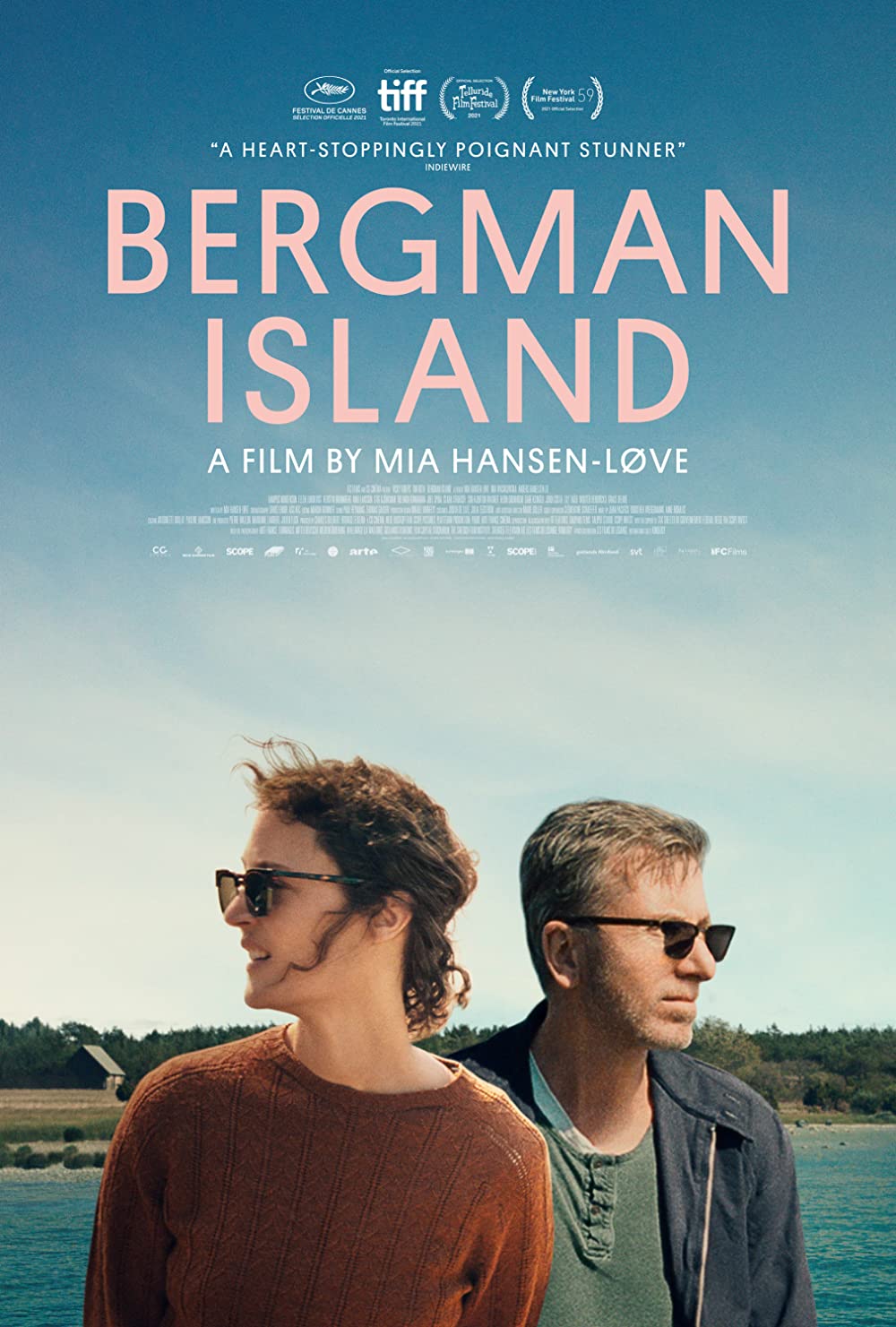
Mia Hansen-Løve‘s Bergman Island is the story of a filmmaking couple who visit Fårö Island, where Ingmar Bergman lived and worked. Rooted in the wife Chris’ perspective, the film questions the monomythical nature of Bergman’s oeuvre. Boasting excellent performances, this film is a thoughtful look at creativity, idolization, and inequalities between the sexes.

Bergman Island, the new film by Mia Hansen-Løve is a complicated love letter to the films of Ingmar Bergman, especially those shot on Fårö, the island north of the bigger island Gotland, near Sweden’s southeastern coast. Fårö also became Bergman’s residence after he fell in love with its landscape during the filming of Through A Glass Darkly (1961). Some of the rather searing and weighty works that have been shot on Fårö are Hour of the Wolf (1968), Shame (1968), The Passion of Anna (1969), and of course Persona (1966). All of these feature Liv Ullmann, not to mention other Bergman regulars like Max Von Sydow, Bibi Andersson, and Erland Josephson. For lovers of Bergman’s films, the island is central to that second half of the great director’s oeuvre, its sere, rocky landscape evocative of the stark beauty in Bergman’s films and mind.
It is typically for this reason that the film’s protagonists Chris (Vicky Krieps) and Tony (Tim Roth) come to Fårö. Chris and Tony are a filmmaking couple although they work on different projects. We get the feeling that Tony is more successful than his wife as he has been invited to attend the Bergman Week festival and present his film, and is constantly dealing with problems (obligatory appearances, talks, phone calls, fan adulation, the nervous impatience that comes with these things) that only the truly successful complain about. Chris, on the other hand, is simply trying to flesh out the outline for her own film and much of Bergman Island is told through her perspective.

This shouldn’t come as a surprise to anyone familiar with Bergman’s work – the auteur certainly preferred female subjects and Vicky Krieps certainly does a great job of teasing out the various ambiguous concerns Chris feels as a woman surrounded by Bergman-mania on the island where Bergman lived, in his very home and studio even. We feel Hansen-Løve really grappling with the less pleasant aspects of Bergman’s life, especially his poor performance (i.e. non-existence) as a father and partner (nine kids with six different mothers!). The Bergman fans, including Chris’ husband Tony, seem to have no problem with this disjunction but Chris continually questions the burden placed on women to be mothers and homemakers, supporting their husbands, thus making it impossible to achieve the same glorious works the mythologized males do.
John Donne wrote that “no man is an island” but no man or woman should especially be Bergman Island. Things go wrong on Bergman Island in Bergman’s films. Horribly wrong. However, Hansen-Løve’s film is more of a teasing out, an unravelling of some of those sticky threads which stitch up various lives. There is no catastrophic and climactic shattering common to the Bergman experience. No, although there are many nods towards Bergman films (Chris buys the same pair of shades Bibi Andersson wore in Persona for example), Bergman Island is not interested in the same kind of intensity and terror that drove Bergman. Instead it’s more like one of the films of Olivier Assayas (whom Hansen-Løve worked and lived with) or perhaps even Abbas Kiarostami.

Perhaps the aspect of Bergman Island which approaches the pain inherent in Bergman’s films is the film-within-a-film. This film-within-a-film is the narration and depiction of Chris’ treatment for her own project. As she tells her idea to Tony (even while he deals with his own distractions) hoping he will give her an ending, we see her proposed film unfold. It is the story of Amy (Mia Wasikowska) and Joseph (Anders Danielsen Lie), former lovers who come to Fårö for a wedding and contend with the reignition of their relationship whilst going through the adversarial maneuvers of parsing it out. I love this aspect of the film. Something about Chris’ introductory narrations and the way Mia Wasikowska embodies each tender moment and stage of Amy’s heart wrung trip enthralls me. What happens is not so important as following that nuanced, emotional ride. Amy, like Chris, is also a filmmaker and so what we have is a woman filmmaker’s ( Hansen-Løve) meditation on a woman filmmaker’s (Chris) meditation on a woman filmmaker’s (Amy) meditation on her life. If that isn’t trippy enough, it all intersects with the work of the granddaddy of all film auteurs who focused on female protagonists.
The ending of the film (which pays some homage to trippy Bergman techniques) either fast forwards to Chris actually making her film or dreaming about making her film, with actors being addressed on Fårö by their real names. This is more of a Kiarostami trick than a Bergman one and ultimately, the film is not so much a celebration of Bergman (despite loving shots of his house, key locales, etc.) as an unravelling of him. This unravelling, precisely because it is not Bergman-esque, might slip the viewer’s notice. Pay particular attention to the hilarious ‘fuck Bergman’ speech delivered by one of the film-within-the-film’s characters. Bergman Island seems to end happily, bringing Tony back after he has gone to pick up their daughter June, and Chris peeking out from a windmill on sunny bright Fårö. However, the viewer is left with questions about what happened, the undercurrents below the staid relationship and reality, and whether this is a relationship in ascent or decline. Similarly, our relationship with Bergman’s work is troubled, and we have to question the momentous nature of his stature in relation to the inequality and abuse suffered by women in the film industry. It’s a film with a gentle, slightly transcendent feel, warm and glowing like a summer cloud on Fårö but also chilly and sharp like the waves that lap against its shores.
