
Field Report: Fan Expo Canada 2023 – Friday’s Panels
by Koom Kankesan
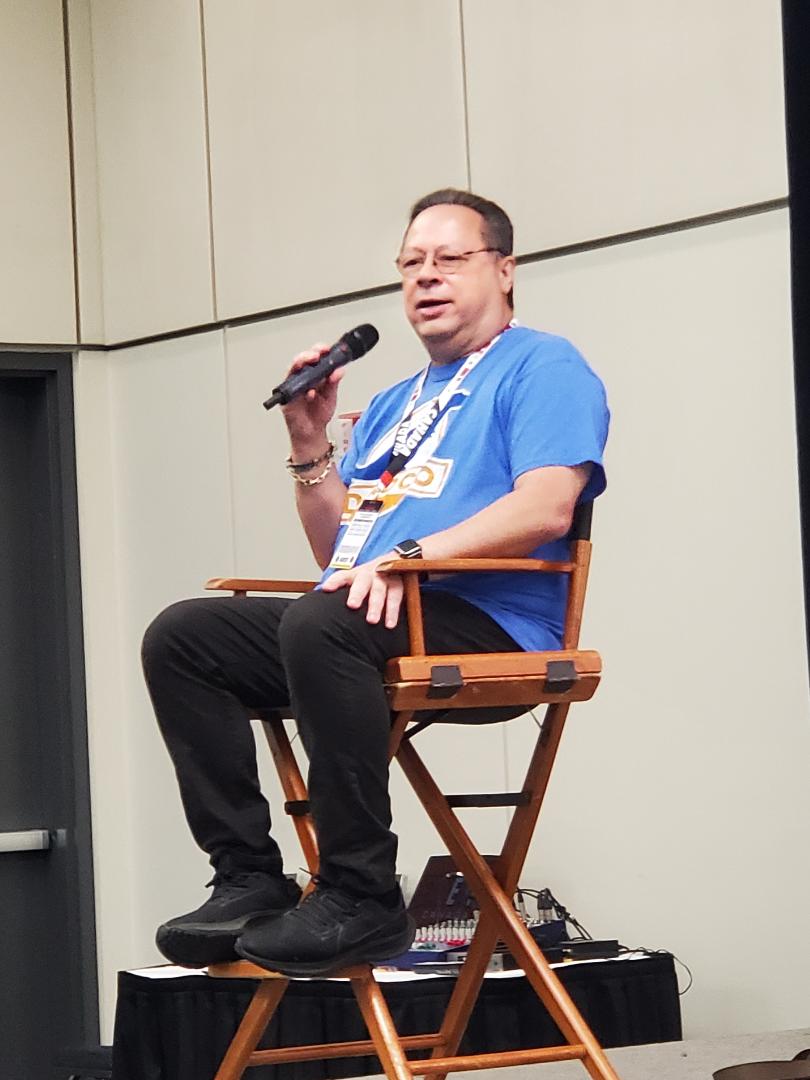
These are the panels on Friday I caught at Fan Expo Canada (in Toronto, August 24th-27th). The first featured ex editor-in-chief of Marvel Joe Quesada answering questions about his career. A member of the audience asked Joe how he had come to do the Marvel Knights line in the ’90s. Joe related how he and his creative partner Jimmy Palmiotti had been invited to pitch Marvel in the wake of the Heroes Reborn projects by Image artists – Heroes Reborn hadn’t been all that successful. They wanted to ask for four titles (Daredevil, Black Panther, Punisher, and The Inhumans) but instead came up with the idea of asking to be editors-in-chief of Marvel for a while, knowing they’d be refused. However, after the refusal, they were offered the chance to edit four titles and therefore got what they originally wanted. They picked those four titles because if they had picked more successful properties, there was a chance of failing on them and facing the repercussions. Of these four properties, only Daredevil had a title at that time and sales were very low.
Queseda talked about meeting Palmiotti at San Diego in line for hamburgers when they were both struggling to get work in comics. He talked about later working as editor-in-chief of Marvel and how early in that job, ex-editor Tom Defalco offered this advice: “you have to have a broad back or quit… because anything that goes wrong will be your fault. Anything that goes well will be in spite of you.” Another interesting anecdote regarded his creative meeting with Stephen King when Marvel licensed King’s properties and how mind blowing it was to hear King rattle off creative ideas within the span of an impromptu meeting. Queseda said that King not only came up with usable ideas out of thin air but worked them out in three-act structure, which explains King’s ability to be as productive and quick as he has been with his own writing.

My next panel was supposed to be the spotlight on Danny Trejo but I learned too late that Trejo had cancelled his appearance due to the flu. I was instead able to catch the very tail end of a panel were ex-alum of The Office Brian Baumgartner, Leslie David Baker, and Kate Flannery responded to questions from the audience. They were in great spirits and when someone asked them to talk about under appreciated guest stars on The Office, Baumgartner mentioned Amy Ryan who acted as Michael Scott’s love interest, Holly Flax. I thought this was a great response as Ryan is a great, versatile actress who can play both dramatic and comedic parts extremely well.

Coming back to comics editors, there was a panel featuring Bill Morrison, editor in chief of Bongo Comics (they put out The Simpsons comics), and Jim Shooter, perhaps most famous for being Marvel’s editor in chief from 1978 to 1987. They talked about their various duties and experiences as editors. Morrison talked about changing Matt Groening’s (the publisher and owner of Bongo Comics) view on having a crossover between The Simpsons and Futurama. Groening had been against the idea and when asked why, replied that the two properties were not in the same universe. Morrison said, “If I come up with a way around this, would you let me pitch you again?” Groening reluctantly agreed and one of Morrison’s writers came up with using Brainspawn, aliens from an episode of Futurama which allowed characters to inhabit a fictional universe. Since The Simpsons was a fictional show in the past of Futurama‘s world, this became the device for them to proceed with the crossover.

My last panel was called “Lost in Toronto” and featured three novels and one work of non-fiction set in our fair city. I thought this was interesting as I’ve never seen panels devoted to literature or non-genre fiction at comic conventions in the past. It’s a great idea to have crossover between these two cultural domains and I think there should be a lot more crossover between ‘high’ and ‘low’ culture moving forward. The four writers on the panel were Tanya Turton, Nathan Whitlock, Denise De Costa, and Rebecca Rosenblum.
The first question that all four writers were asked was why they chose to set their books in Toronto as opposed to a major U.S. city (a U.S. location might make the books more marketable). They all talked about why Toronto was important to them and why it was important to reflect their experiences living in the city. Turton said, “Toronto is close to my heart. As a black queer woman, it’s important to let people know we exist.” Rosenblum talked about having written about Toronto for a long time. She said that just like a relationship with a person, her relationship with Toronto was real and had flaws. She feels it is important to work through the flaws and to help make Toronto a better place.

