
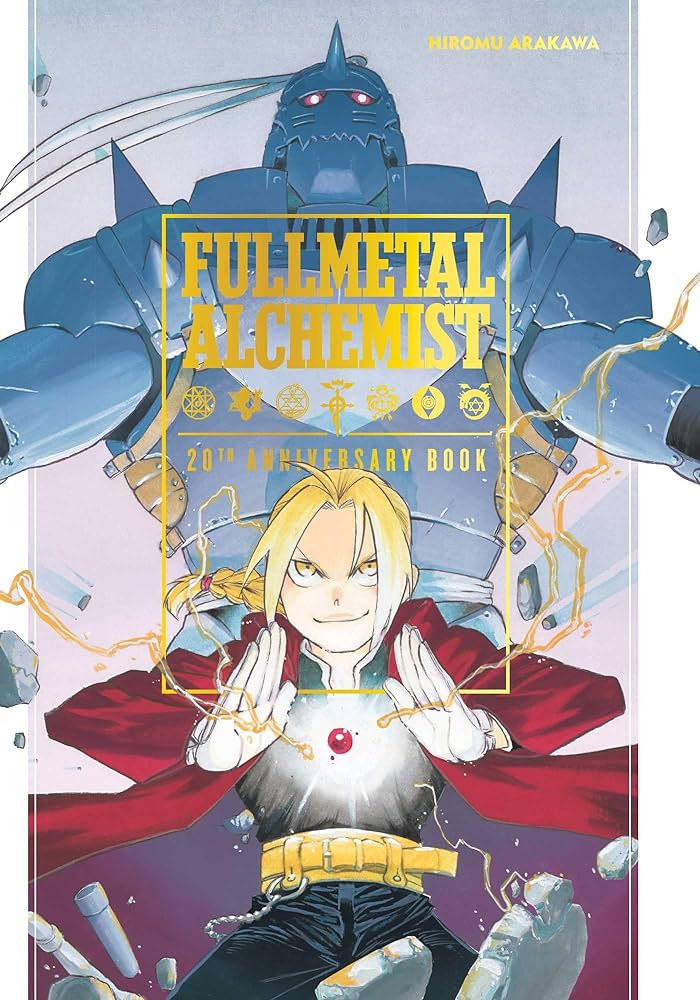
Review — ‘Fullmetal Alchemist: 20th Anniversary Book’
by Anna Lindwasser
Fullmetal Alchemist has been consistently rated as one of the best manga and anime series in history, and rightly so. It’s an emotionally driven, philosophical story that still manages to deliver when it comes to intense plot and exciting action. 2023 is the manga’s 20th anniversary, which is longer than some fans have even been alive.
In honor of that anniversary, Viz Media published Fullmetal Alchemist: 20th Anniversary Book. This celebration of the series contains all the comics that Hiromu Arakawa wrote to introduce media tie-ins like video games, movies, guidebooks, and more. It also features reflections on the series from Arakawa and other people who were involved in the series, like Romi Park, who voiced Edward Elric, and Makoto Inoue, who wrote the Fullmetal Alchemist novels.

I genuinely enjoyed this book. It’s a nostalgia trip – I first saw Fullmetal Alchemist 2003 on TV as a teenager and then saw the 2009 version as a young adult. Paging through this book took me right back to those experiences, and to those times in my life. I think that this will likely be the case for anyone who has read or watched FMA.
But it’s still a good read outside of the nostalgia factor. The comics weren’t just ads for tie-in products, they told genuinely interesting stories. My two favorites were probably The Blind Alchemist and The Long Nights, which were both featured in the FMA guidebook.
The Blind Alchemist saw Ed and Al visiting a renowned alchemist who is said to have actually succeeded at human transmutation. The outcome of all this is a huge spoiler, so I won’t reveal it, but I will say that it was both touching and thought-provoking. In her note at the beginning of the piece, Arakawa said that she was worried people wouldn’t like it because it has no redemption or resolution. I understand that concern, but I think it still worked really well as a window into the series’ world.

The Long Nights was a deep dive into Alphonse’s experiences without a body. He’s missing some senses, although he can still see and hear. He can’t sense temperature or feel pain, and he can’t sleep. He also can’t express his emotions the way that he used to. This is challenging, but it also offers him a perspective on life that he never had before.
Another thing about the book that stood out to me was Arakawa’s thoughts about the anime. The 2003 anime started off following the manga but then veered off in a totally different direction. I didn’t know this, but apparently, production started when the manga had only barely begun. At that time, Arakawa didn’t know exactly how she planned to end the story, so she couldn’t give the anime staff a lot of concrete information. She said she regrets not being more specific, but she was still happy with the outcome of the series. I appreciated the insight into the process, and it was nice to hear that she didn’t feel like her work had been desecrated.
Overall, this is a fantastic book for anyone who considers themselves an FMA fan. It nails its job of celebrating how far the series has come, but it’s not just self-congratulatory – it also offers substantial content.
Note: I received a free copy of this guide in exchange for the write-up. The content of the review represents my opinions and not necessarily those of Viz Media. You can buy a hardcover copy starting on October 31st, 2023
~~~
For more of my work, check me out at Ranker, at Medium, on Twitter @annalindwasser and @sinistealatte, and on my website annalindwasser.com. If you like my writing and want to help pay for my Crunchyroll subscription, you can donate to my Ko-Fi.

