
New To You Comics: The End Of Days In ‘X-Men: Days of Future Past’
by Tony Thornley
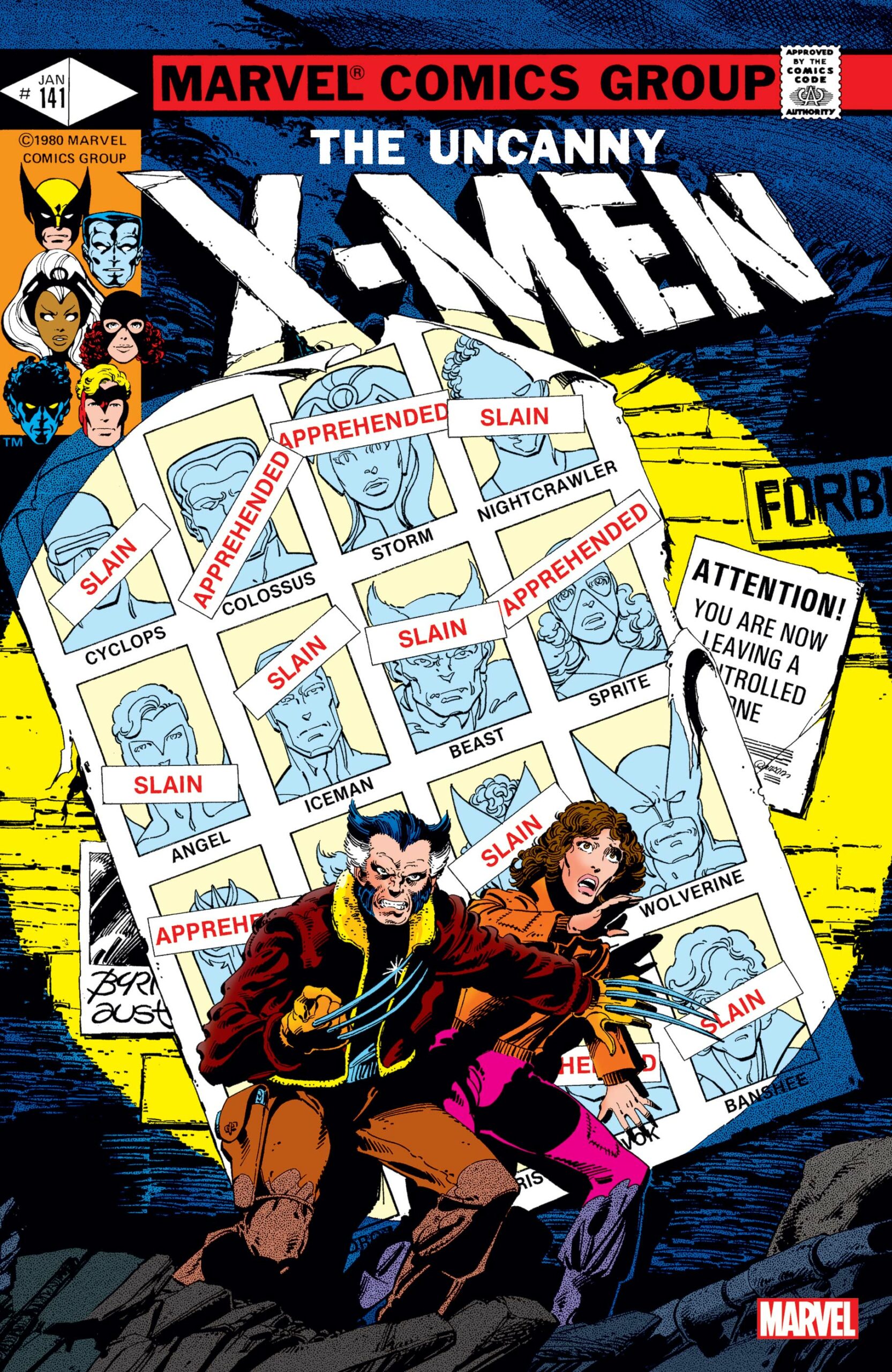
Each of us has different tastes in comic books. Some of us are a little country, others a little rock n’ roll. For November, we’re focusing on dystopian themes because…well why not? Comics are filled with these bleak looks into the future. And few of them are bleaker than Days of Future Past, which was originally published in The Uncanny X-Men #141-142 back in 1980, as we begin our look at dystopias for November!

Created by Chris Claremont, John Byrne, Terry Austin, Glynis Wein and Tom Orzechowski, in 2013, the X-Men are practically extinct. Now a team of the last five surviving X-Men hatch a desperate plan- sending Kate Pryde-Rasputin back in time to 1980 to save the life of Senator Robert Kelly. Once she’s traded places with her teenage self, Kate must convince the X-Men she’s telling the truth before Mystique’s new Brotherhood murders Kelly, Professor Xavier and Doctor MacTaggert!

Tom Smithyman: DOFP really set the stage for so much of what was to come – not just in the X-Men and Marvel, but for so many other stories. This much copied and parodied tale sends Kitty Pryde’s mind backward in time to a pivotal presidential election. In the altered future timeline, the much-feared Sentinels have taken over North America. Most of the mutants are dead and those who are left are imprisoned in internment camps.
It’s a familiar and well-known story that…wait a minute. Tony, how is it possible that a guy who loves his superheroes has never read this classic tale?
Tony Thornley: I’m going to be real- I have not done the “I’m an X-Men fan, time to read the Chris Claremont run beginning to end” journey. And while I’ve read most of two of the most notable runs- Claremont/John Byrne and Claremont/Paul Smith, I somehow missed Days of Future Past in there! I mean, I flipped through the trade and it starts with Jean’s funeral, then into Kitty’s introduction, then the bonkers Nightcrawler’s Inferno annual, and lastly Alpha Flight’s introduction.
That’s the first hundred pages of the trade DOFP is typically collected in, because as you said, it’s only two issues! That’s a whole lot of classic stories. Plus, the issue immediately following this arc is Byrne’s last- Demon- the Christmas story in which Kitty fights and kills a N’Garai solo.

A lot of Marvel fans forget that the Claremont/Byrne run lasts only about a year, but in that year we get pretty much every foundational story of the X-Men as we know them today.
Smithyman: Let’s start with the historical context, both in real life and in the comics. The story in the present timeline deals with the assassination of Senator Robert Kelly, an anti-mutant bigot. The timing is pretty interesting given that Ronald Reagan was elected just as this comic was coming out. I don’t know if writer Chris Claremont was commenting on the politics of the time, but the X-Men have always been a proxy for oppressed people, and Reagan was seen as extremely right wing back in the day.
It’s also important to look at this story in the context of the Marvel universe of the time. The Dark Phoenix Saga had only recently concluded, leaving Jean Grey dead (for the first time) and Scott Summers heartbroken. Scott has just left the team, leaving an opening for Kitty to fill.
Does that look back alter your feelings about the story, Tony?
Thornley: I love this specific era of X-Men so much. After Giant-Size, there was a certain degree of stability from the time Thunderbird died until the end of Dark Phoenix. Sure, Banshee, Beast, Angel and Jean rotated in and out as the story needed them to, but generally in that 3-ish year stretch, the line-up was very stable. This stretch to end the Claremont/Byrne run is all about change- Scott leaving, Kitty joining, Storm assuming leadership.

Then this story is thrown into the mix- both a time travel action story and a political commentary. Because it was a mass market superhero comic of the 80’s it really doesn’t get DEEP into the politics, but it’s there. The mutant metaphor didn’t truly exist until Claremont, but between this story and God Loves, Man Kills, it’s right in the forefront. It’s not a perfect metaphor, and that’s not worth litigating, but it’s an important one.
Smithyman: There’s so much to love with this story. One thing that I really appreciate is that this creative team packs so much into just two issues. If they were trying to tell this same story today in print, it would be a 12-part Marvel event, with spinoffs and tie-ins and Free Comic Book Day teases. But there’s no pretense here. Claremont and illustrator John Byrne are just trying to tell a good story. And they knock it out of the park.
Now, of course, Marvel couldn’t leave well enough alone and keeps coming back to this story in print and even with a well-received cinematic version of events. But taken by itself, I think DOFP holds up remarkable well Tony.
Thornley: Hah, funny you say that, because there’s a “fill in the gap” miniseries being published right now.
But yeah, Claremont gets right to the point. Senator Kelly’s death is going to cause the mass extinction of all of Earth’s superhumans. Considering this was an era in which a new mutant was being introduced every couple issues, there’s a weight to that. And Kitty is such a good point of view character to explore it, since she’s only been with the team three or so issues at this point. To see the trauma this fresh faced character has faced gives it some true stakes.

A few things do fall flat a bit- Piotr and Kitty’s marriage and Franklin and Rachel’s romance both kind of just thud. The first is probably a page space issue, but the second probably needed some real estate, since we don’t know either character at all.
Also, I love a few bits of Moira’s dialogue that completely don’t make any sense after the HOXPOX retcon. The joy of serialized stories.
Smithyman: Can we talk about Byrne’s art now? I love how he is able to fit all of the X-Men and the Brotherhood of Evil Mutants (I love how their name embraces their naughtiness) into a single panel that runs across two pages. And then, there’s Wolverine’s death in the future timeline. Yes, Byrne devotes his cover to it, but while the death inside the comic is dramatic, it takes up only a quarter of the page. In a dystopian future will mutants are killed by the millions, this is just one more dead mutie. It’s a brave choice that would never be replicated today.
And we have to talk about the cover to #141. Talk about iconic! How many times have you seen a version of seminal cover recreated with different characters. Tony, I know you didn’t read the story, but you must have run into that cover a million times.
Thornley: Every bit of this story is so iconic. I hadn’t read it cover to cover, but honestly, I’ve read most of it through snips and general osmosis. So much of why it’s so enduring is Byrne’s art. There’s a lot about the guy that I don’t like about him personally, but as an artist, he and Terry Austin just make every panel look stunning. They pace everything so well panel to panel, the storytelling is very clean, and the designs and figure work look stellar.
There’s so much to like about the art in this arc. Glynis Wein’s color art is great at enhancing the look of the line art too. All around, just great stuff.

Smithyman: The impact of DOFP on the X-Men, Marvel, and popular culture is enormous. First, it introduced Rachel Summers into the mythos (though at the time, the fact that she was Jean’s and Scott’s daughter wasn’t revealed). The two-parter also brought time travel and alternate realities to the X-Men. There hadn’t been much of it prior to this story. We already mentioned the many homages, but of course Marvel itself has followed up with Days of Future Present, Days of Future Tense, Wolverine: Days of Future Past, and Weapon X: Days of Future Now, etc. etc. etc.
Tony, final thoughts on this story?
Thornley: There’s a reason why this story endures. I honestly think it edges out Dark Phoenix Saga as the best story of the era, and it’s one of the biggest reasons why the X-Men are frankly Marvel’s best franchise. And honestly, this is superhero comics at their best. This is a story I would hand anyone. Outside of Claremont’s purple prose, it’s aged extremely well. That’s a big reason it keeps getting revisited- beyond the current “filling in the gaps” mini being published, Marvel’s printing facsimile editions of both issues in the next two weeks!
Smithyman: So what dystopian nightmares are you bringing us next?Thornley: Scott and I shuffled some things due to schedules, so we’re going to do Kingdom Come next week, since we promised it this week!

