
Manga Review: ‘Neighborhood Story’ Vol. 1
by Anna Lindwasser
Summary
‘Neighborhood Story’ follows a young art student named Mikako as she struggles to define her relationship with her childhood friend and neighbor, Tsutomu. The two are enamored with each other, but Mikako isn’t good at expressing her genuine feelings and ends up talking to Tsutomu as if he’s her annoying little brother. As she tries to come to terms with her emotions, he starts dating someone else, sparking her jealousy and forcing her to rethink her approach.
Overall
8/10I’ve always had a major soft spot for Ai Yazawa’s work. NANA has left me in tears more than once, and Paradise Kiss was just so impressively fashionable. But I’ve never heard of Neighborhood Story, a 7-volume 1995 series, until I got a chance to read Viz’s new release of the first volume.

The two things that I liked the most about this volume were the realistic character development and the character design.
The characters feel complicated and realistic. In a lesser creator’s hands, Mikako and Tsutomu’s failure to communicate could have come across as annoying, but here it makes sense – they want to, but it’s hard and embarrassing. Mikako can perform big gestures like buying a motorcycle so that Tsutomu can drive her around on it, but she can’t tell him how she feels. Meanwhile, Tsutomu dates other people even though he isn’t interested in them because he assumes that Mikako doesn’t like him but is too afraid to actually confirm it for himself.
They aren’t the only interesting characters. I liked Mariko, although I did wish that the other characters didn’t call her “Body-ko” all the time. Her reputation as this beautiful girl who sleeps around and doesn’t get attached clashes with her more vulnerable romantic feelings…but it’s not like she doesn’t sleep around. She does, and it’s fine. Some of the characters slut-shame her, but the narrative doesn’t.
Many of the characters felt like precursors to the ones that appear later in NANA. Risa, who moved to Tokyo to be with her boyfriend who was in a band, felt like an alternate universe version of Nana Osaki. This was exciting from a meta perspective, as was the fact that Yazawa cast herself as the school principal.

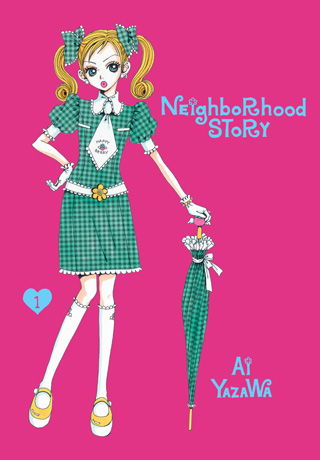
The atmosphere was created by the art style. The characters are drawn in Yazawa’s signature cartoonish, doll-like style, but they don’t look fake. Their expressions and body language get their emotions across perfectly. Because the characters are art students, they all dress in fun and inventive ways.
I’m a millennial who grew up shopping at Trash & Vaudeville and who is currently wearing a giant black sweater with fried eggs all over it. One of my best friends was heavily into Lolita fashion when we were teenagers, and my mother was an ’80s punk. I love alternative fashion, and I find the people who make it to be very impressive. The fashion is part of what draws me to Yazawa’s work in the first place.
Yazawa went to a fashion design school herself, so her depiction of these fashionable kids isn’t just aesthetically pleasing, it’s clearly based on real knowledge and experience. That’s what makes it special.
Overall, I enjoyed this volume and I hope to continue reading the series as it comes out. Also, if I can track down the anime adaptation, I am going to watch the heck out of it.
Note: I received a free copy of this manga in exchange for the write-up. The content of the review represents my opinions and not necessarily those of Viz Media or Shojo Beat. You can buy a physical or digital copy starting on December 5th, 2023.
~~~
For more of my work, check me out at Ranker, at Medium, on Twitter @annalindwasser and @sinistealatte, and on my website annalindwasser.com. If you like my writing and want to help pay for my Crunchyroll subscription, you can donate to my Ko-Fi.

