
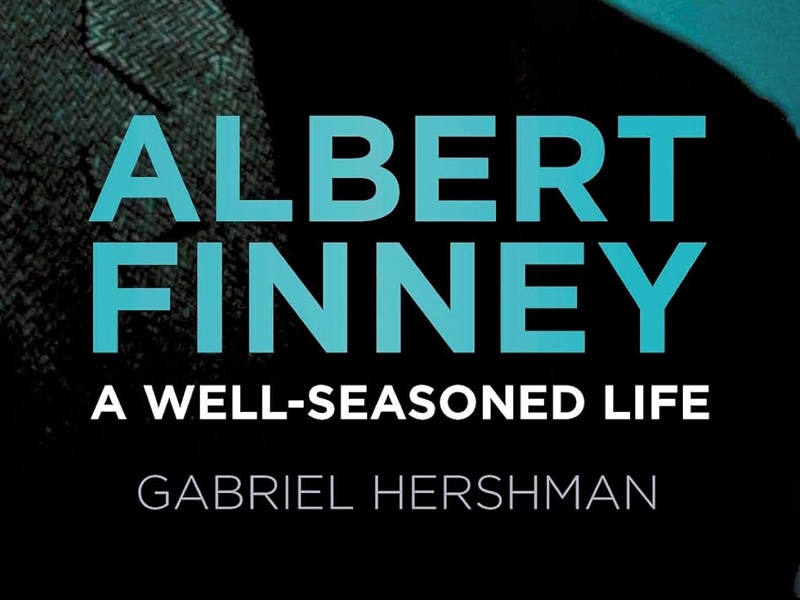
Book Review: ‘Albert Finney: A Well-Seasoned Life’
by Rachel Bellwoar
The job of a biography isn’t to flatter a person. It’s to tell the truth, but when your subject ends up being as likeable as (from all impressions) Albert Finney was, then sometimes reality gets to exceed your expectations.

With Hollywood biographies, especially, the concern is always the opposite – that you’ll come away finding out that an actor you’ve always admired onscreen might not be as pleasant off. Finney has only grown in my esteem since reading Gabriel Hershman’s Albert Finney: A Well-Seasoned Life and it’s been an absolute pleasure learning more about him.
That Hershman was able to create (what feels like, at least) a very comprehensive portrait of him wasn’t necessarily an easy task. While it sounds like Finney was honest in all of the interviews he gave, he didn’t give many, and while Hershman approached Finney’s lawyer about doing an authorized biography, Finney wasn’t interested (this was before Finney’s death in 2019).
The book gets the most fuzzy when it comes to Finney’s personal life. Did he stay in close contact with his sisters, for example? That’s hard to say. Hershman acknowledges that Finney wasn’t around much when his son, Simon, was growing up (though it sounds like they grew closer as adults) and many of his relationships with women didn’t last long. Overall the breakups sound amicable, and Finney never paints himself out to be a saint or like his behavior wasn’t a contributing factor in those relationships dissolving.
Professionally and personally, it doesn’t sound like longterm commitment was Finney’s bag. The artistic decisions he made as a result, though, are extremely exciting. Finney could’ve starred in Lawrence of Arabia, for example, if he had been willing to sign a five-year contract but he didn’t so – for what wouldn’t be the last time in their careers – the part went to Finney’s real-life friend, Peter O’Toole, instead.
That Finney was able to make these decisions, of course, is because he could afford to – especially after making Tom Jones – but fame was not the end goal and his willingness to take sabbaticals and his lack of ego afterwards in doing what was best for his craft (like taking smaller roles to reacclimatize himself to being onstage or onset) shows a lot of self-awareness on his part.
As a writer, Hershman isn’t without personality and if his thoughts on a performance differ from the general consensus he’s not afraid to say so (a candor I personally appreciated). Hollywood fans will be properly sated with tales of Charles Laughton and Lawrence Olivier being two of Finney’s mentors and how well he and Audrey Hepburn got along on the set of Two for the Road. However, while theatrical performances sometimes get short shift in these kinds of biographies (due in part to the fact that many of those plays weren’t recorded), Hershman makes them just as alive and thrilling to read about here as Finney’s film roles, even if they’re now lost to time.
While it’s always clear when Hershman is quoting from someone, it’s not always as easy to find his source (though there is a full bibliography and notes in the back and Hershman conducted some interviews with Finney’s colleagues himself).
Previously published in hardcover under the title, Strolling Player: The Life and Career of Albert Finney, I’m not sure what Hershman’s reasoning was for changing the title for the paperback edition, but Strolling Player: The Life and Career of Albert Finney is available now from The History Press.


