
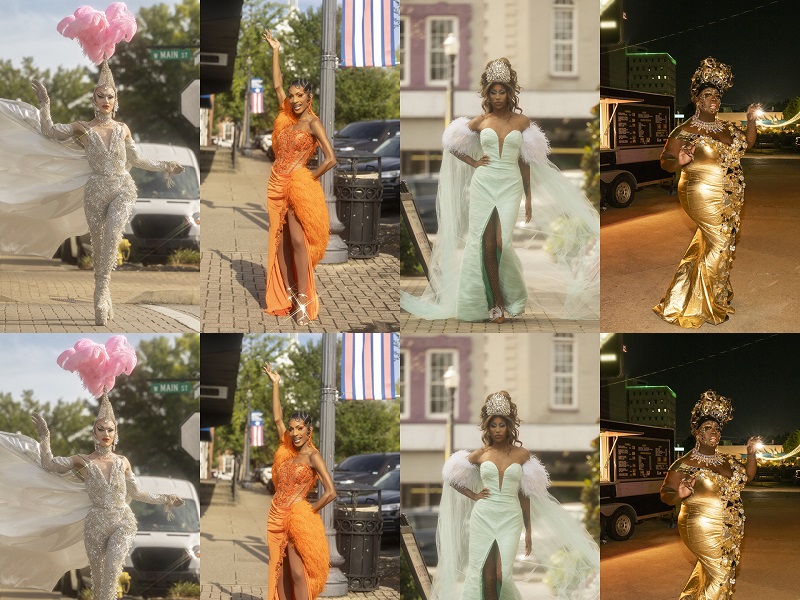
Talking Season 4 Of ‘We’re Here’ With Emmy-Winning Costume Designer Diego Montoya
by Rachel Bellwoar
Not all drag queens wear wigs (see Sasha Velour, one of We’re Here‘s new hosts alongside fellow Drag Race alums Priyanka, Jaida Essence Hall, and Latrice Royale) but they do all wear costumes. And in season four, Diego Montoya is back as part of the two-time Emmy-winning costume team that work on the HBO show. For more on what it was like designing costumes for this year’s crop of drag children and the often tight time constraints they had to work under, check out this interview with Montoya below:
Bellwoar: In a big change from past seasons, instead of each episode taking place in a different town (with the exception of a few two-parters), season four is split between two states: Oklahoma and Tennessee. What was it like not having to move around as much while transporting costumes and materials? Were you able to still find what you needed in the local places?
Diego Montoya: Although season 4 focuses on fewer cities for a longer time, we (the costume team) actually weren’t on location very long. At the beginning of each filming block, we’d fly out to meet our contributors (drag children) in person and take measurements. The costume builds happened in-studio and were brought with us when we flew out for the final performances. Sourcing materials in New York and Los Angeles made things much easier, but there’s always last-minute odds and ends we have to find on the road. There was a day where four of us were scrambling, trying to find ostrich boas in the right color available same-day – You look around at a hotel room converted into a workroom with sequins and rhinestones everywhere stressing over feathers and you just have to laugh.
Bellwoar: There might have been less travel involved, but working in Oklahoma and Tennessee right now, with the anti-LGBTQIA+ laws that have been proposed and passed, is no easy call. Did you feel more pressure to make sure the final show looks were very timely, as compared to past seasons?
Montoya: Slurs were yelled at us on the streets of Branson in season 1, [we] received warnings of the KKK around in Selma during season 2, and had our workroom doxed in Texas during Season 3 – So for us we have felt the urgency of needing to share these stories from day one. Since the very first episode of the show, we’ve felt a pressure and obligation to tell our contributors’ stories carefully and authentically. The focus has always been on each of them and their experience performing in drag. They are being so incredibly generous and brave to share their stories with us, we always strive to give as much back to them as we can.

Bellwoar: Ultimately do you feel that spending more time in each place helped the show accomplish more?
Montoya: In previous seasons we had to cut down weeks of filming into one short episode split between 3 or more storylines and there was so much that audiences didn’t get to see. The new format gives viewers a deeper insight to each town, which makes the drag children’s experiences living in these locations more resonant.
Bellwoar: What was it like working with the new hosts this season, and did you arrive at the same time as them or do you start later or before them?
Montoya: It was great working with the new queens! I’ve either worked with or chatted briefly to all of the new queens in some capacity before they joined, so it was exciting to get to welcome them onto this project we’ve built over the past 3 seasons. We started meetings early on, like we always do, but this time around we didn’t see everyone in person until later into filming.
Bellwoar: How much time do you actually have to work with the local participants in-person?
Montoya: This season we had substantially less time with the contributors than we normally do, so it was very important to get as much information as possible from our short time together.

Bellwoar: Do you get much advance notice, when it comes to the lip-sync songs and looks for costuming?
Montoya: Definitely not, hahaha. And the information we do get, often changes based on music licensing, casting changes or storyline developments throughout the doc filming. I don’t know if people realize, but the turnaround time is very quick. Sometimes things aren’t finalized until a few days before and between approval and dress rehearsal it can be a 2-day build. Part of the challenge of the show is designing costumes that feel specific, but can also remain flexible. There have been several performances that were planned specifically for songs that we couldn’t get the rights to, but you’d never know from watching. Everything happens for a reason and it always comes together in the end.
Bellwoar: Were there any costume mishaps or last minute changes you had to contend with?
Montoya: Oh my god, too many to count! But that’s the fun of live performance. It really feels like the whole town coming together to put on the play at the community center. It’s such a supportive environment that we create in the show spaces, with everyone we’ve met and spent time with over the weeks, so when things do go wrong it feels like a safe space. We’ve had zippers break, shoes fall off, reveals go wrong – everything. But part of the beauty of drag is getting to control what you present to the audience, so I always defer to the Queens. Their stories to share if they choose.
Bellwoar: Do you always bring alternate costumes for each person to choose from?
Montoya: We design all of the costumes specifically for each person and the number we are crafting as a team. Our budgets and timeline are extremely limited, so there’s very little room for error and even less time for changes. I wish we were able to build more, especially since the show has led to additional performance opportunities for some of our contributors. It would be amazing if we could set them up with other costumes for when they start booking gigs. We always try and give them anything we have left over at the end of filming. The crew will start breaking down the show and we are usually loading everyone’s cars up with scrap fabric, random shoes, unused jewelry, tights, everything! We probably look like a sparkly queer traveling circus.

Bellwoar: Was there anyone’s story that you especially connected with this year?
Montoya: I really loved getting to be a part of Jess’ performance in the final episode of the season. That number was, in many ways, a debut for her and it was so amazing to watch her step into herself throughout that process. As a costume designer, you are always trying to tell the story through clothing and with Jess, we got to help tell her story of who she is. Anytime we get to affirm or validate someone with clothes on the show, will always be special to me.
Bellwoar: Thanks for agreeing to this interview, Diego!
New episodes of season 4 of We’re Here air Fridays on HBO and will be available to stream on Max. For more of Montoya’s work, check out his website here.
