
SNAP Into Marvel – Time For Namora To Sink Or Swim
by Austin Gorton
Real Name: Aquaria Nautica Neptunia
First Comic Book Appearance: Marvel Mystery Comics #82 (May 1947)
First Multimedia Appearance: Black Panther: Wakanda Forever (2022) played by Mabel Cadena
Powers: Namora possesses all the superhuman strength, speed, agility, durability and swimming abilities native to Atlanteans, as well as the ability to fly via the wings on her ankles and the ability to move seamlessly between water and air.
Comic Book Chronicles
Namora is perhaps one of the oldest Marvel Comics characters to appear in the game. Namora first appeared in 1947, not long after her namesake, Namor the Sub-Mariner. Occasionally teased as a love interest for Namor and sharing a similar mixed lineage (Namora’s mother was Atlantean, her father human), she was eventually established as a cousin of Namor. Appearing off and on throughout the 1940s and 50s, Namora’s appearances dwindled over time. She popped up briefly in the 1960s Sub-Mariner series, where it was established that she died.

Over the next thirty or so years, Namora appeared sporadically in various alternate reality or continuity-insert series, like What If? and Marvel: The Lost Generation. During this time, Namora also lived on, in a manner, in the form of Namorita. Introduced (in the same story which killed off Namora) as Namora’s daughter, Namorita bounced around the Marvel Universe for awhile, filling a similar role as Namora in terms of being a female counterpart to Namor. Eventually, she would find a regular role for much of the 90s as a member of the New Warriors, where it was established that she was, in fact, a clone of Namora.
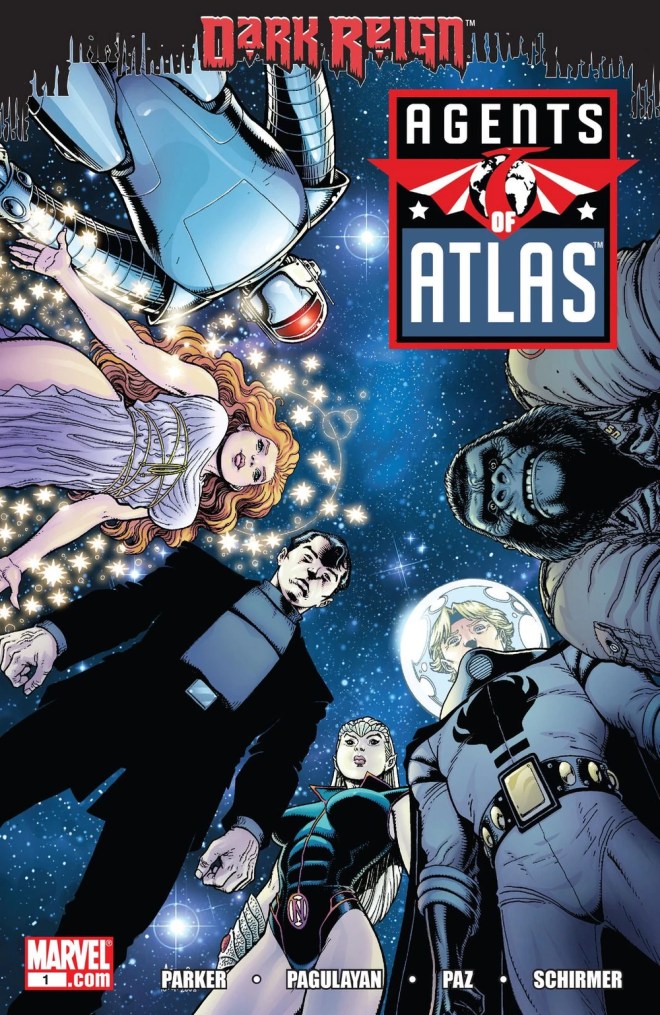
Eventually, the original Namora was revived as part of the mid 00s Agents of Atlas, a team composed of similar “leftover” or forgotten characters from Marvel’s Golden Age (principally the 1950s, when the company that would become Marvel was known as Atlas Comics, hence the name). After her revival, Namora would play a role in the “World War Hulk” story which inspired Hulk’s plotline in Thor: Ragnarok and an earlier season of Marvel Snap, as well as be adapted into film herself in Wakanda Forever.
Prior to her Agents of Atlas resurrection, a different version of Namora became a part of the regular cast in the first volume of the reality-hopping series Exiles. This Namora was an alternate reality version of Namor. In addition to being female, she was blue-skinned like a traditional Atlantean (vs. the pink skin of the “main” Namor and Namora). Though not technically an alternate version of the Namora who first appeared in 1947, it is this Namora’s stint as one of the Exiles which likely led to her inclusion in the current “Blink in Time”/Exiles season.
Fit and Finish

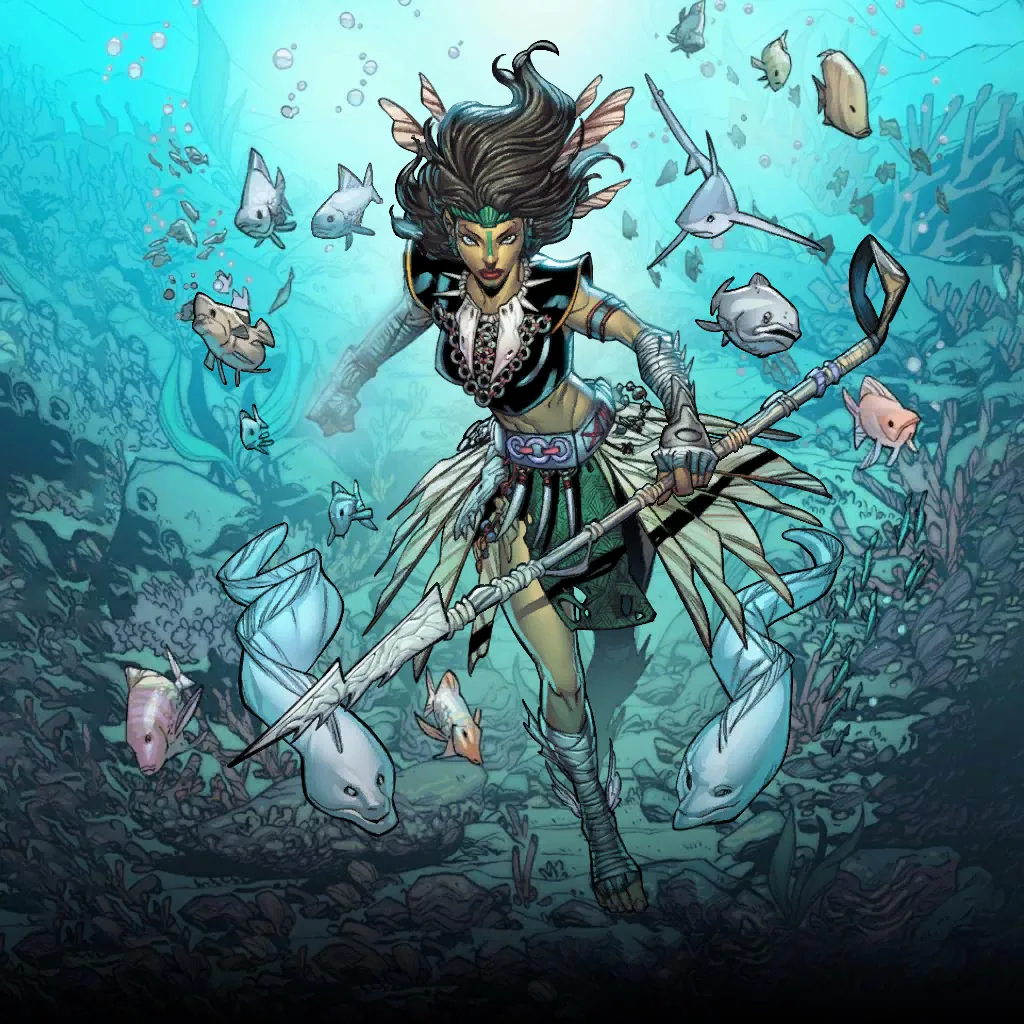
However, it is neither the Exiles Namora nor the original which her initial Marvel Snap card takes for inspiration. Rather, both the standard and variant versions of Namora, from artists Eduardo Mello and Albert Dal Lagom respectively, are taking as inspiration the character’s appearance in Wakanda Forever.
In the MCU, the origins of the undersea empire led by Namor is shifted from its comic book ties to the vaguely classical Atlantis of Plato to a meso-American society named Talokan, located in the Gulf of Mexico. Namora is one of Namor’s chief lieutenants and a secondary antagonist in the film. While it wouldn’t at all be surprising to see a future Namora variant card depicting her original comic book or Exiles look, for now, Marvel Snap is, not surprisingly, taking its inspiration for the character from the version that has reached the widest audience.
Form and Function

In terms of Namora’s Marvel Snap ability, it takes its cue from the general Marvel Snap principle that things connected to Atlantis want to be alone. Just as the Atlantis location grants additional power if only one card is played there, Namor and Orka gain power if they are alone at a location, and Attuma is destroyed if he’s NOT alone at a location, the power generated by Namora is affected by how many other cards are at a location. However, in her case, her base power remains the same, but rather, she increases the power of OTHER cards that are alone at their respective locations.
Potentially, this means that Namora could function a bit like Doctor Doom, spreading five additional points across two other lanes, so long as there is only one card at each of the other locations. This effectively makes her upwards of 5/16 card.
However, the current meta seems like a bad one to debut in for a card like this. The continuing prevalence of Junk decks (and/or simply the prevalence of the recently-released White Widow across a lot of different decks) will make it harder to keep Namora’s targets isolated. Meanwhile, while Namora’s ability is an On Reveal, making her immune to the effects of an Enchantress or Rogue that might still be stalking games in the wake of the Ultron and Klaw buffs, it also makes her susceptible to the buffed Leech, who is still running rampant. As a five cost card, it will probably be more trouble than it’s worth to get her out before she’s Leeched.
That said, there’s avenues of success for the card. For example, Namora could fill a role like Klaw or Jeff in helping boost a locked Professor X lane while still contributing a decent amount of power to her own lane. But in the current meta, it’s probably going to take a little too much work to capitalize on her abilities to make Namora a must-have card.

