
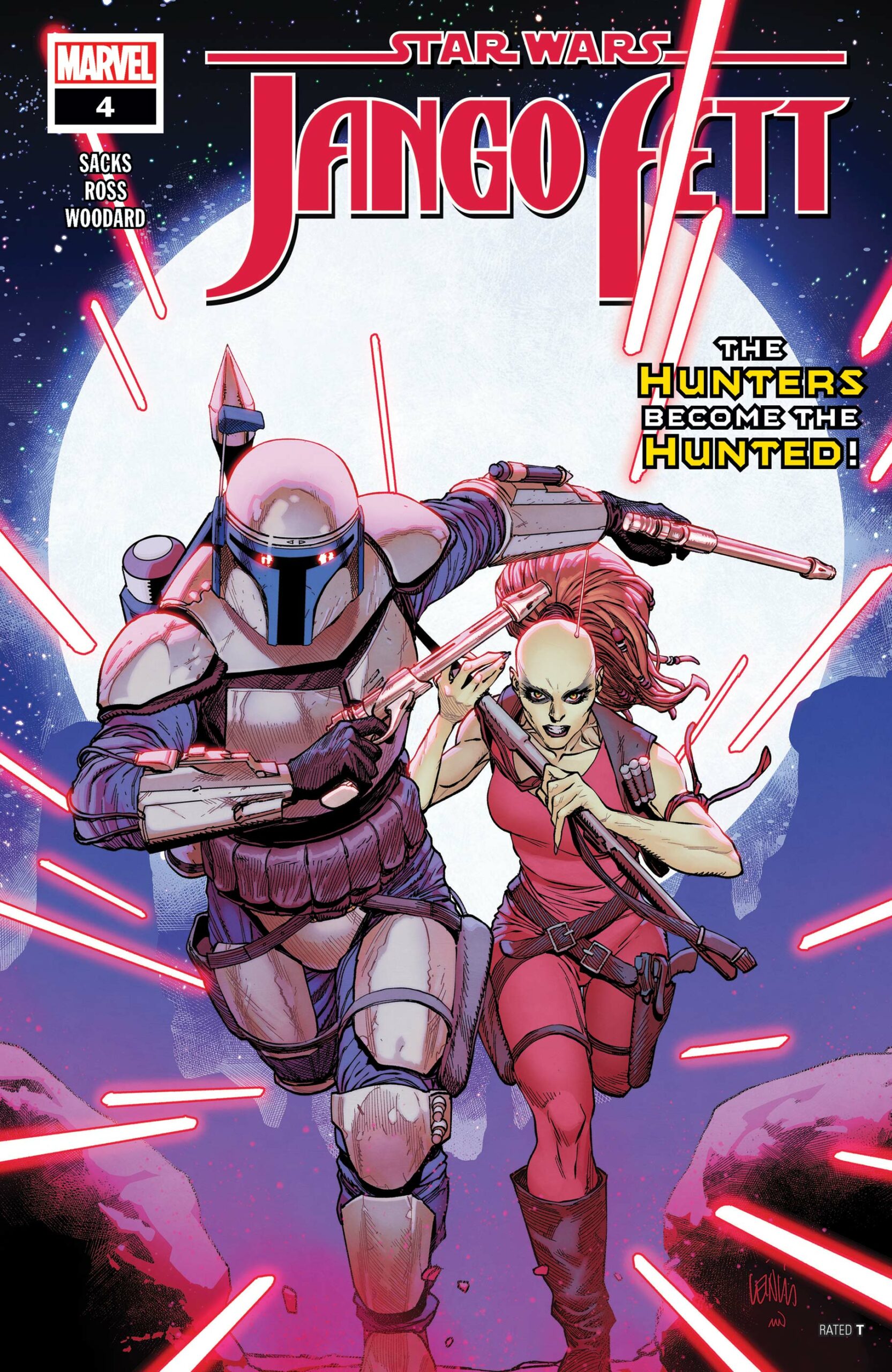
‘Jango Fett’ #4 Review: A Simple Man Makes His Way To A Satisfying Conclusion
by Austin Gorton
Overview
Finishing the miniseries strong, Jango Fett #4 succeeds by making its title character the center of the issue. Its portrayal of Jango as a simple man just trying to make a living is enough to overcome some dicey plotting and ham-fisted narrative connections to the broader Star Wars narrative.
Overall
7/10Ideally, every miniseries would start strong, stay strong, and end strong. But if a story is only going to hit one of those goals, “ending strong” is probably the way to do it. If the last impression is a good one, it’s more likely for the series to be remembered fondly, the edges of its earlier faults softened by the memory of its stronger finish. It’s doubtful that this series is going to go down in history as an all-time great miniseries (or even an all-time great Star Wars miniseries), but Jango Fett #4 takes a step in that direction by finishing it out strong.
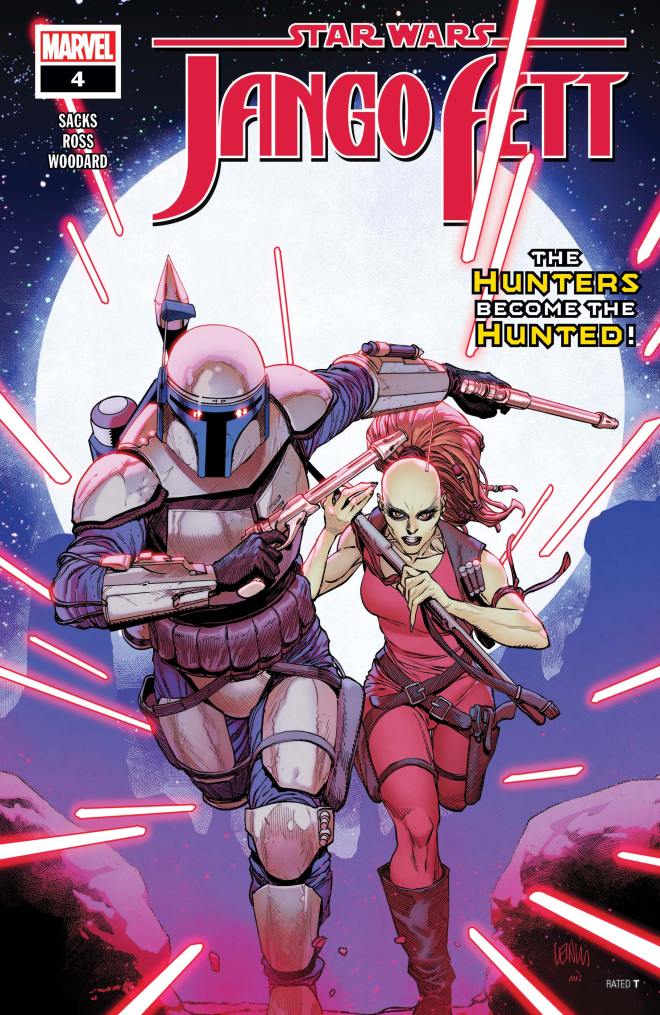
It does so largely by leaning into what has worked best in this series: an emphasis on Jango himself as a blue collar, workmanlike character. Whereas the middle chapters of the series tended to downplay Jango in favor of Aurra Sing or push him into a more traditional (but less interesting) “badass bounty hunter” role, this installment gets back to the more enticing parts of the first issue’s characterization. Jango is once again driving the action.
He has no horse in the political (and soon to be military) fight between the factions on Glee Anselm. He just wants to get paid. He’s even cracking dad jokes as he puts his plan in motion. It works because it gives him a distinctive voice. It sets him apart from the other coolly capable Mandalorians sprinkled throughout the saga (including his, at this point in time, unborn/uncreated son). More immediately, it sets him apart in this issue from his ad hoc partner, Aurra Sing.

Also working in its favor is the resolution to the series-long plot. While this installment gets its requisite dose of action thanks to a two-on-dozens fight between Jango, Aurra, and a bunch of bounty hunters arrayed against them, the resolution to the non-theft of the actual MacGuffin gets resolved without any blaster fire or jetpacks. Born of Jango’s lack of interest in the broader conflict, it’s refreshing to have the resolution to the plot be born of characterization rather than via some kind of complicated plot twist or brilliantly-executed scheme.
Similarly, that resolution is a fun “snatching defeat from the jaws of victory” moment: Jango gets paid, so it’s a win for him, but the true villains still essentially get away with their scheme. The ensuing war Jango was ostensibly trying to prevent still breaks out. In a story with more traditionally heroic characters, that could feel unsatisfying. But here, it works. Jango wins, even if the galaxy at large loses, and because he’s our protagonist, we share his world view, so we are satisfied enough to see him win out.
There are still a few missteps here. Because Jango doesn’t care about the twists and turns of the scheme to bring war to Glee Anselm, it’s hard for readers to care about it either. As a result, a lot of the plot happenings in this issue are muddied and end up getting hand-waved away. There’s also efforts throughout the issue, with the end of the series nigh, to connect it more firmly to the larger Star Wars narrative.
While there’s always some element of that in any shared universe story (and there needs to be), previous issues had done so with a defter touch. Here, things like Aurra telling Jango he’s good with kids and might want to think about his legacy land with all the subtlety of a wink to the audience. It’s enough to pull readers out of the story, and too cutesy by half.

Nevertheless, Jango Fett #4 concludes the series on a high note. When it started, I questioned how and if it would be able to distinguish its title character enough from characters of similar ilk to justify its existence. While resultant four issues were often uneven in their handling of Jango, the end result presents a take on the character that is both relatively unique and appealing by building the character around his semi-famous sentiment of merely being a simple man trying to make his way in the universe. I would read more adventures of this version of Jango.
The Star Wars universe has lots of knights and princesses and assassins and spies and generals. It doesn’t have a ton of jobbers, beings who don’t care about the twists and turns of galactic politics or the millennia-long conflicts between assorted space monks who nevertheless get swept up in the wake of those conflicts. Cementing Jango — who previously was best known as the guy responsible for birthing an entire army of clones into the galaxy — as one of those “everyday Joe” characters is a smart move, and it helps make this series an ultimate success.

