
I’m Worried About ‘The Okinawan Girl I Love Has An Unbearable Dialect!’
by Anna Lindwasser
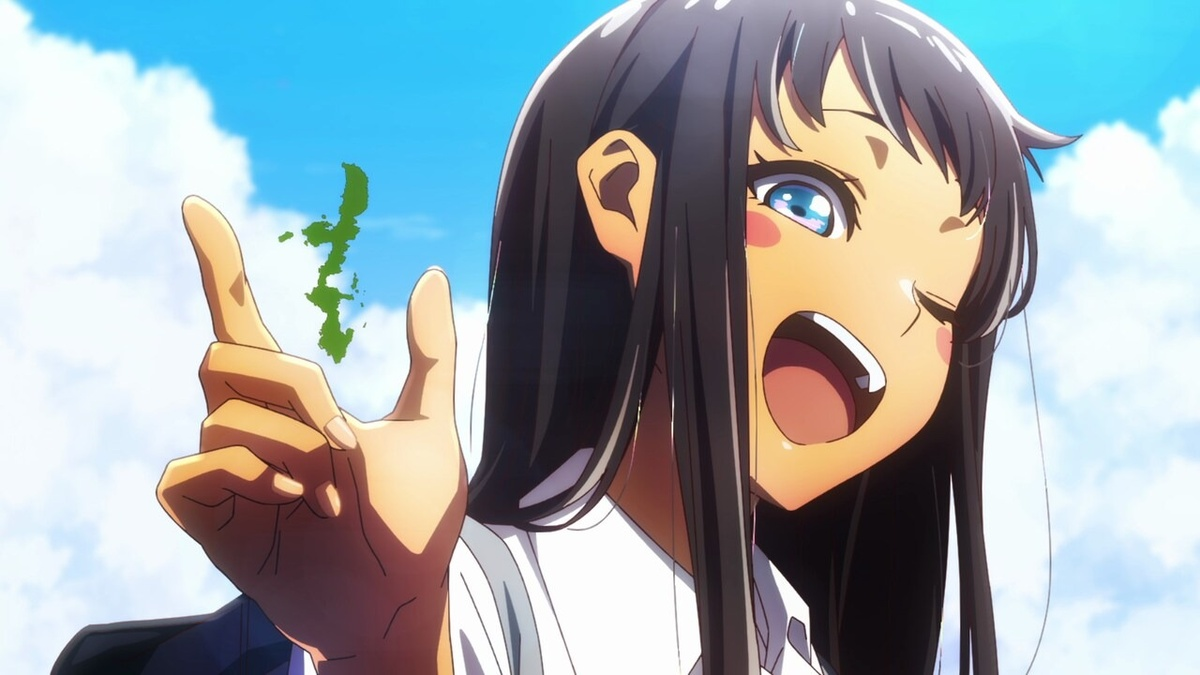
Recently, a Winter 2025 anime called The Okinawan Girl I Love Has an Unbearable Dialect! was introduced. The series is about a boy who moves from Tokyo to Okinawa and has trouble understanding the dialect. Here’s the PV:
So far, most of the reviews of the manga it’s based on say that it’s a wholesome series that introduces Okinawan culture to the audience. I hope that that’s true, but I’m concerned.
The official translation is The Okinawan Girl I Love Has an Unbearable Dialect! I probably don’t have to explain why the word “unbearable” is negative. That said, it might not be the actual intended meaning. The original Japanese title is Okinawa de Suki ni Natta Ko ga Hougen Sugite Tsurasugiru. Tsurasugiru can be roughly translated to “too tough” which is why a previously used translation is The Dialect of the Girl I Fell in Love With in Okinawa is too Difficult to Deal With. That’s a little more neutral, though could still be dicey depending on how things play out.
How so? Jokes about regional accents can be funny, but they can also be rooted in classism and racism. That could be the case here.
Before I get started explaining why, I want to clarify that I am not an expert in this topic. I’ve read a few books and articles, but there’s a lot more for me to learn. I’m also not Japanese or Okinawan, so my thoughts are not informed by lived experience. So please take what I’m saying with several grains of salt.

Okinawa has a long history — one that spans thousands of years. The version of it that existed when Japan came into the picture was created through the unification of three different communities in the 1400s. It was called the Ryūkyū Kingdom. In 1609, the kingdom was taken over by the Satsuma Domain. Until the 1800s, it served as a tributary for both China and Japan. As the years wore on, Japan gained greater and greater control over the island until they decided to annex it. The former Ryūkyū Kingdom became Okinawa Prefecture.
Many of the Ryūkyūans hated this, mainly because Japan tried to perform ethnic cleansing. The government tried to stamp out their language, religion, and cultural practices. In the schools that Ryūkyūan children were forced to attend, they were only allowed to speak Japanese. If they spoke their native language they would be shamed and forced to wear a placard that marked them as a “dialect speaker.” In 1937, their languages were officially banned, and businesses that served speakers had to refuse service or be punished.
During World War II, Okinawa was the site of several major battles between the USA and Japan. Though many Ryūkyūans fought alongside the Japanese militia, they weren’t treated like equals. In fact, they faced just as much danger from the Americans as they did from the Japanese. Whether they were being shot by Americans or dragged out of the caves they tried to hide in for safety and having grenades thrown at them by the Japanese, the community suffered greatly. Both sides are known to have sexually assaulted Ryūkyūan women in huge numbers. All told, nearly 300,000 Ryūkyūans died — 1/3 of the total population. Many Ryūkyūan children were forcibly conscripted into the war.

To this day, 74% of all US military bases in Japan are on Okinawa. This causes considerable problems for the local environment and has resulted in several violent incidents. Japan has yet to address this problem despite significant pushback – and of course, the USA isn’t backing down either. While the Japanese government doesn’t acknowledge them as such, the Ryūkyūans are an indigenous people and a minority group with a long history of being abused. They still experience significant discrimination. Many Japanese people consider them to be backward, uneducated, inferior people.
This brings us back to the whole dialect thing. Okinawa is associated with a unique dialect, and that dialect is associated with those stereotypes, which were created by a brutal history. The premise of the series is that the dialect is “unbearable” or at least too difficult for the protagonist to comprehend. Depending on the execution, this could be anything from “mildly offensive” to “wildly racist.”
But maybe the protagonist learns to understand and appreciate Okinawan culture, including their dialect, and the characters don’t act like stereotypes. Maybe it does a great job of exploring the island and its history and culture.
I don’t know how it’s going to pan out, which is why I’m not condemning it as a definite disaster. Instead, I’m just worried. I hope I’m worrying for nothing, but we’ll find out in January 2025.
~~~
For more of my work, check me out at Ranker, at Medium, on Twitter @annalindwasser and @sinistealatte, and on my website annalindwasser.com. If you like my writing and want to help pay for my Crunchyroll subscription, you can donate to my Paypal.
