
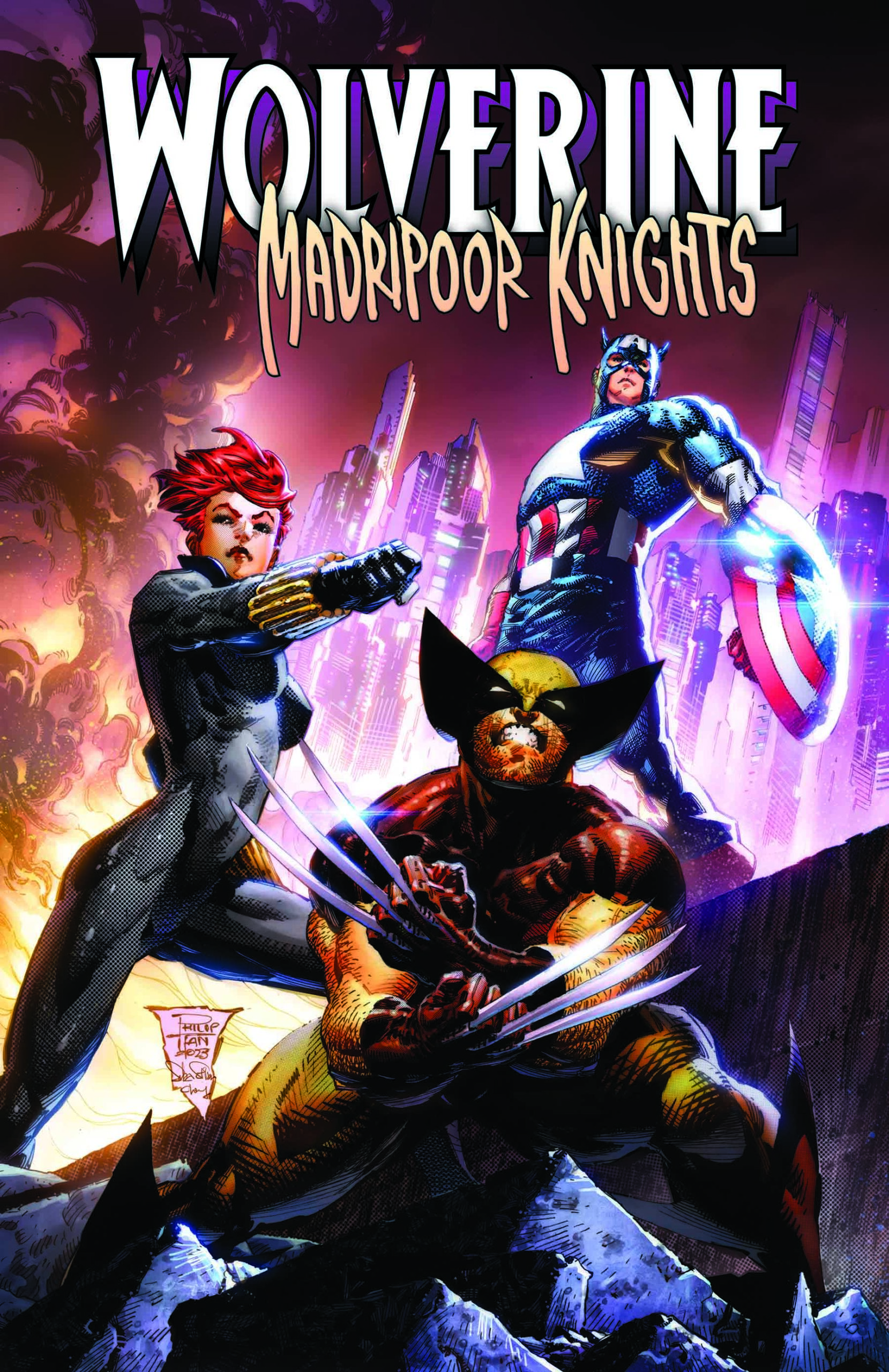
‘Wolverine: Madripoor Knights’ Makes The Most Of Its Marketing-Driven Motivations — A Review
by Austin Gorton
Overview
While the motivations behind this series’ creation seem crassly marketing driven, writer Chris Claremont uses Wolverine: Madripoor Knights to fill in a bit of missing character development and play around some expected tropes, making the series more than just an unnecessary sequel to fan favorite issue.
Overall
7/10Marvel is no stranger to nostalgia series these days, nor is writer Chris Claremont, the majority of whose work of late largely comes in the form of miniseries set in previous eras of X-Men continuity. That said, when Wolverine: Madripoor Knights launched, there was a bit of confusion in the fan community. The idea of building a nostalgia-driven story around an issue that, for most readers, was fondly regarded chiefly because it was a showcase for an artist — Jim Lee — who wouldn’t be involved in the sequel series was odd. It did the “look into Wolverine’s past” bit when that was still novel.
Certainly, there’s nothing in the five issue story which comprise this collected edition that changes the fact that Lee isn’t drawing any of it and digging into Wolverine’s past is beyond played out. But once that’s been accepted, Wolverine: Madripoor Knights stands as one of the better Claremont-penned nostalgia series.

Whereas one of the conventions of Uncanny X-Men #268 is the way it cuts back and forth between the past and present day, Madripoor Knights takes place entirely in the present (of that issue, or, at least, shortly thereafter). After more or less writing out Psylocke and Jubilee (who are present in the original story) in issue #1, the bulk of the story involves Wolverine joining Avengers Captain America and Black Widow in a hunt across Madripoor for a mysterious weapon about to be sold in auction.
Along the way, run into Jessan Hoan, aka Tyger Tiger, one of the two dueling crime lords of Madripoor (and an associate of Wolverine’s with a backstory filled with no small amount of convulsions), get targeted by Bloodscream and Roughhouse, a pseudo-vampire and an Asgardian strongman who fought Wolverine early in his Claremont-penned solo series, and eventually get drawn into a scheme by Matsu’o Tsurayaba and the Hand that involves the heroes becoming possessed by demonic forces the Hand serves.
Most of this is pretty standard comic book stuff. And, of course, it’s replete with “Claremont-isms,” those plot, character, or script tropes that Claremont has been peppering into his stories for decades. There’s the usual “explain the difference between Hightown and Lowtown” narration that accompanies, by comic book law, all stories set in Madripoor. Tyger Tiger (herself another distinctive Claremont character) also shows up wearing a version of Psylocke’s old pre-ninja Outback Era armor that briefly featured in a Claremont-penned subplot back in the late 80s. The climax of the story involves heroes being possessed and having to fight back against their darkest urges to prove themselves heroes.

But in a couple places, Claremont hints at something of a character arc, and a purpose for this story beyond the marketing angle. Uncanny X-Men #268 (and this story) take place at a time when the X-Men are more or less dissolved, just prior to them coming back together in the “X-Tinction Agenda” crossover. Moreover, it is a time when Wolverine’s healing factor is maxed out and Wolverine believes himself to be on the verge of death.
Between Uncanny X-Men #268 and Wolverine’s next (X-Men) appearance in issue #271, he makes a whole slew of appearances: issues of his solo series, stories in Marvel Comics Presents, a New Mutants guest appearance. But none of them really address the change in the beaten down, misanthropic Wolverine of this era and the Wolverine who springs into action to save his friends in the course of “X-Tinction Agenda”, and proceeds to rejoin the team with little mention of his struggling healing powers going forward.Claremont uses Wolverine: Madripoor Knights to retroactively bridge that character arc.
It also shows how Wolverine snapped out of his relative funk in order to rejoin the X-Men and operate in more or less the same role as he did before. In doing so, Claremont gives the miniseries a narrative purpose to exist, something beyond a cash grab celebrating a fondly remembered issue drawn by a long-departed artist.
Claremont also zags slightly in the resolution of the story. Instead of going the typical “hero is possessed by an evil force, but overcomes the possession by asserting their innate goodness”, in the end, all three of the story’s heroes — Wolverine, Black Widow and Captain America — win not by focusing on their goodness, but by embracing their inner darkness rather than fighting it. It’s an appreciated twist on the trope.

Meanwhile, while artist Edgar Salazar is no Jim Lee, he smartly doesn’t try to ape Lee’s style. His figure work can occasionally be a little stiff and his backgrounds shy on details. But his somewhat-stretched, mildly-distorted figures suit the plot well. The end result gives the book a look that merges the pinup-y action style of Lee with the more noir-ish and body horror elements of the story Claremont is telling.
Did we need a follow-up to the original “Madripoor Knights” story, especially one drawn by someone other than the artist responsible for the majority of the fondness fans continue to carry for it? Probably not. The miniseries is, overall, probably an issue too long, padding out a four-issue plot into a five-issue run with some gratuitous action spread across its story.
But that’s probably more the fault of Marvel marketing or editorial than Claremont and Salazar. As later-period continuity-insert Claremont-penned miniseries go, this could be much worse. Which sounds like damning with faint praise, but isn’t meant to. For what it is, there’s enough here to recommend Wolverine: Madripoor Knights.

