
Commentary: Studios Need To Make More Bottle Movies
by Frank Martin

Bottle episodes have an interesting history in television. They are isolated installments that take place in a single location, like the characters are stuck in a bottle. On the one hand, they are a means to keep costs down on the production. On the other, they are an opportunity to tell interesting and unique stories — but only if done right. This concept can extend to film in what can be described as “bottle movies” which take place in only a few or one single location. They aren’t as prevalent anymore, but Phone Booth is a great example that the bottle movie should make a comeback.
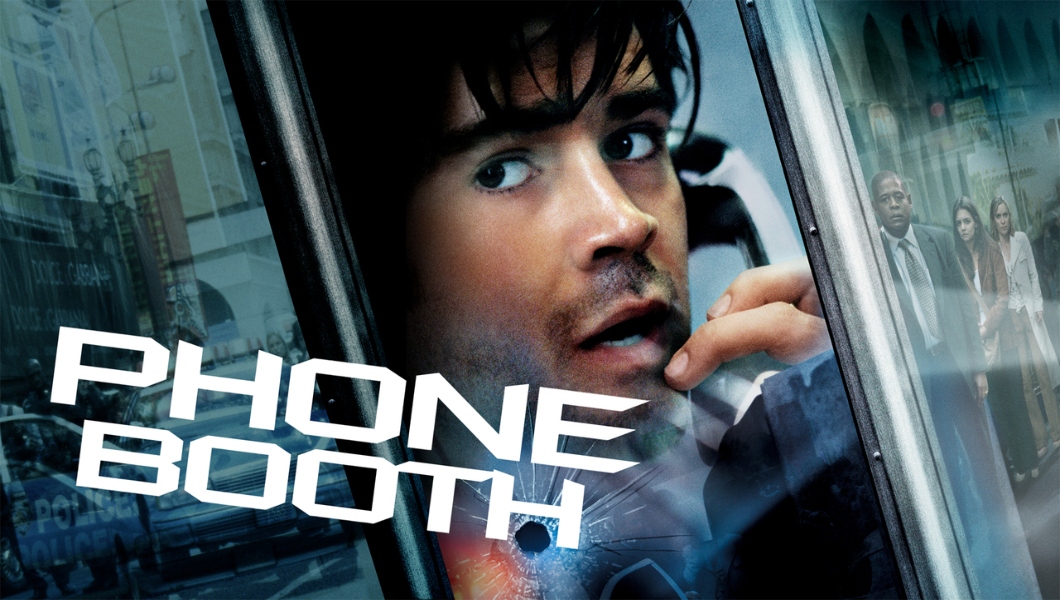
The film is about a fast-talking publicist named Stu (Colin Farrell). Based out of New York, he has made a living by lying and being an overall slimeball. He calls a potential mistress from the last remaining phone booth in the city, but he gets sucked into a game of cat and mouse when the phone booth rings and he decides to pick it up. A man on the other end of the line (Kiefer Sutherland) tells Stu that if he hangs up he will kill him with a sniper rifle. A police standoff ensues, resulting in a dramatic race against time to find the perpetrator before he decides to kill Stu in front of everyone.
Phone Booth has little to no plot. This stems from the fact that 85% of the film takes place on the city street in a single phone booth. It’s also a movie that plays out in real time. Every minute of screen time is a minute of story. This heightens the suspense but doesn’t add any real twist to the story. Instead, Phone Booth is all character. The audience watches Stu get broken down from an arrogant smooth talker into a man who confesses his sins and lies in front of the whole world. The film is driven by Farrell’s emotional performance, which is allowed to happen because of the bottle movie nature. In order to provide other actors the same opportunity, bottom movies should get more notice.
Phone Booth is available for rent on Amazon Prime.