
Talking Boom! Studios’ ‘Be Not Afraid’ With Jude Ellison S. Doyle And Lisandro Estherren
by Rachel Bellwoar
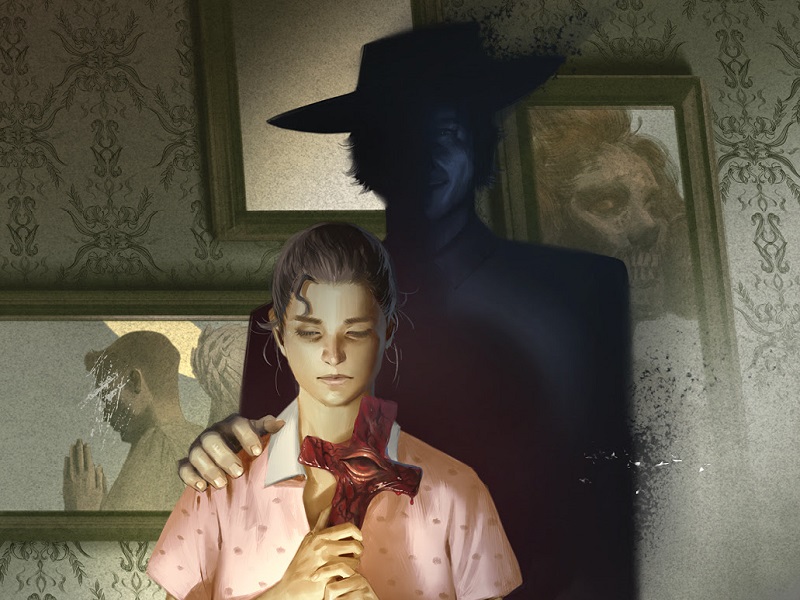
There’s nothing like the bond between a mother and her son. In this case the son in question, Jordy, might be part angel but that doesn’t make him inherently angelic in writer Jude Ellison S. Doyle and artist Lisandro Estherren‘s new series, Be Not Afraid. For more on the series, which is being colored by Francesco Segala (with color assistance by Gloria Martinelli and letters by Simon Bowland), check out this interview with Doyle and Estherren below:

Rachel Bellwoar: How you say something can be just as important as what you say. Why name this series “be not afraid” and not “don’t be scared” or “everything will be fine”?
Jude Ellison S. Doyle: “Be Not Afraid” is what angels say whenever they appear to humans in the Bible. I’m most familiar with it from the story of the Annunciation — the angel Gabriel says it to the Virgin Mary, right before telling her that she’s pregnant. It’s always been a really menacing phrase to me because (a) something has to be really terrifying, if it has to warn people not to be afraid every time it appears, and (b) it’s a phrase you hear right before you get bad news. In Mary’s case, it’s a very young teenager, who’s never had sex, hearing that she’s now pregnant against her will by a cosmically all-powerful being. That’s such a creepy hijacking of her bodily autonomy, and the angel sweetly warning her not to be afraid right beforehand only adds to that; it’s like the angel is completely oblivious, or indifferent, to how she might feel about this. Mary’s story, obviously, mirrors our protagonist Cora’s in a few ways and it felt right to begin with the evocation. “Be Not Afraid” are now the first three words you read every time you pick up an issue. The angel arrives for you.
Bellwoar: The term “nephilim” is a new one to me. What interested you in telling a story about a nephilim?
Doyle: I had been reading a biography of John Dee, who was a high-placed Elizabethan courtier who supposedly created a means of contacting angels, and it was strangely one of the creepiest things I’d ever read — in the mythology that grew up around Dee, angels were something like nuclear energy, less people than primal forces that constitute the building blocks of the universe, and they’re so powerful that supposedly anyone who used Dee’s methods would go insane or die horribly from trying to channel these forces with their puny mortal minds and bodies. Stories about Dee were a huge influence on Lovecraft; before there were Elder Gods, there were angels, which is fun.
I wanted to tell a story about a force that powerful escaping containment — sort of an angelic Chernobyl. The idea of a nephilim, which is the offspring of a human and an angel, seemed like the best way to do that. They are monsters, and it’s been suggested that the last time nephilim appeared on the earth, God sent the flood just to wipe them out.
Obviously, there’s a lot of room to mess around within the mythology, but to me, what stood out is that angels don’t have free will — they’re given immense power because they can only ever do what God wants from them. Humans have free will. If you put this enormous, maddening, corrupting force of angel-hood inside a human being, with a full range of choices, and a human level of selfishness, what do they do with it? They become abominations with Godlike power, and that was a really scary place to start.

Bellwoar: The first issue quickly moves from Jordy’s birth to Jordy as an adult. Why did you want include that glimpse of Jordy as a child and, similiarly, why have him grow up so fast?
Doyle: I really like non-chronological storytelling, and to me, it seemed like the easiest way to understand Jordy was to move around inside his biography. In my initial drafts, he was purely evil, and I still think he is just fully, horribly, gleefully evil by the time we meet him at eighteen. But that evil emerges out of the experience of being a very small boy filled with a force that does horrific things to everyone he encounters. He has always scared people, he has always hurt people, and God has always hated him and wanted him gone — that would be true no matter what he did with his power, which is a really tragic and overwhelming position for anyone to be in, especially a child.
Is anyone so bad that they just shouldn’t exist? Is anyone so bad that God himself can’t forgive them? God, supposedly, is love, so does that love only extend to humans, or can a monster like Jordy receive it? You’re supposed to ask those questions over the course of the story, though I can’t tell you how I wound up answering them, or whether my answers will be yours.
Bellwoar: Adult Jordy’s introduction is pure menace. What was it like working on that sequence and coming up with that eerie, stretched out visual effect?
Lisandro Estherren: The whole Be Not Afraid narrative universe it’s strange and full of elongated things, things that are good on one end but bad on the other. I wanted the art to reflect that, so I worked with the proportions a lot.
It was also great because that allowed me to try new things style-wise.

Bellwoar: It’s easy to focus on how cruel Jordy is but he’s also part angel. Was it difficult finding that balance in your character design?
Estherren: Jordy’s character moves between two opposites: the almost tender look of an innocent cherub and a mean adolescent / adult who wants to inflict pain on others. It’s a sleek figure, but I think he also struggles with his inner cruelty. He, in fact, raises questions and analyzes a human world that he doesn’t fully understand. I tried to reflect that searching for soft features that could be also menacing. A direct reference for the character design would be a young Brad Dourif, an actor I love, btw.
Bellwoar: At the core of this series is Jordy’s relationship with his mother. Were you inspired by any other iconic mother-child duos from horror?
Doyle: I wrote a book on the horror genre called Dead Blondes and Bad Mothers, back in 2019, and one thing I figured out, over the course of writing that book, is that a ton of American horror can be traced back to the serial killer Ed Gein. He’s the basis for Psycho, for Texas Chainsaw Massacre, for Silence of the Lambs, and his relationship with his mother is central in every version of that story — he lived alone with her in a farmhouse, and she was his only human connection, so that when she died, he went insane with grief and started trying to resurrect her by (among other things) wearing her skin, or the skin of other women who resembled her.
One thing that stood out to me, when I was trying to understand Ed Gein as a human being, is that he and his mother disagreed on religion. His mother had been abused pretty horribly by his father, often in front of Ed, and she had been very sick for most of his adult life, but she was a deeply religious Christian. She could also, reportedly, be very unpleasant and horrible in her own way, but she was insistent on her faith. Ed Gein didn’t believe in God, because he didn’t believe that a good God would let his mother suffer as much as she had.
That really haunted me, and it’s a huge part of Jordy and Cora’s relationship (and Cora’s relationship with her mother, Anne, who is a lot more like Ed Gein’s mother supposedly was in real life). Like: Here you have one of the most famous monsters in history, and he’s so concerned with his mother’s pain that he’ll take her side over God’s in a fight. So Jordy and Cora and Anne are one of many many horror stories that started with Ed and Augusta Gein. And it is, weirdly, exciting to submit my own version of the story into that pantheon.
Bellwoar: Thanks for agreeing to this interview, Jude and Lisandro!
Be Not Afraid #1 goes on sale Wednesday, June 4th from Boom! Studios.


