
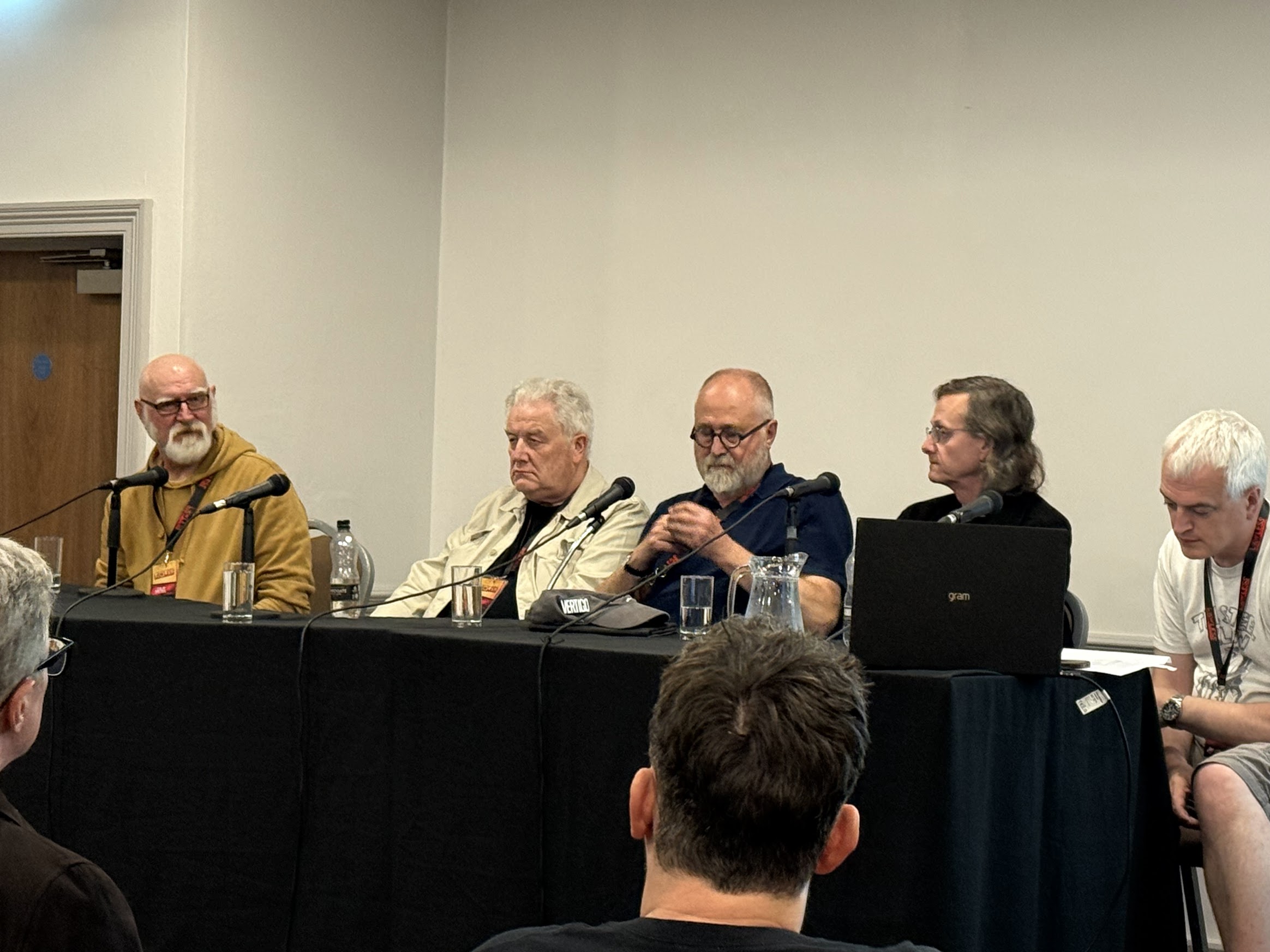
Lawless 2025: Artist Influences – With Colin McNeil, Alan Davis, David Roach And Brian Bolland
by Olly MacNamee
This panel was well run and well organised looking at each artists’ training and influences. Here are the highlights:

Training:
I did arrive late to this one and by that time we had the obligatory discussions around the table of how each artist got into comics and particularly 2000 AD. Colin McNeil was a student at Art College when he got his first gig with 2000 AD. Back then, as I can attest from my own experiences in Art College, comics were not taught. Even though some of his lecturers were 2000 AD fans. “Which must have really pissed them off” when they found out. But, he has always drawn. Even before he had learnt to speak. So a career in the arts was always on the cards.
Brian Bolland then discussed his own education in the arts. His philosophy is that every child can draw. Before they learn how to write. His criticism with the education system is that we are shown excellent examples of art that can put young pupils off, believing they can never be as good. He trained in Leicester for his Foundation Course year before moving to Norwich School of Art for his degree. It was at this time that he started working with underground publications like the infamous Oz magazine and other “really rude comic strips.”
David Roach was also put off from doing comics (a common problem I have heard many times from artists, particularly in the UK). He loved drawing and was trained in Fine Art and Philosophy, and did a lot of life drawing in the day on his Fine Art course, with comics done in the evening. E claims while he remembers nothing of the Philosophy, he is an encyclopaedia on legs when it comes to comics.

Artistic Influences:
Roach: Different influences at different times in his life. Early influences included Frank Hampton, John M Burns, Ian Kennedy and then Marvel Comics. Which was what made him want to draw. Marvel seems “somehow approachable” while Hampton and Kennedy were examples of artists Roach felt he could not emulate.
McNeil: Hasn’t read comics for 25 years. He compares to working in a chocolate factory. You can all the chocolate you want, but after a while, you don’t. Like Roach, it’s all from his younger days. Artists like Rembrandt, having seem ‘The Night Watch’ when he was nine years of age. It was an immense painting and this awe inspiring moment clearly stayed with him. Oh, and some guy called Leonardo Da Vinci.
Davis: He always more interested in the storytelling rather than art as a kid. He also mentioned Neal Adams, who combined reality and cartooning effortlessly. Adams was a great artist who could soak up influences and work it into his art. It was David Roach who mentioned that Adams first started on Archie Comics, having to adapt his style to the Archie style. A good example of what Davis’ point.
Bolland: Rene Magritte – more for the ideas than the execution.

And then, as with previous panels, Steve Bull (The’77) arrived with a third and final Hall of Fame Award given to Alan Davis. Very much a “man of few words” as a person over my shoulder said. And, based on the evidence from this panel, he’s not wrong. And that pretty much wound down the panel, other than the odd reminiscing about the UK comics they bought as kids.
