
Hollywood’s Gay Golden Age: An Interview With ‘Sick And Dirty’ Author Michael Koresky
by Rachel Bellwoar
If you’ve ever enjoyed Criterion Channel’s Queersighted series, here’s a way you can show your appreciation: pick up curator Michael Koresky‘s new book, Sick and Dirty: Hollywood’s Gay Golden Age and the Making of Modern Queerness.
Following in the footsteps of Vito Russo‘s Celluloid Closet, Sick and Dirty is a reconsideration of some of the films made in Hollywood during the production code that have gotten dismissed as bad representation but which still have a lot to offer as early depictions (or suggestions) of queer stories. For more on this project, here’s what author, Michael Koresky, had to share:

Rachel Bellwoar: While the production code was being enforced in Hollywood it wasn’t supposed to be possible for a film to address homosexuality, and yet (as this book shows) there were films that found ways around it (if not without difficulty). Do you think that’s a point that often gets missed – that just because the production code was supposed to prevent something doesn’t mean it was successful or that clever people didn’t challenge it?
Michael Koresky: The workarounds that directors, writers, actors, and often studio heads used to get a little — or in some cases a lot—of queer flavor into films in which “sex perversion” (i.e. homosexuality or any inference of its existence) was forbidden were sometimes there from the script stage. But more often than not, the filmmakers were clever enough to wait until actual production so something couldn’t get excised so easily. Joseph Breen thought he was eliminating it all, but more often than not the artists making the films were far too aware of what these films were really about to completely eradicate them. And you can take out things with a horrifying gay “flavor” in the script stage, but once the film is created it gets trickier. Also, audiences were far too savvy to not notice as well…that’s important to remember.
Bellwoar: One thing I feel is true about all of the films you cover (and this goes with what you wrote about being inspired by the student screenings you hosted) is these aren’t films where you can get away with reading a summary of the plot and know how they’re going to hit. That could be said about any film (it’s always better to form your own opinions and not rely solely on reviews) but do you feel these films are especially vulnerable to pre-judgement and misinterpretation?
Koresky: For sure. As you say, that’s true of anything, but I do think that because we’ve had decades of being told that essentially these are films whose negative images are “bad for us” — meaning a gay community reliant on pushing images of positivity — we might assume that we shouldn’t look any deeper. Yet why does “golden age” Hollywood cinema still captivate our imaginations so much? It was a censorious time, the most censorious in our national cinema’s history, yet the expressive undercurrents remain so present, so fresh, that we talk about them to this day. The most beloved stretch of movies in American history, in fact, so the negative and positive deserve equal consideration.
Bellwoar: The other common factor is how many of these films took their source material from the theater and playwrights like the great Tennessee Williams. With the end of the production code, do you think Hollywood and Broadway still have that same relationship, where the more controversial material usually originates on stage?
Koresky: Much less so now. But I think Hollywood has always had a humorously envious relationship to the New York stage. They crave its East Coast intellectual elitism, and would use Broadway hit plays for their sensational material to lure people back to the movies, both during the depression in the early 30s and again in the fifties during the television boom which was decimating the industry. Tennessee Williams’s work was raw and frank and adult — even after they had to expurgate outwardly gay characters and themes—and they kept making them despite the restrictions because of their prestige-shock factor. You see a lot less of these “serious adult” plays being adapted … Hollywood used to crave adult drama to boast its serious pedigree … today there’s little interest in courting that audience.
Bellwoar: As you bring up, Tea and Sympathy is not the Vincente Minnelli film that comes up the most but it’s probably the one I was most excited to see included. What was your first experience with the film and could you elaborate more on what you wrote about reconsidering the film from a modern perspective, where (unless you’re the federal government) not everything has to be so binary?
Koresky: I first saw the film as an adult and after coming out. And this was, of course, after decades of hearing the film talked about in dismissive tones. That it was a relic. That it was compromised. That it was even homophobic in its way, by virtue of both its “cowardice” in not committing to the homosexuality of its put-upon protagonist Tom Lee and also its tacked-on Hollywood wraparound. But I was very moved by its sensitivity and by Minnelli’s ability to make its audience never see Tom as the butt of any joke. He’s entirely sympathetic, and the masculinist, conformist society is the joke. When I screened it for students, I didn’t know what they’d think, but many of them found it relatable and even inspiring. For here was a film about an unsettled identity, a film that hesitates to commit to one side or the other for its distinctly nonconforming male protagonist. And that feels beautiful and radical, and many students commented on how ahead of its time it felt. It’s a nonbinary film in many ways!
Bellwoar: Given the official stance of the military, I’d never considered how joining the army during WWII and, for some soldiers, leaving their small towns for the first time would be an opportunity to meet other members of the LGBTQIA+ community and later form gay communities in urban areas after the war. Films are sometimes treated as frivolous entertainment but do you feel they are also gateways to learning about history that gets left out of the history books?
Koresky: A great point, and I hope that this book does that for many people who might just be expecting a cinematic history. But cinematic history is the same thing as history itself, if you’re focusing on the right films. Cinema reflects a reality even when the censors try to eradicate it of that history. Joseph Breen, head of the PCA, didn’t even want WWII represented at all originally. He wanted no shred of reality or realism. So cinema makers had to find ways of getting it back in time and again.
Bellwoar: With regards to Alfred Hitchcock, there are a couple of his films you could’ve chosen, and you touch on Rebecca and Strangers on a Train, but why did you decide to focus on Rope the most?
Koresky: What I love about Hitchcock movies is how willfully and lovingly perverse they are. And that strikes me as the greatest contrast to the Hays Code dictates, enforced by Breen, which forbade and feared “perversion” the most. The Code tried to eradicate perversity; Hitchcock did his damndest to get it back in. And that for me is a key to Hitch’s humanity. Rope is the most fascinatingly queer Hitchcock film for how overt and subliminal it is — a fascinating contradiction. And the backstory is the gayest: its writer, Arthur Laurents, was gay. Its costar Farley Granger, was Laurents’ boyfriend. The other star, John Dall, also gay. They play two murderers who are also clearly a gay couple, though it’s never spoken about directly. The central idea, of a body hidden in a trunk in the center of the scene, all on one set in “real time,” functions as a metaphor for the closet. It’s got countless breadcrumbs for gay viewers. And Hitchcock not only knew that Laurents and Granger — he wanted to emphasize the gayness throughout as best as he could. He and his wife Alma even took Granger and Laurents out to steak dinner, just the four of them, before production began to let them know they knew and that they were fascinated by it.
Bellwoar: This is a similar question but many books have been written about Judy Garland and musicals in general. How difficult was it to limit yourself to a chapter on both subjects?
Koresky: It’s only an “interlude” because the chapter exists a bit outside of the Code narrative, but it felt weird and wrong not to have a chapter on musicals and Garland. So I used it as an investigation into how musicals are both the gayest and weirdly the least gay genre, and also why and how the Garland gay phenomenon began, which was essentially at this very period in Hollywood history, with her A Star Is Born “comeback.” Though musicals are written about a lot, I haven’t found too much written about the central contradiction of them for gay viewers, which is that on the surface they’re very much about heterosexual reification, but below the surface they’re about code-switching and the unspoken, inner self that has to come out through song.
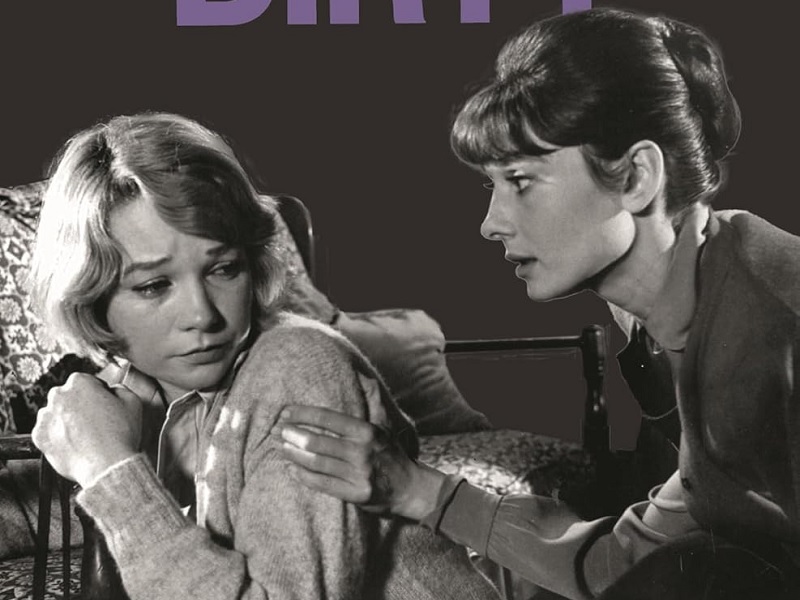
Bellwoar: As the title of this book underscores, what words you use matter. “Sick and dirty” was a line from The Children’s Hour that got revised multiple times. Why did you decide to use it as the title of this book
Koresky: It jumped out at me from the very beginning. From the first book proposal. I knew that was the title. Because it’s such a devastating moment in that film, and a seismic moment for queer representation. Because it’s an incredibly sad and negative thing to hear a lesbian say about herself, but also because it reflects an undeniable reality. And because this is how we all were told to see ourselves. We were all sick and dirty, and the Code wanted to make sure we didn’t exist at all because of it. But like so many terms, especially “queer,” we can reclaim sick and dirty for ourselves as well.
Bellwoar: Thanks for agreeing to this interview, Michael!
Sick and Dirty: Hollywood’s Gay Golden Age and the Making of Modern Queerness is on sale now from Bloomsbury. Also, be sure to check out Koresky’s latest Queersighted series, Coming of Age, on the Criterion Channel which includes Tea and Sympathy and features special guest, I Saw the TV Glow director Jane Schoenbrun.

