
Gloria Grahame Will Have Her Revenge: Fritz Lang’s ‘The Big Heat’ Reviewed
by Rachel Bellwoar
People love to lament that no one answers the phone anymore, but those same people should watch Fritz Lang’s The Big Heat, because everyone answers the phone in that movie and it always leads to regret. Take David’s wife, Katie (Jocelyn Brando), who decides to answer the phone during dinner rather than risk the sound of the phone ringing waking their daughter (Linda Bennett). Without fail, the call sends David (Glenn Ford) off, ditching his steak and falling deeper into the investigation of a cop’s suicide. Far from being an open and shut case like he expected, David comes to realize his beloved profession is racked with corruption and that the last thing his bosses want is for him to do his job properly.

There are a lot of reasons The Big Heat stands out from other noirs. For starters, the film sets its pace early and never lets up. In the very first moments we see the cop in question commit suicide (bloodless, so the film could be approved by the production code), his wife (Jeanette Nolan) finds the body, her reaction, (which isn’t to scream or cry or call the police – even though it’s strongly suggested her husband was a cop) and then the chain of phone calls her decision sets off. There’s no time for filler in this movie and every supporting player is well-cast. Carolyn Jones (The Addams Family) and Dan Seymour (Key Largo) essentially get one scene each but speak to the caliber of the casting across the board.
Then there’s the film’s treatment of David, our “hero cop,” who knows enough to keep digging but not enough to grasp his actions will have consequences – being the “hero cop” in no way protects him from tragedy in this movie (let’s just say The Godfather copied The Big Heat). It doesn’t save him from criticism, either, though, which is the part that doesn’t always happen in film noir; his judgement is shown to be fallible. Just because he’s the white, male lead doesn’t mean he’s always right or outsmarting everyone.
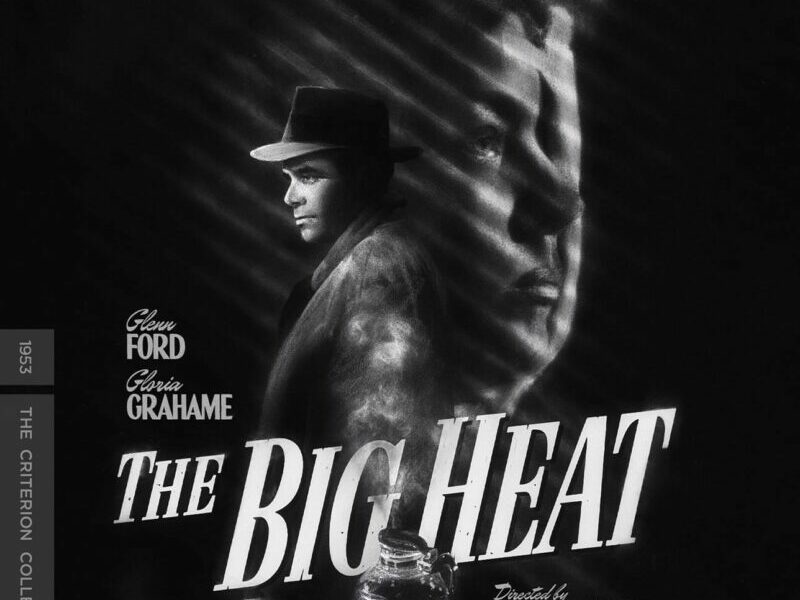
The film’s most iconic moments feature Gloria Grahame (but, on the off chance they haven’t been spoiled for someone yet, I’ll stay silent). I do wish Criterion had played with the contrast for the cover art by Drusilla Adeline (Sister Hyde) because it’s a great image, but you almost can’t see it, the way the white doesn’t pop off the black, especially in-person versus online.
The bonus features are exactly what bonus features should be, enhancing and adding to the viewing experience. Instead of focusing solely on Grahame, film critic Farran Smith Nehme makes sure all of the women in The Big Heat get their due in her video essay. I especially appreciated the chance to appreciate Edith Evanson‘s acting in the scene where Ford and Seymour are talking. Because the scene is about their conversation it’s easy to overlook the character work she’s doing in the background but Nehme makes sure you notice.
Film noir experts Alain Silver and James Ursini have recorded a fantastic new commentary that covers everything from toxic masculinity to redemption to religious symbolism.
It would’ve been cool if there could’ve been a bonus feature considering The Big Heat as a horror film or specifically looking at how the film portrays disability post-WWII, or even just the film’s treatment of veterans overall (it’s a relatively small moment but there’s a scene towards the end where a point is made to identify some of the characters as veterans and it feels quietly significant). These aspects are touched on in some of the other bonus features, including Jonathan Lethem‘s written essay (which brings up monsters) and even an old interview with Martin Scorcese that’s included. But I guess I’m just greedy, this film is that good, and as much as this release by Criterion is extremely worthy, there’s always room for more.
The Big Heat is available on 4K and Blu-ray now from Criterion. It’s also 50% off right now as part of Barnes and Noble’s Criterion sale until July 27th.


