You’re Out Of Order: ‘…And Justice For All’ Reviewed
by Rachel Bellwoar
In Al Pacino‘s memoir, Sonny Boy, he doesn’t spend much time on …And Justice For All other than to admit he didn’t get along too well with the director Norman Jewison. Shot on location in Baltimore, Pacino’s Arthur starts the film in prison for punching a judge (Dynasty‘s John Forsythe). When that same judge is accused of rape, though, Arthur is the lawyer who’s requested to defend him.

One of the brilliant aspects of Valerie Curtin and Barry Levinson‘s screenplay (that film historians Alexandra Heller Nicholas and Josh Nelson point out in their commentary) is that any one of Arthur’s cases could sustain a whole movie. Besides the judge, Arthur is also representing Ralph (Robert Christian), a young transgender woman who he first saw being harassed by the police in jail, while another client, Jeff (Thomas G. Waites), is languishing behind bars for a broken tail light he shouldn’t have been sentenced for in the first place. By depicting all three cases, …And Justice For All proves that these aren’t flukes. One could be dismissed as isolated but these problems are systemic – the US legal system is broken and Arthur alone can’t fix it.
The most famous scene from the movie is probably the ending, which reads like an attempt to replicate the magic of Pacino yelling “Attica” in Dog Day Afternoon but pales in comparison. The real gut punch is when Arthur confronts a lawyer (Larry Bryggman) he trusted to cover for him during an emergency.
…And Justice For All is technically a comedy, as reflected by Dave Grusin‘s score (which takes the most jarring pivots, but at the same time what better way to underline the madness of a cold world that keeps on turning while these injustices barely register) but, as Heller and Nicholas argue (their commentary is full of great observations) the ending is more pessimistic than the otherwise grittier Serpico. The film also feels ahead of its time in its depiction of the police and how they handle, for instance, a lawyer who’s having a mental episode — constantly wanting to pull out their guns and then not knowing how to respond when that option’s taken away from them.
The one storyline the film could’ve lost is the so-called romance between Arthur and ethics committee member Gail (Christine Lahti). Jewison only has praise for Lahti in his commentary (like Jeffrey Tambor, …And Justice for All was Lahti’s film debut) and there’s nothing to fault in her performance, but any romance feels unnecessary, let alone one between two people who have completely different ideals.
It’s clear Jewison and Pacino occasionally butted heads, but Jewison never has a bad word to say about Pacino’s passion for his craft. Apparently in the scene where Arthur and Gail are talking and Arthur is setting the table at the same time Jewison had to mostly use a two shot because Pacino never blocked it the same way so the scenes wouldn’t match (technical issues like that and disagreements over how many takes to film). One warning about Jewison’s commentary is he does use the word “transvestite” — language changes and the commentary was recorded in 2001.
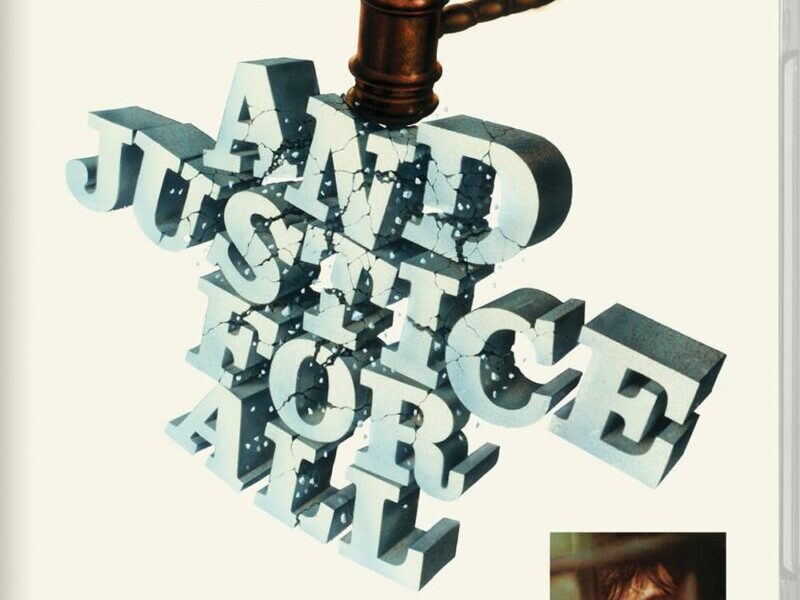
There are also archival interviews with Jewison and Levinson (all of the information from the Jewison one is covered in his commentary — the interview just puts a face to the voice) and deleted scenes (none of which feel revelatory but it’s nice to see them included). The booklet includes a new essay by film critic Sergio Angelini that considers everything from the ellipsis in the title to the tie-in novelization.
Indicator’s Blu-ray is loaded and …And Justice For All features great acting and a plot that resonates as much today as it did in 1979, unfortunately.