
Previously On X-Men: ‘X-Men Of Apocalypse’ Poorly Retreads Old Ground
by Austin Gorton
The pre-“Age of Revelation” culling continues as three books come to an end, and a different “Age of…” series begins with…questionable results.
Astonishing X-Men #36 by Tim Seeley & Edoardo Audino

Changeling re-emerges and storms a nuclear facility intent on triggering an apocalypse.
- Changeling’s “do what I say or this headband blows off your head” headband from Banshee’s first appearance gets a lot of play this issue.
- At one point Morph puts his hand over Banshee’s mouth and it seems to be enough to stop his sonic scream? I feel like Banshee should be able to blast it away, unless he’s making some kind of super tight seal with his hand (which I guess is possible).
- When Morph switches back to Changeling, he starts talking like a Silver Age villain (lot’s of “bahs!” and whatnot), which is a nice touch.
- Similarly, Changeling’s big plan involving nuclear missiles and triggering a lot of casualties to let mutants thrive is an appreciated nod to his Factor Three origins.
- Audino renders the shapeshifting in a neat way.

There’s a lot of fun touches here, but we seem to have completely lost the thread of the plot. What was the deal with the seaside town of spies and LMDs? Given a face is all it takes to get into the nuclear facility, that all just feels like time-killer material now.
Exceptional X-Men #13 by Eve L. Ewing & Federica Mancin

Kitty makes peace with her past while stuck in her past.
- The cover is an homage to the opening splash page of X-Men #131, Kitty’s third appearance.

- Once again, we’re all over the place in terms of what time period “the past” is meant to represent relative to the Marvel sliding timeline, with incidental characters referencing VCRs and pagers, two things that don’t really work whether we’re assuming this is the 1979/1980 setting of the original story or the vaguely “twenty years” ago setting of the sliding timeline. Best not to think about it too hard.
- Stevie Hunter, Kitty’s dance instructor and later teacher/mentor to the New Mutants (one of Claremont’s various “normal people who get drawn into the X-Men’s orbit” characters) gets name-checked by young Kitty; she first appeared in X-Men #139.
- Young Kitty having a headache immediately after she uses her powers is a reference to her first appearance, which linked her emerging abilities with headaches.
- While the Wolfpack Sentinels were established as targeting the kids last issue, the presence of humanoid Sentinels in the past is a bit random, especially given Sentinels were largely off the table at the time of Kitty’s introduction; the last batch were built by Steven Lang and destroyed in X-Men #100 (the story which kickstarted all the Phoenix stuff); the next batch gets built by Sebastian Shaw as part of “Project Wideawake”, but that specifically comes in the wake of “Dark Phoenix Saga” (being inspired in part by the X-Men’s “attack” on the Hellfire Club).
- The presence of the Sentinel also introduces all kinds of narrative problems the issue doesn’t even try to handwave away — if the idea of sending the kids back in time was to prevent disruptions to Kitty’s personal timeline, it seems like having a Sentinel show-up on her front lawn before she even meets the X-Men would do that. And then the kids get pulled back into the present with the Sentinel still hanging out there on Kitty’s lawn which seems like…a disruption. What happened to that Sentinel once everyone went back to the future? No idea!
- Ironheart talks about using a “goober”, the term for a comic book-y MacGuffin introduced by Into The Spider-Verse.
- In the end, Kitty seems to make peace with her past as a child superhero by acknowledging how it makes her a better teacher of young mutants in the present, which seems to bring an end to her character arc for the series.

- To punctuate that, the issue ends with Kitty, back in the present, reaching out to Rogue (something she explicitly avoided earlier in the series), putting an end to her self-enforced estrangement from the other X-Men teams.
- It all gives an air of finality to the issue — like most of the books this month, this is the last issue before “Age of Revelation”, and while it has a AoR counterpart in Expatriate X-Men, Tom Brevoort recently announced that the entire line would get relaunched coming out of the event, and of all the series with “X-Men” in the title somewhere, this one is the most likely to not return in some form.
If this is the end of the series in this form, it doesn’t go out on the strongest of notes. The emotional arc of Kitty getting over her “Fall of X” PTSD works well enough, but the plot mechanics don’t. You simply can’t build a story around the idea of preventing alterations to history, then do a bunch of stuff that should alter history, and then never bother to address how that stuff either did or didn’t alter history. Did this get cut short by “AoR”? Probably. But that’s still inexcusable.
Hellverine #10 by Benjamin Percy & Raffaele Ienco

The Hell Hulk arc — and the series — comes to an end.
- Not a whole lot to this one — it concludes the Hell Hulk arc and more or less puts Daken back with this Project: Hellfire team, which is more or less where the last Hellverine series ended as well.
- Ienco’s art — which I’m generally a fan of — feels a little rushed towards the end.
- I do appreciate that in the end, Aurora being a captive of Mephisto to force Daken into action turned out to be a ruse on Mephisto’s part.

The cancellation of stuff like this stings less than, say, Magik or Psylocke — there’s enough of a hook to the general concept — a Ghost Rider Wolverine — that ensures it’ll be back in some form or another before too long (to wit, this is already the third such outing for the character), whereas other X-characters who can’t carry their own solo books tend to get fewer repeat chances.
Wolverine and Deadpools #3 by Cody Ziglar & Rogê Antônio

Logan and Laura help Deadpool free his daughter from the Shadow King.
- Shadow King trying to possess Gabby in a similar fashion to what its doing to Ellie here is a reference to a Krakoa Era New Mutants story.
- At one point Laura reasons that the kidnapped kids must be close because teleporting long distances is usually a no-go for young kids; that’s not something I’ve ever heard before.
- Deadpool putting a bullet through both his and Agent X’s heads to shut down Agent X is the kind of gory grossness you want in a Deadpool story.

This was always intended to be a three part miniseries to wrap up Ziglar’s Deadpool run, and this finale works well enough to that end, with the Wolverines firmly in guest star status despite the shared billing. Will I ever feel compelled to revisit this? No. But it does what it set out to do.
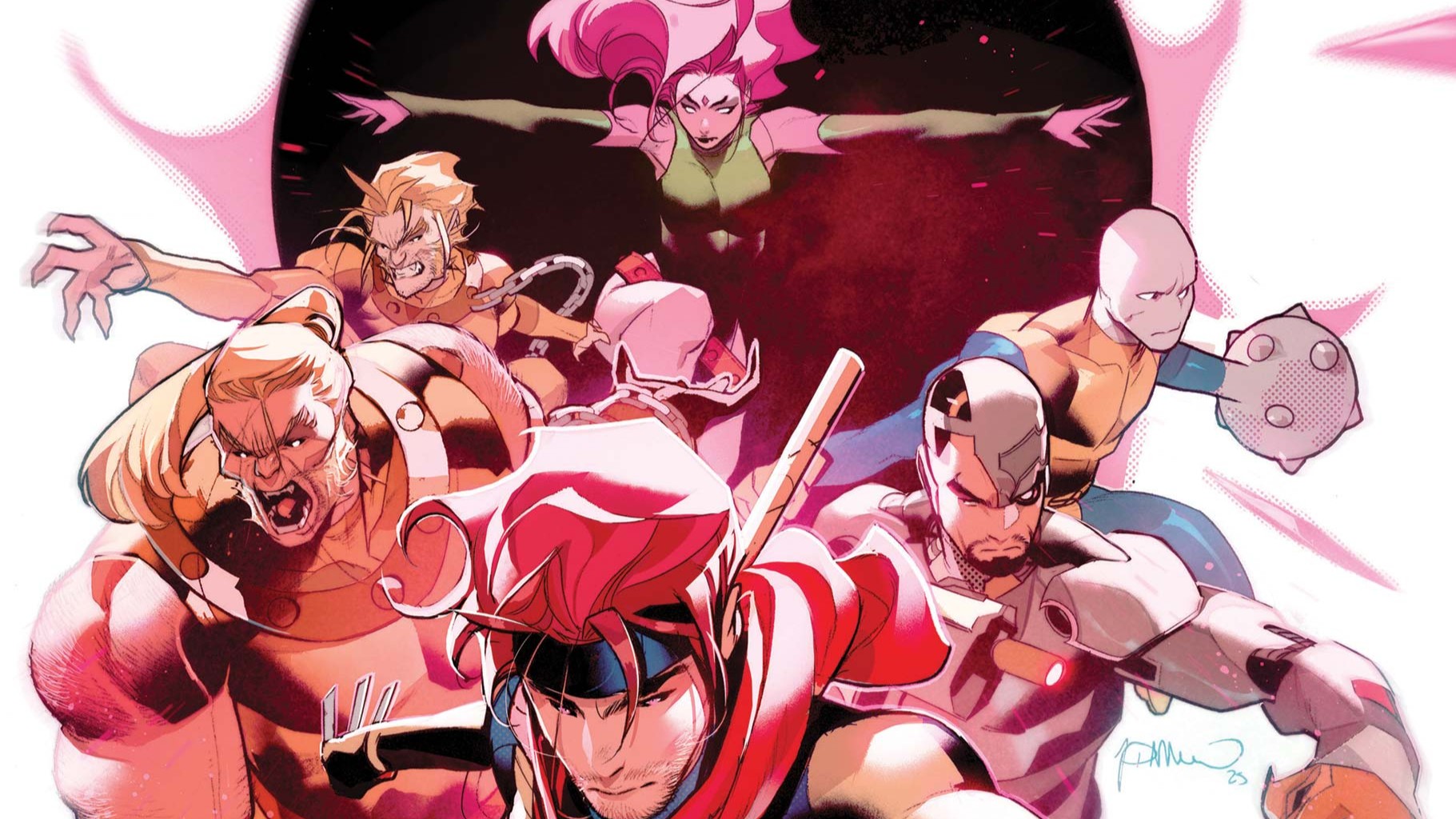
X-Men of Apocalypse Alpha #1 by Jeph Loeb & Simone Di Meo

In the wake of Apocalypse’s defeat and the rewriting of history, Magneto’s X-Men struggle to determine how their reality continues to exist.
- Like “Age of Revelation”, this issue kicks off a miniseries meant to celebrate the 30th anniversary of the Age of Apocalypse; whereas the former celebrates it by doing a new story in a similar style, this is more of a direct sequel, returning to the setting and characters of the original.
- Of course, “Age of Apocalypse” unfolded over the first four months of 1995, so we’re already well past the actual 30th anniversary of the event.
- This also isn’t the first time the X-books have “returned” to the “Age of Apocalypse”, despite the fact that it pointedly ends with the reality being erased by the actions of the characters in the story. Nearly every time the event hits some kind of significant anniversary milestone, Marvel trots out a new story revisiting it (including one for the 10th anniversary written by Marvel’s current editor-in-chief under his yellow-face “Akira Yoshida” pseudonym).
- All that said, this issue pointedly ignores all those sequel series, presenting a new take on the immediate aftermath of the original story’s conclusion.
- If the font used in the narrative captions isn’t the same font used in the original “Age of Apocalypse” books, it’s a pretty close approximation of it.
- Less reminiscent of the original are many of the character voices here (despite Loeb being involved in some of those original stories); for example, the AoA Magneto was never as imperious sounding as he is here and Morph, while a jokester, wasn’t a fourth-wall breaking Deadpool stand-in.
- It’s also rife with continuity issues (again, despite the presence of one of the original story’s authors). It’s said that Havok and Cyclops were once X-Men before defecting to Apocalypse; they weren’t, and rather were raised by Sinister in this reality. Havok and Polaris were never together, and Sabretooth didn’t kill her. Forge was killed before the end of the storyline (in a book Loeb wrote), but he’s alive here with no explanation. Apocalypse’s son Holocaust is here, scheming with Sinister, despite the fact that he was one of the four characters who survived the end of the original story by being transported to the “main” reality (alongside Nate Grey, Dark Beast, and Sugar Man). And Sinister is apparently scheming to get back Nate, whom he created — except the point of his creation was to be used as a weapon against Apocalypse, who is dead.
- Also, Marvel long ago sunsetted the name “Holocaust” in favor of “Nemesis” for sensitivity reasons, but apparently neither Loeb nor Brevoort got that memo (or care).
- In the end, as an “alpha” issue, this all turns out to be setup for the actual series, which will involve a group of “Age of Apocalypse” X-Men traveling through time led by Blink to save their timeline, which has shades of both the 2000s era Blink-led Exiles series and the recently-concluded “Giant-Size X-Men” anniversary event (which also featured a stopover in the “Age of Apocalypse“).
The art here is really good — a little zoomed in at times, filling panels with characters to eschew backgrounds — but overall it channels the Joe Madureira-esque energy of the original without just aping it directly like so many late 90s Joe Mad clones. But everything else here is a mess, and the fact that Loeb was there for the stories he’s so badly misremembering/ignoring/mixing up makes it all the more egregious.

