
Romy Schneider Double Feature: ‘Le Combat Dans L’île’ And ‘Maedchen In Uniform’
by Rachel Bellwoar
It’s always the right time to watch more films starring Romy Schneider.
Alain Cavalier‘s Le Combat Dans L’île (1962)

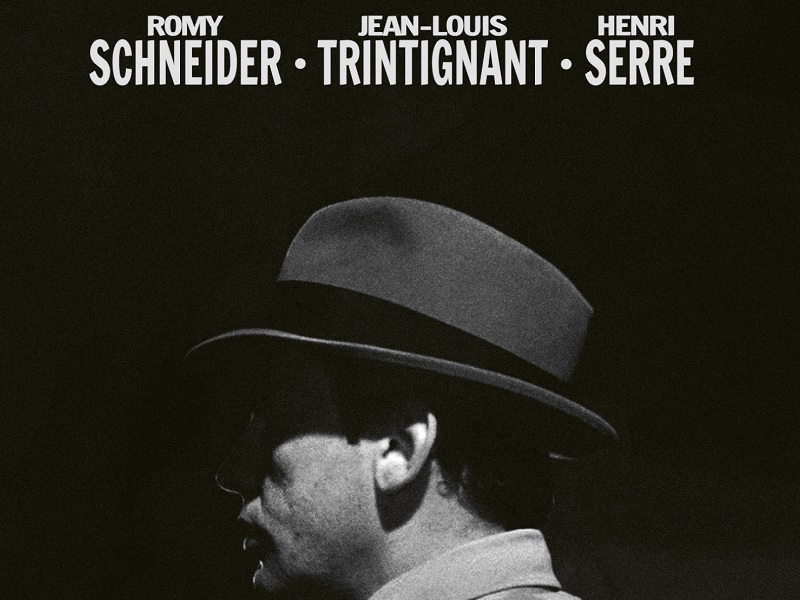
For all appearances, Le Combat Dans L’île comes across as a very masculine crime thriller. The cover for Radiance’s Blu-ray is of an intense Jean-Louis Trintignant, his face hidden in shadow, and the film begins with Clément (Trintignant) planning a political assassination behind his wife Anne’s back. The first disappointment is realizing they’re married and not just dating, which would make it easier for Anne (Schneider) to dump him and never look back.
This could speak to my own limited knowledge when it comes to the Algerian War, but the politics of the film aren’t always the easiest to follow (though film scholar Mani Sharpe does a great job providing context in his booklet essay while also identifying what it is that Trintignant’s acting style adds to the movie). Clément doesn’t like how his father (Jacques Berlioz) runs his factory, but he also hates Communists and he’s definitely racist, as is made loud and clear when he makes a ‘speak French in France’ remark at a Black man at a jazz club. Fascist about sums it up and he certainly holds the belief that violence is always the answer (which the film revels in mocking).
There’s a reason Schneider has top billing even before Tritignant in the opening credits, though, and where all expectations might be that the film will follow him — not her — there’s a pivot that makes sticking with this film extremely worth it and more a relationship drama than anything else.
Radiance’s Blu-ray includes multiple archival interviews by Cavalier, who started out as Louis Malle’s assistant on Elevator of the Gallows — Le Combat Dans L’île was his first feature and his first short, “Un Americain,” is included as well. There is also one with Trintignant (who was given his choice between the two male roles). Speaking of the other male lead, Henri Serre gets unfairly short changed by the bonus features. His performance as Clément’s friend, Paul, is equally strong but gets limited attention. I also enjoyed the specificity of some of critic Phillippe Roger‘s observations in his interview, like identifying the poster in Paul’s mill versus the painting at Clément’s apartment.
Géza von Radványi‘s Maedchen in Uniform (1958)

Following the death of her parents, Manuela (Schneider) is sent to an all-girls boarding school/convent where the Mother Superior (Therese Giehse) has no qualms about suggesting all of the girls need to get to making babies so Germany has troops. Everyone’s favorite teacher is Miss. Von Bernberg (Lilli Palmer). Manuela’s feelings towards Miss. Von Bernberg start to grow romantic, however, especially after rehearsals begin for the school’s production of Romeo and Juliet.
Maedchen in Uniform was the second film adaptation (and first in color) of Christa Winskoe’s play. Unlike The Children’s Hour, another seminal play with a lesbian character that resulted in two film adaptations (one black-and-white and one color), in that case the differences between the two films are more defined. These Three made the central love triangle between two cis women. William Wyler’s 1961 version (he directed both) makes the one woman gay again, but at the price of fueling the trend of giving LGBTQIA+ movies tragic endings.
As filmmaker Drew Burnett Gregory talks about in her commentary, Radványi’s Maedchen is very indebted to and admiring of the original and doesn’t have a clear agenda or reason for existing (which in no way means it’s a bad film, but the director’s reasons for remaking it are unclear). Why the need for another Mädchen movie? Set in 1910, the film is even still a period piece instead of moving the action to contemporary times. Schneider gives a rousing performance, as do many of the young actresses around her. Her impassioned drunk speech at a climactic moment is especially affecting. Gregory also talks about the subgenre of lesbian boarding school movies, including two personal favorites — the French film Olivia (1951) and Cracks starring Eva Green.
Le Combat Dans L’île is available on Blu-ray from Radiance Films. Maedchen in Uniform is available on Blu-ray from Kino Lorber.
