
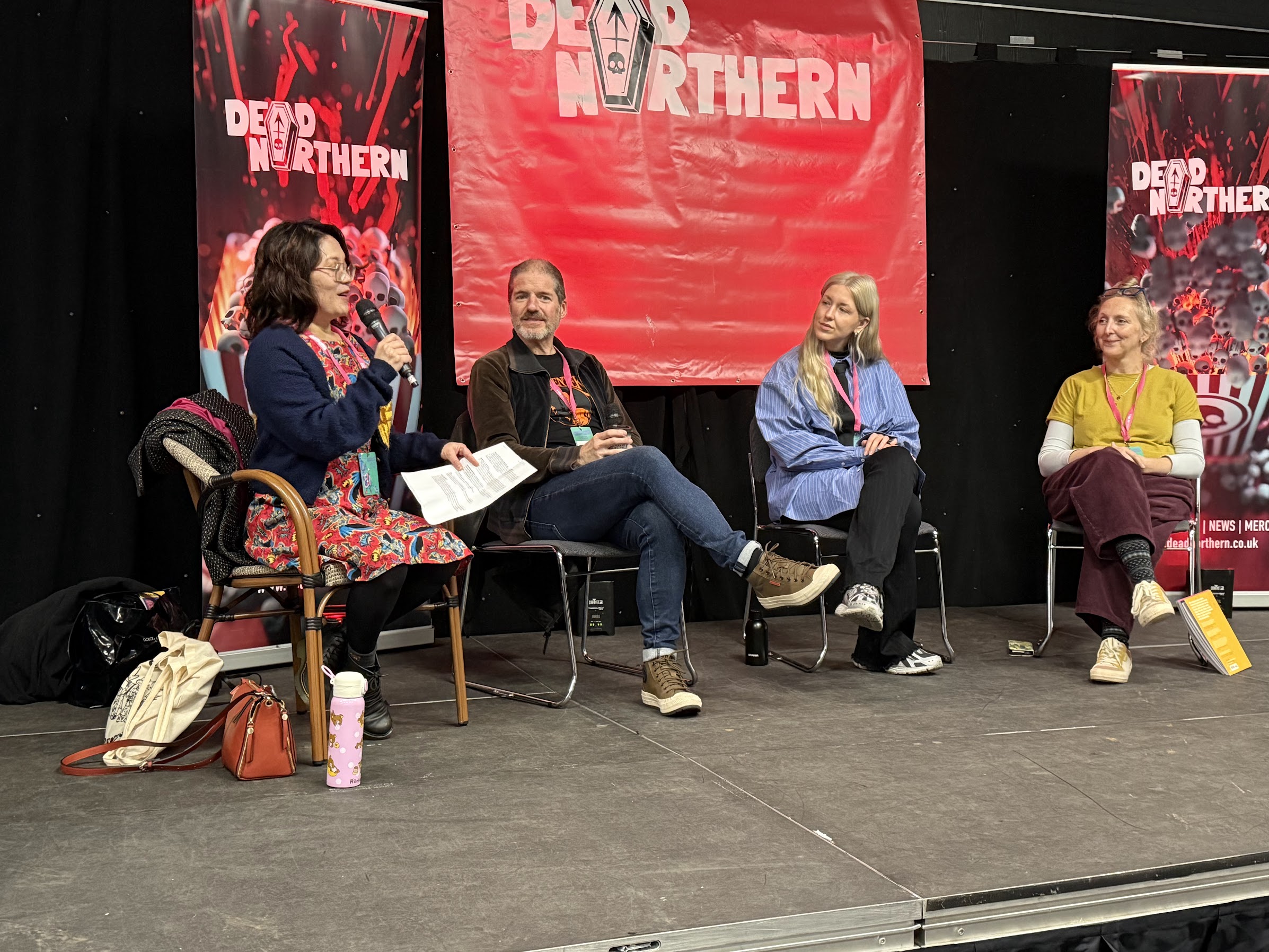
Thought Bubble 2025: Things I Learnt From The Dystopian Comics Panel
by Olly MacNamee
This one was one of the earlier panels of the day on Saturday and while the questions were rather lengthy – and at times difficult to follow, if I’m honest – the answers did reveal a few interesting takes by the two writer and one artist on the panel, on dystopian narrative. Here’s what I learnt from this panel, with guests Charlie Adlard (The Walking Dead), Chrissy Williams (Golden Rage), and Bim Eriksson (Blue Baby):

Chrissy Williams spoke about Golden Rage steering clear of showing the dystopian future but rather focuses on the cast – the Golden Girls meets Battle Royale – and the island they survive on.
As the only artist on the panel, Adlrad spoke about how the zombie apocalypse is not relevant to know in The Walking Dead. It would almost be a distraction from the human focused series. It’s a big part of what appealed to Adlard, that the zombies were the least important part of the story. They tend to be used to move the characters forward from one point to another.
In Golden Rage the elderly are seen as unwanted, and while the island they are exiled to is supposed to be a punishment, the cast forge a new life there and come to see it as their home.

Adlard noted that zombies are scary because, unlike other monsters, when you turn you lose your self.
Golden Rage is a rare example of a comic that positively represents the elderly. In Baby Blue the characters are drawn in an off-kilter way, which has rubbed – mostly male readers – up the wrong way. Comic book fans seesm to always want beautifully rendered characters.
On one occasion Adlard drew two UK comedians/presenters – Adam Cornish (who wrote the first draft of the Ant-Man movie) and Joe Buxton– into The Walking Dead, because he loved their radio show back in the day, and hoped that if he did this he may get a mention on the show. He didn’t, though.
Golden Rage purposefully has an all-female cast. Even all the animals are female. These castaways show through their fortitude that they are anything but throwaways.
The Walking Dead’s whole story arc is the rebuilding of society, moving from one area and community to another until, eventually, they settle and the 20 year time jump in the final issue reveals the end result of this process. In fact, Adlard didn’t want a dystopian, nihilistic finale. Not after what these characters had gone through over the epic run of the series.

Dystopian stories can reveal humanity’s moral courage and ethical values we hope we all share, but may only come to the fore with such struggles as. Living in a dystopian future has the potential to draw these qualities out of all of us. They may be dystopian, but the message of human ingenuity and courage is a positive one in many instances.
When a dystopian society is closer to our present, it’s more relatable, more believable, Adlard suggests, using Pluribus and Severance as two good examples of this.


