
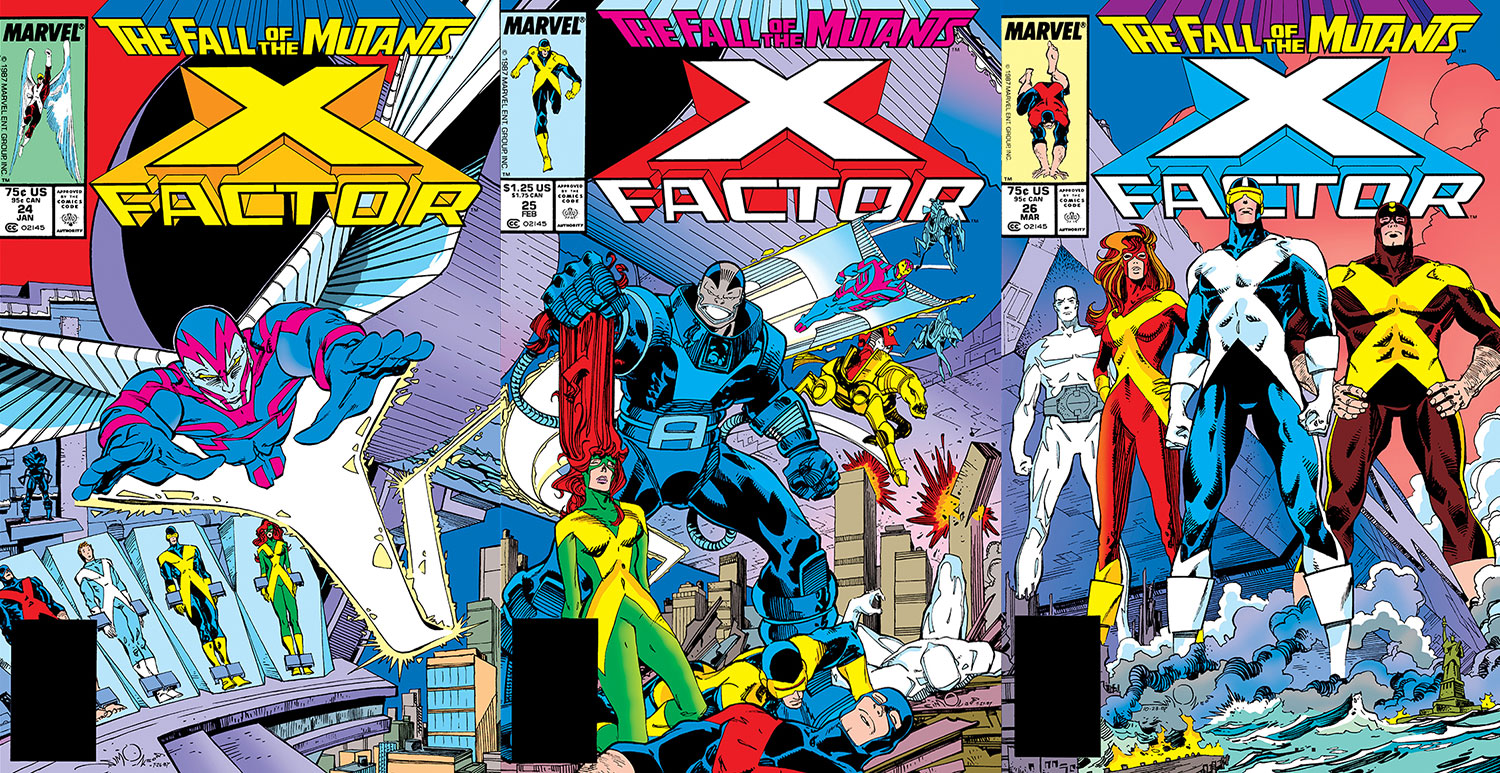
Comics We’re Thankful For: When Louise Simonson Took ‘X-Factor’ From Terrible To Terrific
by Austin Gorton
Good morning and happy Thanksgiving! This year for every American’s favorite gluttonous holiday, the Comicon team wanted to take a look at some of the comics that made us the geeks we are. They might be single issues, graphic novels, full series, or even something off the beaten path. This is the Comics We’re Thankful For.

Back in the early 1990s, when I was first getting into comics, reading old stories was trickier and more expensive than it is these days. Trade paperbacks were few and far between. The idea of reading comics cheaply and easily online was but a gleam in Al Gore’s eye. The most reliable avenue, assuming you had a decent comic shop nearby, was back issues. But the early ’90s was also the height of the first speculator bubble — with the X-Men hot and the future Image artists working on their books even hotter, it was tricky to find back issues of Uncanny X-Men or New Mutants that were attainable on an income comprised of a weekly allowance and the occasional lawn mowing or babysitting job. The one exception? X-Factor back issues, which, a few one-offs aside (like Archangel’s first appearance in issue #24), were readily available in bargain back issue bins.
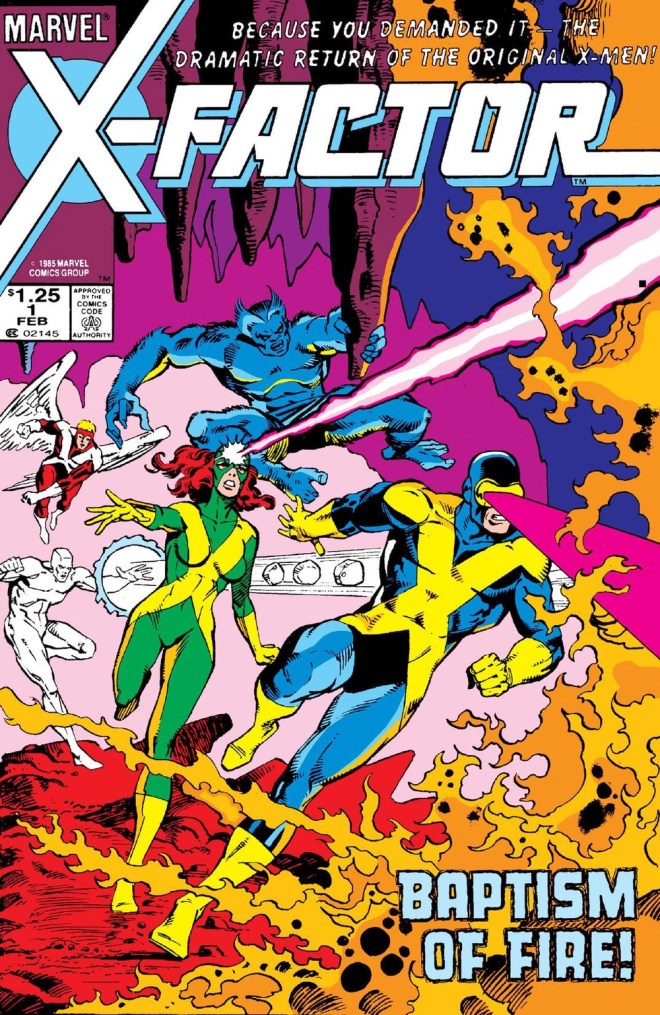
The launch of X-Factor roughly forty years ago was an inauspicious one. It marked the first time an ongoing X-Men related title would unfold outside the stewardship of longtime X-Men writer Chris Claremont. It featured a terrible premise, in which its mutant heroes pretended to be mutant bounty hunters as a cover to find young mutants in need of training. And in its desire to reunite the original X-Men, it brought up one of the most notorious retcons in superhero comics, undoing the end of the classic “Dark Phoenix Saga” and bringing Jean Grey back to life (technically, establishing that Jean never died but rather was replaced by a cosmic doppelganger who died).
That last element was particularly problematic when it came to Cyclops — my favorite comic book character — who, under Claremont, had more or less ridden off to the sunset, having married and started a family. The return of Jean and the broader desire to reunite the original X-Men in an ongoing comic book undid all of that, with writer Bob Layton undoing it in the most tone-deaf way possible: by having Cyclops abandon his wife and newborn baby with nary a word of explanation so he could go play with his high school friends. But Layton wasn’t long for the book; by issue #6, he was replaced by writer Louise Simonson.

A former editor who oversaw a long run of Claremont’s X-Men before going freelance, “Weezie” immediately left her mark on the book, revealing the hidden master of the Alliance of Evil (a group of jobbers doing OG Brotherhood of Evil Mutants cosplay to X-Factor’s original X-Men) to be a new creation, the evil mutant Apocalypse (Layton originally intended the master of the Alliance of Evil to be the Owl, a minor Daredevil villain). She also brought her husband Walt, then in the midst of a defining run as writer/artist on Thor, aboard as the book’s new penciler, starting with issue #10.
But Simonson is a consummate professional — whereas nowadays, a new creative team/direction for a character or team gets a new launch that just plows ahead with something new, Simonson didn’t immediately abandon the faulty initial premise of X-Factor and its portrayal of Cyclops. Rather, she worked the abandonment of those elements into the narrative itself, having the team gradually realize the negative impact their mutant hunter ruse was having on human/mutant relations (and revealing it all to be the work of a secret villain trying to do just that) while having Cyclops recognize what a cad he’d been, with Weezie working alongside Claremont to generate reasons to keep him separated from his wife that were less dependent on him being a callous, selfish jerk.

By roughly a year-and-a-half into her run, at the climax of the “Fall of the Mutants” crossover event, Simonson had salvaged X-Factor, disposing of — but not abruptly abandoning — the book’s initial premise which, in the process, positioned X-Factor as the Avengers of the mutant world, the public-facing superheroes speaking to the media and interacting with the average denizens of New York City. It would take another crossover event — the following year’s “Inferno” — to finish clawing back Cyclops from the terrible position the launch of the series had put him in, and even then, it came at the ill-advised cost of turning his wife into a baby-kidnapping supervillain looking to bring Hell to Earth, then killing her.
Though Walt Simonson would leave at the end of “Inferno”, Weezie would remain on X-Factor for another two dozen issues. Included in the back half of her run is “Judgment War”, an underrated (if a chapter or two too long) space epic; a chunk of issues with forgettable plots that are nevertheless memorable for widening the book’s supporting cast and leaning heavy into the soap opera elements while bringing back some fun Silver Age villains; and a brief collaboration with future Image founder Whilce Portacio featuring the most ’90s of all characters, cybernetic ninjas. Thanks to the fact that none of it was as sexy or hot or kewl or collectible as Rob Liefeld‘s or Bill Sienkiewicz‘s New Mutants, or the Marc Silvestri and Jim Lee X-Men, teen me got to read (and re-read) all of it well before all that other stuff, absorbing it into my comics DNA. It also imbued me with an affection for the original X-Men as a collective unit that I never would have acquired had the original Silver Age issues been as relatively easy to read as Weezie’s X-Factor.

Louise Simonson’s X-Factor is certainly not without its flaws — it can lean too hard on melodrama at times and outside its two main villains — Apocalypse and Cameron Hodge — it lacks in memorable foes (it would take Zeb Wells’ Krakoa Era Hellions to make Nanny and the Orphan Maker really sing). But while it often got overshadowed (rightly or wrongly) at the time by Claremont’s Uncanny X-Men and Simonson’s own New Mutants (once Liefeld showed up), and after the fact by the Peter David reinvention of the series that came in its wake, Simonson’s X-Factor run stands as a testament to the idea of making lemonade out of lemons, and I remain thankful for the work it did and the stories it contains.