
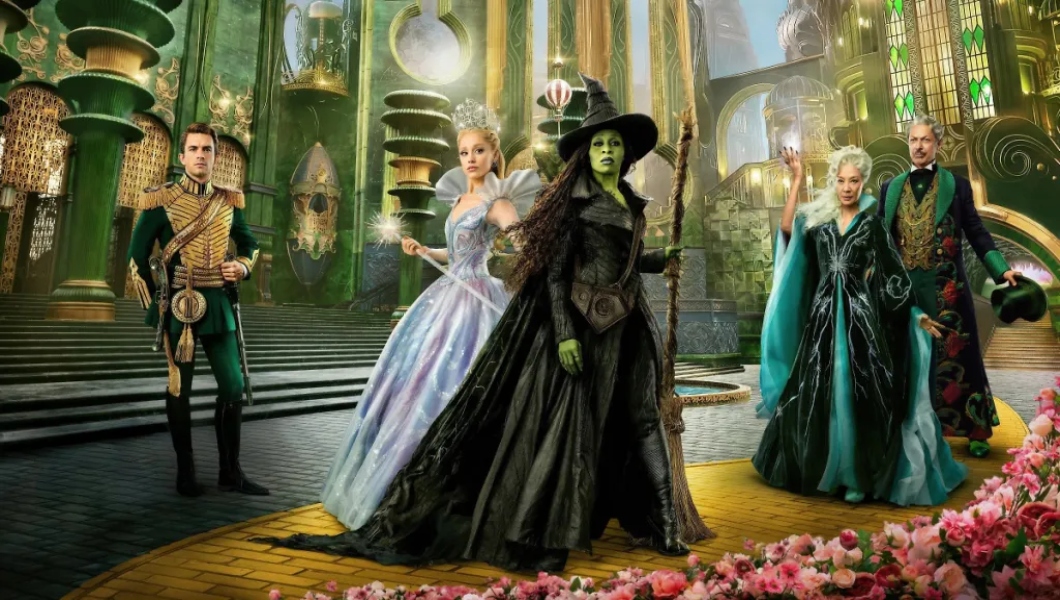
Commentary: ‘Wicked: For Good’ Highlights The Difference Between Theater And Film
by Frank Martin

There have been many films adapted from the stage even though both mediums have huge differences in both terms of storytelling and execution. Because of the nature of a musical or a play, certain things that work on stage in front of a live audience with rigid sets do not necessarily translate to the screen — and vice versa. Changes need to be made to accommodate the strengths and avoid the weaknesses of each medium. Sometimes, though, things can’t be changed because they are inherently baked into the nature of the story. Wicked: For Good has certain moments highlighting this phenomenon.
The overall story serves as both a prequel and an alternate take on the events of The Wizard of Oz. It reveals how Elphaba (Cynthia Erivo) was wrongly framed as the Wicked Witch of the West and was actually friends with Glinda the Good (Ariana Grande) at their school. Labeled a terrorist on the run, Elphaba visits her sister, Nessarose (Marissa Bode), who is now a governor. Angry at her friend, Boq (Ethan Slater), Nessa uses Elphaba’s magic book to cast a spell, accidentally shrinking his heart. Elphaba eventually saves Boq by casting another spell, turning him into the legendary Tin Man.
By all accounts, Nessa was acting completely irrational by looking through the book and casting a spell that she had utterly no experience with. It’s a ridiculous character choice that plays awkwardly on the screen. Nevertheless, this pivotal scene plays out very differently on the stage. Because of the nature of theater, character choices — even irrational ones — are taken with a grain of salt. They play out in dramatic fashion that the audience can buy into much easier than seeing it edited on a screen. Of course, this is a plot point that really couldn’t be changed, but it highlights the difference between stage and screen, where terrible character choices are far more forgivable.
Wicked: For Good is now in theaters.
