
Interview: Joseph Illidge Speaks Legacy And Importance With ‘New History Of The DC Universe: The Dakota Incident’
by Scott Redmond
In 2025, DC Comics began a journey to present a definitive history of the universe depicted between comic book pages. Called The New History Of The DC Universe, this four issue miniseries was led by Mark Waid and a bevy of artistic talents.
While that part of the journey was completed, the story is far from over.
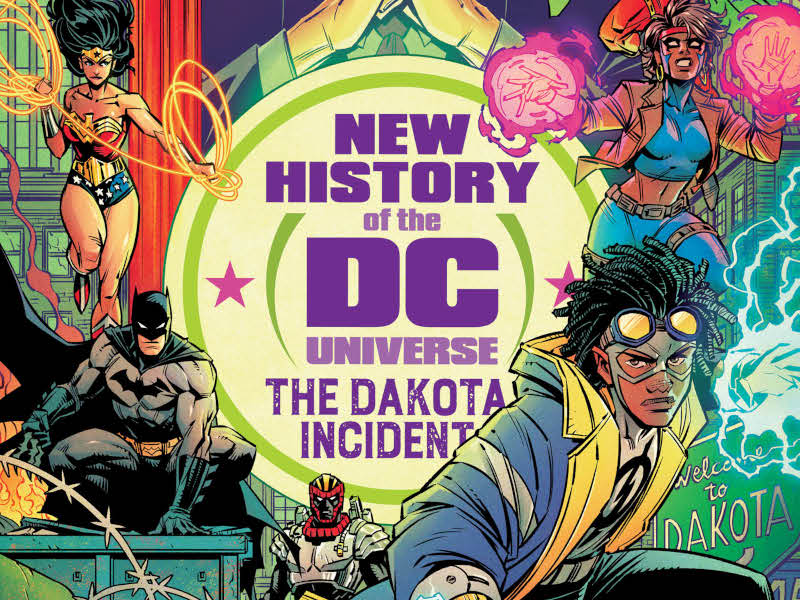
On February 25th, the publisher is launching a brand new one-shot focused on a moment in the DC Universe centering the iconic Milestone Comics characters. Titled New History Of The DC Universe: The Dakota Incident, the one-shot features the writing of Milestone veteran Joseph Illidge, Stephanie Williams, Morgan Hampton, and Nikolas Draper-Ivey, featuring artwork from Carlo Pagulayan, Valentine De Landro, Edwin Galmon, and others.
I had the chance to ask Illidge a few questions about this new one-shot and the impact that Milestone continues to have.

Scott Redmond: Thanks for taking the time to talk to us about this pivotal issue, Joseph. This is, of course, not your first go around with writing within the Milestone sphere of influence. First off, how does it feel to not only see these characters and concepts thriving after three decades, but to also still be contributing to their tapestry?
Joseph Illidge: It’s very heartwarming to see the Milestone heroes and the Dakotaverse thriving 33 years after their publishing debut, and to be one of the writers ushering in their smooth fusion with the DC Superhero Universe is nothing less than an honor.
Milestone is where I started my career in comics and began to understand the importance of heroic fiction from all walks of life, so it’s a labor of love and a full circle in my career. You’ll see that when you experience the story, the team and I are telling with New History of the DC Universe: The Dakota Incident!
SR: Static and so many of the other Milestone characters have remained popular and relevant with the themes and foundations built for them so long ago. Times have naturally changed since their birth, but how has the approach to writing these characters changed or not in that time?
JI: In the Milestone bibles, the massive documents that Dwayne McDuffie, Denys Cowan, and Christopher Priest made the greatest contributions to crafting, there is a reference to The Marvel Age of Comics of the ’60s and a line about the hero’s duty to humanity versus duty to oneself. That credo, that imperative, lies at the center of the earliest Milestone stories, and it’s the North Star for writing the characters now.
The approach remains the same. Our world changes. The characters and our world are interlinked, so we’re able to give the heroes, villains, and supporting characters new textures and nuances.

SR: New History of the DC Universe: The Dakota Incident is connected to the recent New History of the DC Universe miniseries, but clearly is also its own entity. What is the focus and overall bigger picture goal with this one-shot?
JL: New History of the DC Universe: The Dakota Incident is very much a New History book in the vein of what Mark Waid has shepherded, so much so that Mark was an advisor on this book. What’s different is that it’s a story using comic book panel-to-panel storytelling, as opposed to the journal text, full-page and double-page splash approach.
The focus and overall bigger picture of this one-shot is crafting a fusion of the Milestone and DC superhero universes with a story that matters, one that has import and opens the door for a new era of Milestone stories, starting with that surprise reintroduction of Static readers saw in DC K.O.: The Kids Are All Fight.

SR: This issue focuses on an untold moment in the history of Milestone wrapped within the timeline of the DC Universe (from a time when Lex Luthor was still President of the United States and has his sights on Dakota City). There is certainly a timeliness that resonates with this premise. How much of the choice behind this particular framing came from current as well as past events within the real world?
JL: Many writers will tell you how stories are crafted before the world catches up with them, and the team and I, the writers and artists, along with DC Editorial, have been in discussion and working on this for the better part of a year.
It’s funny because I was a member of DC Comics’ Batman Editorial Department when Lex Luthor became President in the comics. I still remember that page with Superman flying into space so he could scream, and I admired DC’s courage to make the villain into the leader of the focal nation on Earth. We’re leaning into that, and other continuity points of DC Comics, which I would love to reveal here but can’t because [REDACTED] would have me [REDACTED]. Lol
The compression of time that Mark Waid and DC Editorial pulled off with the New History of the DC Universe series opened up opportunities to overlap important events for dramatic character impact, so the timeliness comes from the resonance that Milestone and DC Comics’ stories have exemplified throughout the years.

SR: Writing-wise you’re being joined by Williams, Hampton, and Draper-Ivey. All of them have made pretty big marks on modern DC with their stories, many of them focused on Black characters from DC and Milestone alike. What has it been like to work with them and to be able to have a full writing team of Black writers for such an event issue?
JL: First, I have to say being in a writers’ room with Stephanie, Morgan, and Nikolas was a real treat, and we started to mesh pretty instantly because of our friendships and mutual love of both Milestone and DC Comics stories.
Seeing the real and fictional worlds from a collective Black perspective allowed for a certain kind of shorthand when we spitballed ideas with DC Editorial and platformed off of each other’s ideas. At the end of the day, we’re all storytellers, and telling The Best Story is the unifying goal.
SR: On the artistic side, Pagulayan, De Landro, and Galmon — among others — have been tapped for this double-sized feature. What would you like to say about their work in helping bring this story and Dakota City to life?
JL: What I’d like to say about all the amazing artists who brought our story to life is that I’m grateful for their skills and commitment to making this a top-level 40-page saga. Their approach to both the Milestone and DC characters was truly respectful and larger-than-life! The covers are the final icing on the cake!!

SR: Over the years, Milestone has found new life multiple times. A lot of that has come through shared connections with DC Comics. You’ve long been associated with work on and preservation of Milestone’s legacy. Beyond this one-shot, is there potentially more Milestone for fans to look forward to?
JL: You’re absolutely right about Milestone and its multiple lives, and it speaks to the potency and agency of those heroes. Like the DC Comics and Marvel superhero publishing mythologies that change with the times, Milestone’s heroes transform to travel forward in time so that new readers can discover and embrace them the same way many readers discovered DC Comics after Crisis on Infinite Earths.
My long association with preserving Milestone’s legacy is a responsibility I take very seriously, so I can tell you that New History of the DC Universe: The Dakota Incident is by no means the end of their story.
After all, Static just gave Granny Goodness some back talk!
SR: Thank you again for the time today for this interview. Is there anything more you’d like to share with our readers about this issue or Milestone and DC Comics overall before we wrap things up?
JL: You’re welcome! New History of the DC Universe: The Dakota Incident is a story for all the fans, and we hope the readers have fun with all the Easter eggs and amazing events from these two wonderful publishing universes, now fused into one!
Check out New History of the DC Universe: The Dakota Incident on February 25th.

