An Interview With ‘First Freedom’ Writer Angélique Roché
by Rachel Bellwoar
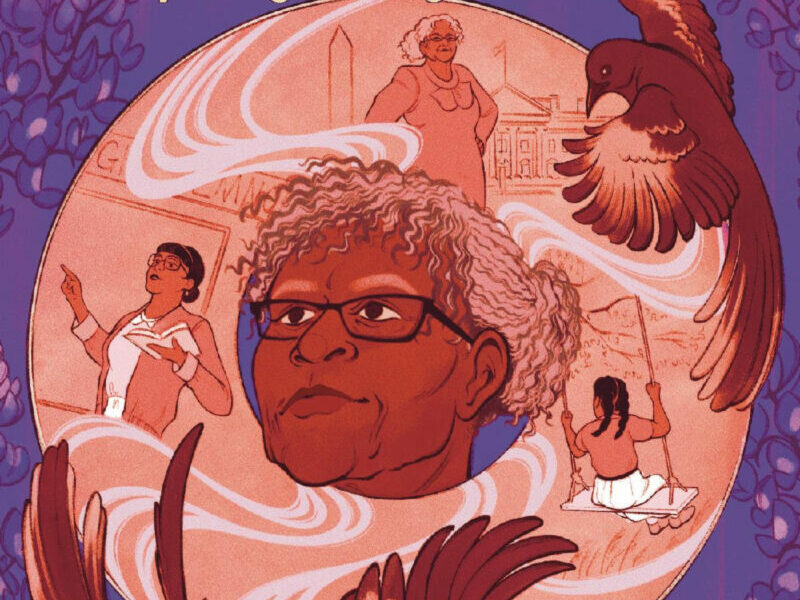
Juneteenth has only been a federal holiday since 2021. It’s been celebrated a lot longer than that, though, and it’s thanks to activists like Opal Lee that it’s finally getting national recognition. Now it’s time for Dr. Lee — or Granddear as she’s often referred to — to get the props she deserves in writer Angélique Roché‘s graphic novel, First Freedom: The Story of Opal Lee and Juneteenth. Featuring art by Alvin Epps, Bex Glendining, and Millicent Monroe, as well as colors by Damali Beatty and letters by Alexis Bennett with AndWorld Design, here’s what Roché had to share about documenting Dr. Lee’s life:

Rachel Bellwoar: In the introduction, you talk about how Oni Press approached you with the idea for this graphic novel. How familiar were you with Opal Lee and her activism going into this project?
Angélique Roché: Before my conversation with David [Steward II], I was familiar with Juneteenth. I knew of Dr. Lee’s push to make Juneteenth a Federal holiday, but I quickly realized what I knew of Dr. Lee and her work was only the tip of the iceberg.

Roché: Graphic novels have the power to blend words and the impact of imagery into a single medium accessible to multiple generations and readers across the spectrum, and I believe that stories like Dr. Lee’s should be accessible to as many people as possible. Moreover, when you are telling a story of the life and journey of someone as phenomenal as Opal Lee, that blend of imagery and words is the only way to do it justice.
Bellwoar: Did Dr. Lee make any requests, in terms of stories she wanted to include or points she wanted to emphasize?
Roché: From our very first conversation, Dr. Lee’s priority was to tell an authentic, honest story that could reach multiple audiences, particularly younger audiences who gravitate towards sequential storytelling. It was always at the forefront of my mind to honor that wish by ensuring that Dr. Lee’s spirit was at the heart of the story. That means that many of the small moments, like young Opal tossing buckets into the field, her relationship with AlRose LeGrange, and her meeting President Obama for the first time, are the stories we discussed during our conversations and interviews.

Bellwoar: Texas plays a huge role, both in the history of Juneteenth and in Dr. Lee’s personal life. How important was it to you to spend some time in the state?
Roché: As the adage goes, write what you know. And, I am a true believer that if you don’t know, you’d better go learn. The first thing I did when I launched into the research and background for this book was plan a weeklong trip to Fort Worth. From where Ms. Opal lived and went to school to where the historic development of Black Fort Worth and the current-day development of Ms. Opal’s farm, it was all important information I needed to craft the narrative. That trip was followed by others that included visits to Dallas, Wiley, and Texarkana (in Texas and Arkansas). That said, what I hope the book conveys is that this story is bigger than just Texas; what began in Texas now spans the entire country. Parts of Ms. Opal’s story take place in Arkansas, Washington, DC, New York, California, and, like Dr. Lee, even in my home state of Louisiana.
Bellwoar: As Dr. Lee notes, the work is never done and First Freedom hasn’t even come out yet and already a panel marked “Present Day” in reference to Dr. Lee visiting the East Wing of the White House hits differently in light of the East Wing’s demolition. What do you hope readers take away from Dr. Lee’s story?
Roché: It’s funny you should ask about that panel. I think about that panel and the parts of the book that take place in the East Wing often these days. Those panels were carefully and intentionally done to reflect as accurate a portrayal of that evening and the White House as possible. In fact, many of the pictures the artists used for reference were personally taken by me the evening of the Holiday Party.
My hope when I wrote that caption was and still is that readers could see that image from that day and imagine themselves there, in that moment, in the people’s house. That they could imagine a world where they can make a difference and be the change they want to see. That is what I wanted and still very much want readers to take away from Dr. Lee’s story. Don’t wait for someone to give you permission; make yourself a “committee of one” and get to work.
Bellwoar: Thanks for agreeing to this interview, Angélique!
First Freedom: The Story of Opal Lee and Juneteenth goes on sale February 10th from Oni Press.