
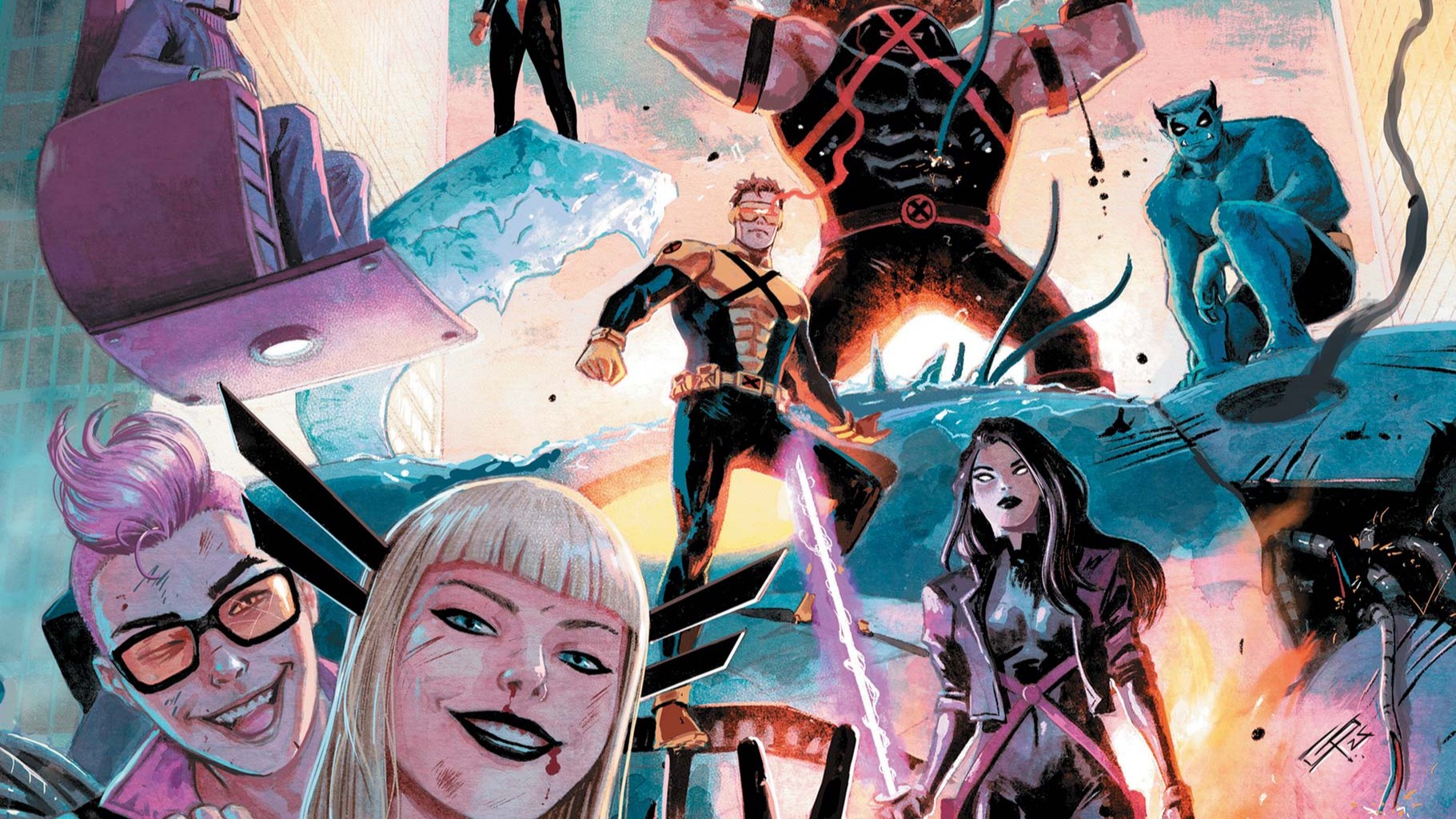
Previously On X-Men: It’s Empathy For The Win in ‘X-Men’ #30
by Austin Gorton
It’s a week light on annotations, but with a trio of “high-floor, low-ceiling” issues (and X-Men Infinity).
Generation X-23 #4
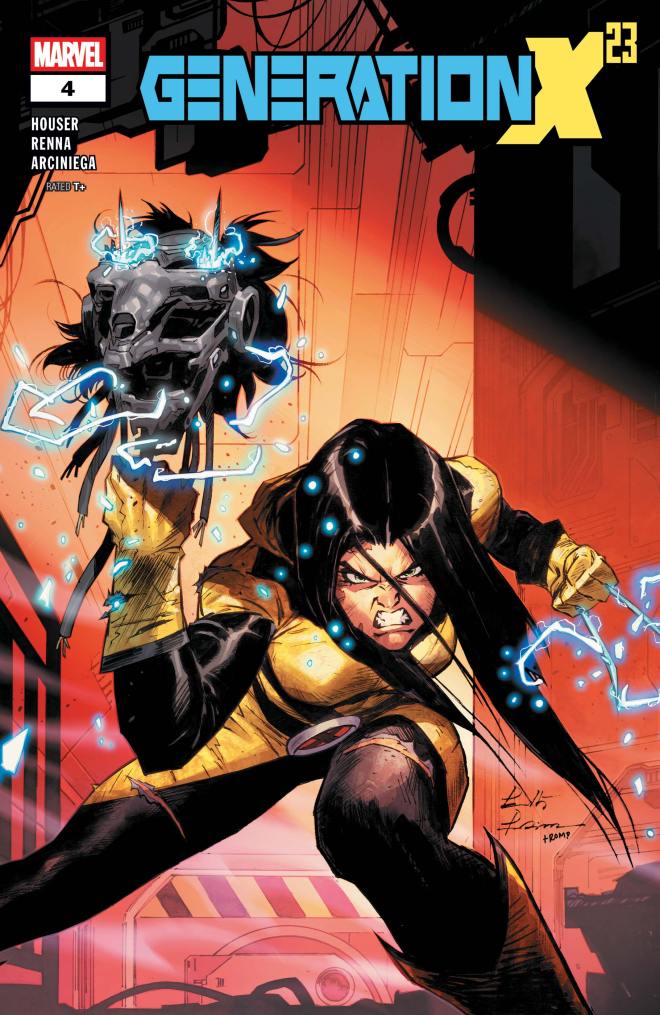
By Jody Houser, Marco Renna, Ariana Maher, Erick Arciniega
Laura and X-Infinite infiltrate another Facility … facility in search of their captured friends.
- If it’s not obvious by the end, the green narrative captions throughout the issue are from the perspective of the time-traveling X-80.
- Kimura is Laura’s original Facility handler. She apparently died in All-New Wolverine #18 (via drowning), but it’s possible this is a clone/alt reality version or something like that.
The “X-Infinite is the bad guy!” reveal is hardly surprising, but it also isn’t really setup to be a big shock, more of a “ah yeah, that tracks” kind of thing in terms of him being a dark mirror to Laura. All the generic “X-__” names are still holding this back and make it hard to connect with any characters outside Laura, Gabby and X-92 (the silent teleporting one), but it’s well-contructed.
Psylocke: Ninja #5
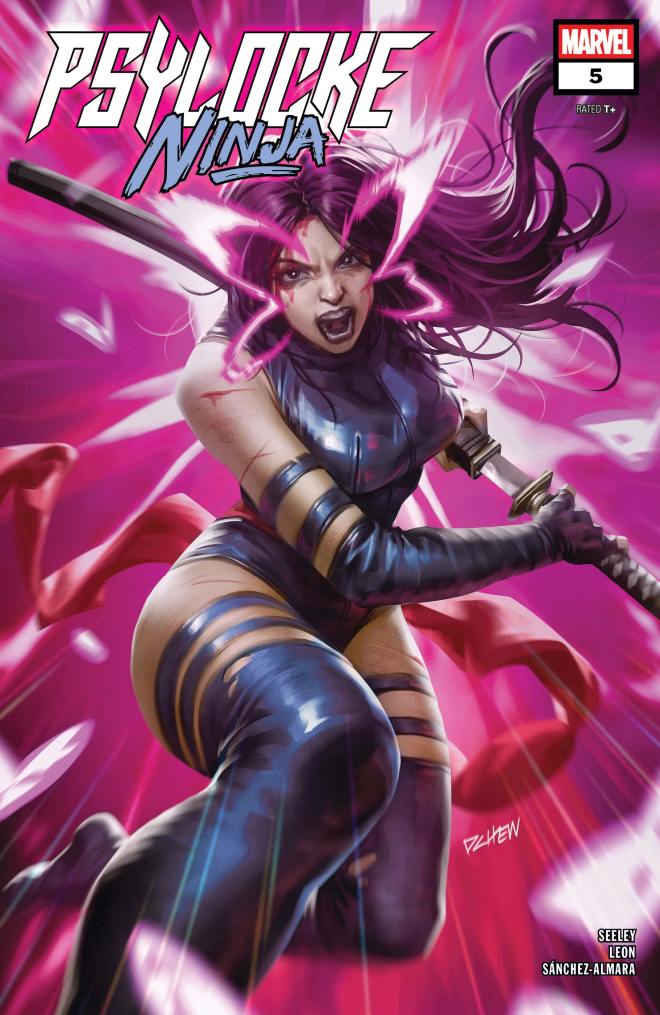
By Tim Seeley, Nico Leon, Ariana Maher & Dono Sánchez-Almara.
Psylocke and Elektra team-up to rescue Jubilee from the Hand.
- Psylocke letting Matsu’o live is a requirement of the story (since he makes appearances after this story is set) but the fact that she does so willingly (as opposed to failing to capture/kill him and he escapes) makes her indirectly responsible for the death of Mariko, since Matsu’o kills her after this story (in Wolverine #57).
- John Garrett is a character first introduced in the (originally out of continuity) Elektra: Assassin, who later returned in “Fall From Grace,” the same Daredevil story which also re-introduced Elektra. He made into the MCU, played by Bill Paxton, and later was used in Jonathan Hickman‘s Secret Warriors.
- Elektra’s bald head and white clothing that she adopts at the end of the issue also match her look in “Fall from Grace.”
- The end of the issue syncs up with Wolverine, Psylocke and Jubilee’s introduction to the “X-Tinction Agenda” crossover in Uncanny X-Men #271 (presumably, their adventure with Hardcase and the Harriers in Uncanny X-Men #261 and the battle with Fenris in Uncanny X-Men #268 fit in and around earlier issues of this series), right down to them spotting Rictor and Boom-Boom running down an alley, where that issue opens. Curiously however, it doesn’t establish who calls in Wolverine to help Genosha; in the original story, it’s implied they simply came to Genosha in response to news coverage of the attack on the X-Men.
As with the previous issues, the Elektra stuff more or less gets in the way of a not-terrible Psylocke (and Jubilee) story. It (more or less) accomplishes its mission of fleshing out Psylocke’s reaction to her body swap and smoothing out some of the discrepancies between Matsu’o’s presentation in the original story and how he should have been acting given the later retcons. All the Elektra stuff just it makes it feel like Seeley didn’t have enough material in that to fill five issues and needed Elektra to help pad it out.
X-Men #30 – Book of the Week
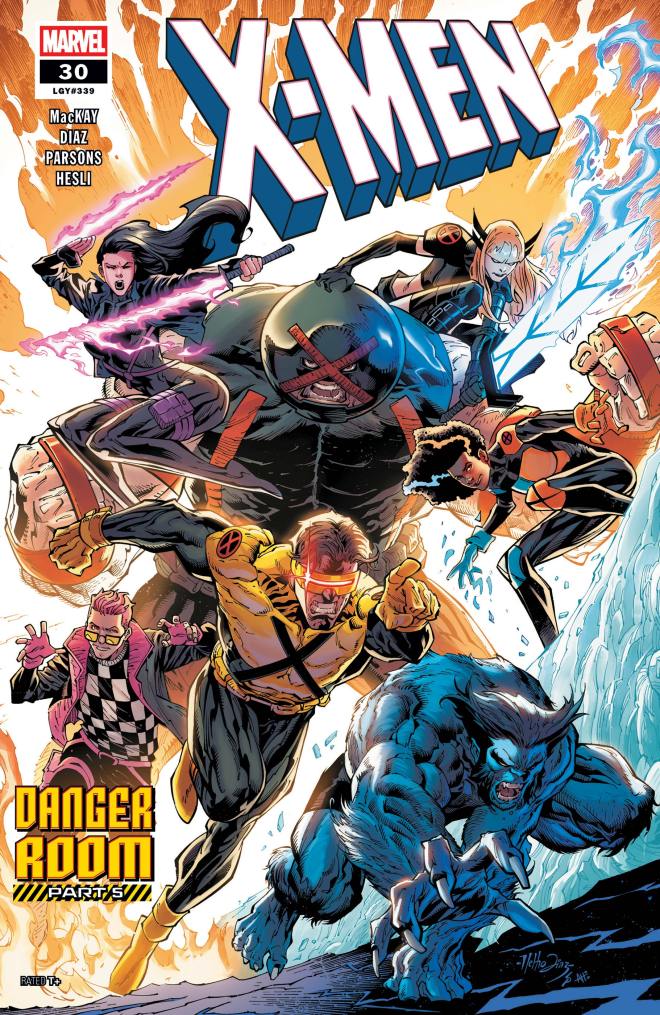
By Jed MacKay, Netho Diaz, Sean Parsons, Arthur Hesli & Clayton Cowles.
The X-Men halt Danger Room’s schemes across all three fronts.
- Colton says Idee and Quentin are both killers; in Idee’s case, this is specifically a reference to Schism #3, as well as the pirates she killed that got her consigned to the Pit on Krakoa. In Quentin’s, it’s more a broad assumption based on his time leading the Omega Gang and serving in the Krakoan X-Force.
- Not sure how Magneto made it onto the psychic plane to confront Quentin, but the rendering of this scene is quite nice.
- For all his “Magneto was right!” evangelism, Quentin wiping the memories of everyone in Merle is straight out of the Professor X playbook.
- Seems pretty obvious, but just in case, that’s Wolverine in his Weapon X gear when Beast references knowing people who have been turned into weapons against their will.
- Beast’s explanation of mutant codenames is broadly consistent with similar notions laid out during the Krakoa Era.
- Leviathan, with its shades of the Impossible City in Avengers, seems like the kind of thing that could come back again (assuming MacKay sticks around long enough, I don’t think anyone else would pick it up and run with it).
- I’m not sure if we’re meant to take Cyclops’ assertion that Beast talking Leviathan down was his backup plan seriously or not.
- It’s kind of funny that after getting an entire issue of introduction, only one member of the Danger Room (outside Maxine Danger) gets dialogue in this final chapter of the story.
As the only significant story wedged between two events (“Age of Revelation” and the upcoming “DnX”), it’s hard not to feel like this is a bit of a water-treading exercise, but it does a nice job of emphasizing Beast’s empathy (and the empathy of the X-Men as a whole, who basically win across the board because they’re less sociopathic than the Danger Room villains), which seems very deliberate ahead of the impending showdown with the sociopathic Chairman/White Beast in “DnX.”
X-Men Infinity Comic #18
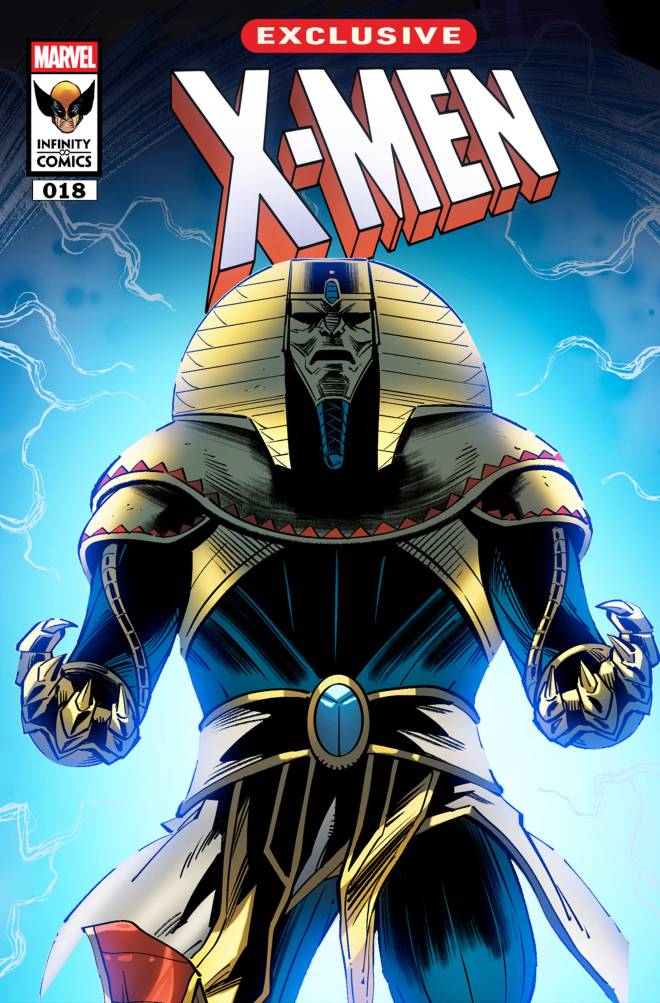
By Steve Orlando, Minkyu Jung, Yen Nitro & Clayton Cowles
The Durisphinx appears before Mother Askani and Cable.
- Young Cable’s look here is broadly consistent with his appearance in The Adventures of Cyclops and Phoenix miniseries.
- The different X-Men groups he considers are the X-Men 2099, the Threshold Three (from Orlando’s Marauders run), Xorn and Beast from Grant Morrison‘s New X-Men, Magneto’s Acolytes (the redhead is maybe meant to be Fabian Cortez; not sure who the blonde – Scanner never wore a cape), and Generation X.
- The big problem with the premise of this issue is that Mother Askani never really had a chance to tutor Young Cable in the capacity shown here. She fell into a coma shortly after pulling Cyclops and Jean Grey into the future to help raise the infant Cable in The Adventures of Cyclops and Phoenix, and then died at the end of that miniseries, when Cable was roughly the same age as depicted here.
Orlando changes things up a little bit, with the Durisphinx acting the aggressor now in the wake of Forge’s virus, but another fairly significant continuity flub once again drags things down.

