
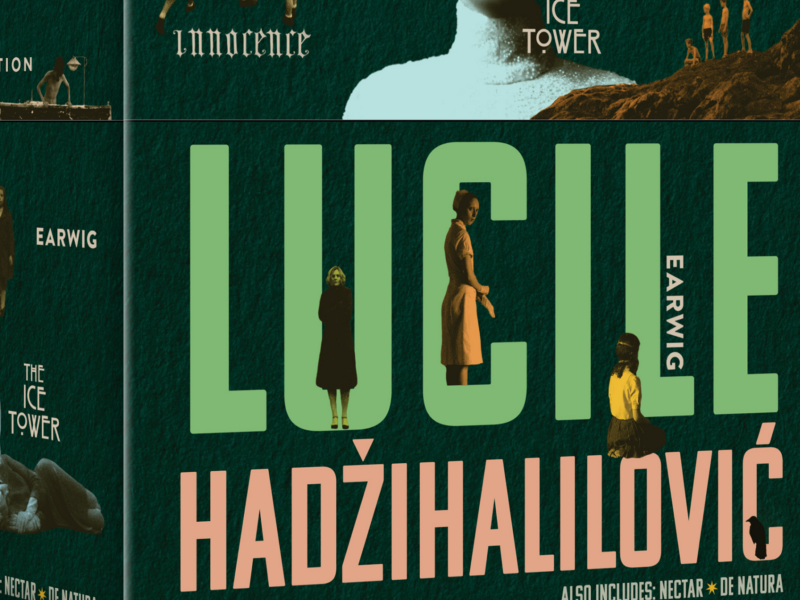
Reviewing Severin’s ‘The Worlds of Lucile Hadžihalilović’ Box Set: Part 2
by Rachel Bellwoar
Those unaccustomed to Lucile Hadžihalilović‘s nightmare worlds where image and sound take precedence over dialogue are in for a treat with this deep dive immersion into her surreal filmography.
 Evolution (2015)
Similar to Stand by Me, Evolution begins with a young boy finding a dead body and trying to convince people he actually saw it and wasn’t just imagining things. Tellingly, it’s easy to forget that’s how the movie begins since so much happens in the interim. Like a gender flipped version of Hadžihalilović’s first film, Innocence, Nicholas (Max Brebant) lives on an island consisting of only young boys and their “mothers” (and sadly, the quotation marks are necessary because Nicholas suspects Julie-Marie Parmentier isn’t his real mom). All of the young boys have been told they’re sick and are forced to take a medicine that looks like octopus ink (in keeping with the film’s aquatic themes, where starfish are also a major motif).
Technically, Evolution is just as dialogue-light as Innocence, and Hadžihalilović’s take on sci-fi is definitely weird (Stephen Thrower compares the film to David Cronenberg in his booklet essay), but as a ringleader, Nicholas’ attempts at rebellion and connection with the other boys may be tempered and realistic, but very consistent and endearing. Even as what’s happening to him might be difficult to parse out, that’s kind of the point, since Nicholas doesn’t understand what’s happening to him either. All he can do is follow his gut, and while the film’s conclusion is equally open-ended to the ending of Innocence, it’s easier to swallow because viewers have been on this journey with Nicholas the whole time.

Severin’s Blu-ray includes an interview with Hadžihalilović and cinematographer Manuel Dacosse (where Hadžihalilović names Eraserhead as an inspiration) and a separate interview with co-screenwriter Alantė Kavaitė. The Hadžihalilović/Dacosse interview is notable for allowing Hadžihalilović to speak French instead of English.
Earwig (2021)
Earwig sees Hadžihalilović test how far she can go without having the characters speak, and while there are moments of genius (like a transition involving a painting that keeps changing), it’s definitely the most challenging of the films in this box set. Unlike Innocence and Evolution, the main character in Earwig is a man (though I’ll push back on this assertion on Hadžihalilović’s part and say the film has more than one point of view character, which is why I’d argue it’s less successful than Evolution).

Albert (Paul Hilton) is the caretaker to a young girl named Mia (Romane Hemelaers) who doesn’t have teeth. Hadžihalilović’s ability to communicate using purely visuals and sound (no dialogue) is beautifully showcased in an early sequence where Albert demonstrates how he creates teeth for Mia using her own saliva. The “why”s are definitely glaringly absent in this movie and while a decision to throw the timeline into question injects the film with some late excitement (not unlike Robert Altman‘s Images, a comparison Thrower makes in his booklet essay), Albert isn’t Earwig’s most interesting character (that honor goes to Mia or Céleste (Romola Garai), a waitress Albert meets) and the occasional scenes from their perspective only emphasize that fact.
Severin’s Blu-ray includes interviews with cinematographer Jonathan Ricquebourg and co-screenwriter Geoff Cox.
The Ice Tower (2025)
For fans of films like Pan’s Labyrinth and The Spirit of the Beehive (the latter of which is brought up in Alexandra Heller-Nicholas’ visual essay), The Ice Tower is a triumph of a movie that sees a young girl live out her own version of Hans Christian Anderson’s The Snow Queen when she inadvertently winds up on a movie set for a filmed version of the fairy tale. Jeanne (Clara Pacini) lives in a foster home but decides to run away when she receives a postcard from a friend who’s moved out. Seeking shelter in a building she assumes is abandoned, she wakes up to the sight of Marion Cotillard, playing an actress who is playing the Snow Queen, onstage and off. While Jeanne becomes fascinated with the star (even stumbling into a part in the movie as an extra), Cristina’s interest in Jeanne might not be so pure.

Blurring the line between reality and fiction, Heller-Nicholas compares The Ice Tower to Innocence (and points out that both films feature a character named Bianca), but to me (and this might be personal bias speaking), the parallels are stronger between The Ice Tower and Evolution. In both, a kiss becomes an important image, but is it a kiss of life or death? Viewers are left to form their own conclusions.
Severin’s Blu-ray includes another interview with Ricquebourg and two IFC Center Q&As.
Final Verdict: Severin’s box set shows a director figuring out and cementing their artistic vision. It truly is a body of work where you can learn more from watching the films together and recognizing recurring interests.
The Worlds of Lucile Hadžihalilović goes on sale June 30th from Severin Films. For my thoughts on Innocence, be sure to check out part 1 of this review.
