
Diving Into The Comics Of Alejandro Jodorowsky In 2026
by Tito W. James
Alejandro Jodorowsky is a unique creator who has garnered a multi-generational cult following thanks to his films and eventual forays into comics. And yet, there are still many comic book readers unfamiliar with his work. As someone who has read nearly every comic in the Jodoverse, this writer decided to compile a comprehensive list of titles and some thoughts on them.
The Films
Arguably the best place to enter the Jodoverse is with the documentary Jodorowsky’s Dune. If you dig it, then check out El Topo, The Holy Mountain, Santa Sangre, Dance of Reality, and Endless Poetry.
The Incal Universe

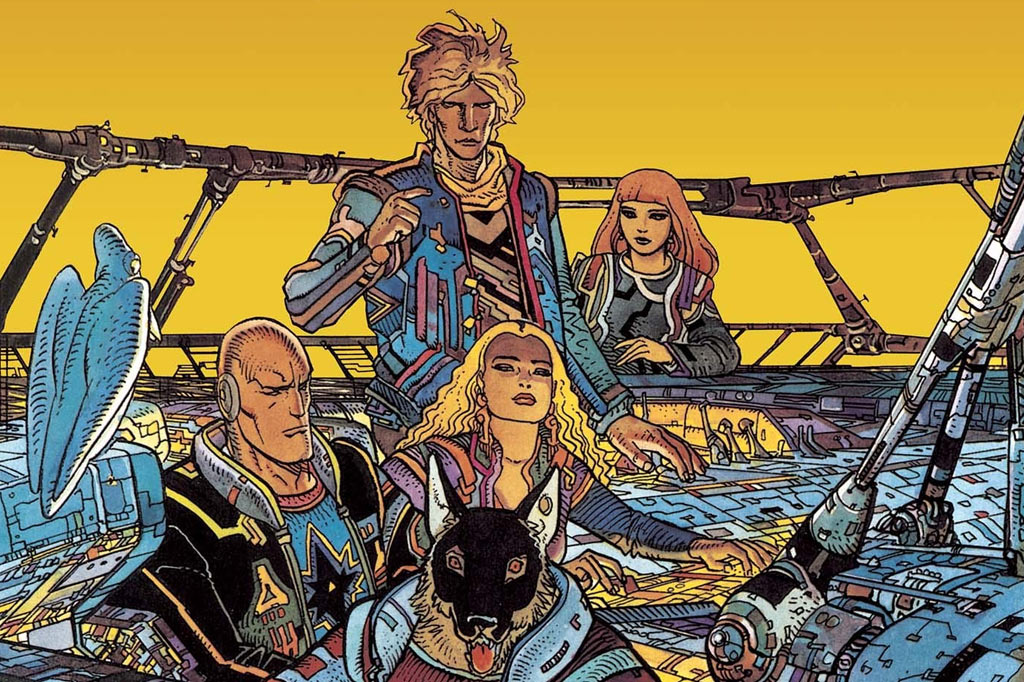
Co-created with Moebius, The Incal Universe, takes many of the concepts developed from the unmade Dune film and creates an original narrative. The story of the Incal expands with Before the Incal and Final Incal. Humanoids also made other spin-off titles not written by Jodorowsky but still worth reading, like Incal: Dying Star.
The Metabarons

I personally much prefer The Metabarons Saga to The Incal simply because the Metabaron is a much more fascinating and badass character. If The Incal is a psychedelic space odyssey, then The Metabarons is a heavy metal retelling of Oedipus Rex with cyber-enhanced assassins. The Metabaron Second Cycle is written by Humanoids Editor-in-Chief Jerry Frissen and, in my view, improves upon the original. The Metabarons Genesis Castaka and Weapons of The Metabaron are other worthy additions to this robust mythology. Few comics can be considered modern epics that will resonate for hundreds of years — The Metabarons is one of them.
The Technopriests

The White Lama

The White Lama is an epic with a rich narrative, nuanced themes, and miraculous moments of wonder and terror. It’s a serious literary work that still has the fun of a fantasy tale. Moments feel like a grounded period drama, but then shift into set-pieces worthy of a pulp adventure novel. Jodorowsky has had a paradoxical relationship with spirituality. His comics contain religious and sacrilegious imagery that, at times, work in perfect synchronicity — critical of religious institutions and their potential for corruption, but respectful of the power of spiritual teachings and their ability to bring out the best in human potential. This is an ambitious and well-executed work of graphic fiction that pushes the creative and narrative literary potential of comics to Himalayan heights.
Moon Face

In Moon Face, Jodorowsky takes us to a mysterious island ruled by an authoritarian regime teeming with gangs of scavengers and cults that worship mutant whales. When a tsunami is about to hit the island, everyone runs to a shelter — except for a lone figure who playfully dances between the waves. This is how we are introduced to Moon Face, a character who is both a savior and a savant. Because Moon Face maintains a childlike sense of innocence, he’s able to create wonders and miracles. The tale also feels very Old Testament in that it dives headlong into the darkest aspects of human cruelty and suffering. There are also aspects of Moon Face which feel more in line with a rollicking adventure like The Odyssey and Moby Dick.
Son of the Gun

Son of the Gun follows the journey of a young bandit turned messiah in a magical but realistic world of crime and villainy. Nursed on a gun barrel and born with a tail, Juan Solo behaves more like a beast than a man and quickly makes waves in the criminal underworld. Jodorowsky blends iconography from The Bible, Oedipus Rex, The Jungle Book, Dick Tracy, and Scarface to deliver a crime story like no other. It is an incredibly dark and depraved story from the “Theater of Cruelty” lavishly rendered on the page.
Anibal 5

Anibal 5 is a twisted interpretation of a James Bond–style spy story. This is one of the few times we can see Jodorowsky and the artist, Bess, lean into full raunchy comedy. The comic makes great use of exaggerated caricature and cartoon logic to deliver a surprisingly fun farce.
Megalex

Megalex was supposed to be created in collaboration with legendary Akira creator Katsuhiro Otomo. Jodorowsky may very well be the king of unmade projects! While the story never reaches the seminal heights a collaboration between Jodorowsky and Otomo would have produced, it is still an interesting absurd story — more of an oddity about what could have been.
Angel Claws

Jodorowsky and Moebius aimed to make erotica with this collaboration. The book is mostly a collection of illustrations with descriptive prose. Given that this isn’t sequential art and the graphic subject matter, readers’ mileage may vary based on their personal taste. I would not recommend Angel Claws as a starting point, but the volume is a unique object for completionists.
Showman Killer

Showman Killer is about a heartless assassin genetically engineered by an insane scientist to be devoid of any emotion. Showman is driven only by greed and bloodlust until he’s made responsible for a mysterious child the whole universe is trying to find. It’s a world of shape-shifting assassins, ruthless religious satire, biological spaceships, and a talking seal in clown make-up. While there are some spiritual and esoteric elements thrown in, it is undeniably a farce.
Sons of El Topo

The graphic novel series Sons of El Topo acts as a sequel to Jodorowsky’s acid western cult film, El Topo. Written by Jodorowsky and illustrated by José Ladrönn, the comic picks up with the merciless gunslinger El Topo after he’s abandoned his pursuit of ultimate gun mastery. Instead, he searches for enlightenment in the unlikeliest of places and is forever transformed into a holy vessel imbued with the power to perform miracles and cheat death.
The collected work is a cinematically rich work of sequential art offering a thrilling continuation to an avant garde film. Longtime followers of Jodorowsky’s oeuvre will recognize the “cinema of cruelty” carved into each page. The violence and sexploitation take on a mythical quality that few other artists could pull off.
Epic tales of the Old Testament are re-contextualized within a surreal western landscape. This is a radical deconstruction of religious imagery that leads to a bold reinvention of spiritual ideas. The brilliance is in how the creators use elements from various genres, myths, and aesthetic traditions to weave them into something new.
Knights of Heliopolis

This is Jodorowsky’s radical reinterpretation of Alexandre Dumas’ The Man in the Iron Mask. He brings that world of swashbuckling heroes into his own alternate dimension of esoteric science fantasy. Knights of Heliopolis explores gender identity, spirituality, and human nature while delivering a gripping period drama filled with lust, murder, and treachery. Longtime fans of Jodorowsky will recognize recurring symbolism and themes explored in his surrealist films and sci-fi comics. Taking note of this intertextuality only enhances the reading experience and makes his auteur work stronger as a whole. Having immersed myself in the Jodoverse over the past several years, I can say with full confidence that this is my favorite story Jodorowsky has ever written and it’s a perfect introduction to his mad genius.
The Seven Lives of Alejandro Jodorowsky

The Seven Lives of Alejandro Jodorowsky is an excellent comprehensive look at his full artistic career. The book contains interviews and literary analysis giving context to the overall artistic canon. Those who are devotees of the comics will also gain much from Deconstructing the Incal and Deconstructing the Metabarons. Then, absolute acolytes can pick up The Way of Imagination.