
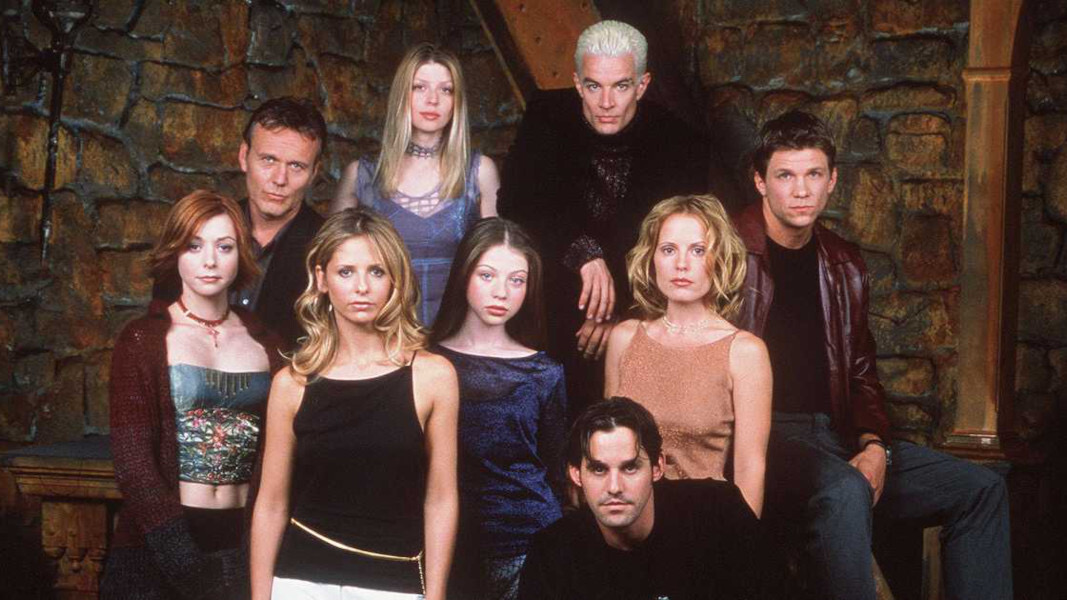
Characterization In The Buffyverse — ‘Buffy The Vampire Slayer’ Season 5, Episode 21
by Benjamin Hall
This is part of a bi-weekly series concerning the characterization of Buffyverse characters. Arguably the best place to begin reading this series is at the beginning, but that is up to each reader. As a reminder this column will cover major and some minor characters from the shows Buffy The Vampire Slayer (1997-2003) and Angel (1999-2004). Other Buffyverse media, such as the graphic novel Spike: Into The Light (2014) are not pertinent to this series. Also there will be no referencing real world events that have direct relation to either show in this bi-weekly series. Although this series does reference things that have no direct relation to the show in order to examine things such as metaphors and literary analogues.

This week: The Scoobies deal with a catatonic Buffy Summers (Sarah Michelle Gellar). At the same time, Glory (Clare Kramer) fights with her human half.
(Warning of spoilers from this point on!)
Buffy spends most of her screen time in a television-style catatonia. She can come out of it if-and-when the plot needs her to do so. She also has screen time in the form of manifestations of herself in her own mind via a magical spell. However, these are just a way to exhibit how Willow Rosenberg (Alyson Hannigan) is mystically interacting with Buffy. Thus, this writer argues the appearances in Buffy mind only matter to her characterization in so far as the answers they give about why she is catatonic. The chief answer: Buffy prematurely giving up is combining with her history of traumas. Sadly, why she comes out of this state is down to a lazy and unhelpful idea — she should essentially just stop feeling her traumas.
Dawn Summers (Michelle Trachtenberg) is pretty much just a damsel in distress with no real agency despite talking back to and attacking her captors. She is also a living prop that Glory and Benjamin Wilkinson (Charlie Weber) do physical things to while the pair are arguing.
Spike (James Marsters) comes across like a less affective fighter thanks to recent injuries he is still recovering from. Additionally, the plot needs him less affective to suggest Doc (Joel Grey) is strong and fast. Arguably, it also happens to give Xander Harris (Nicholas Brendon) something to do besides stand around. Spike and Xander arguing over Buffy may be about their respective feelings for her as much as the panic the situation is causing. Finally, Spike displays some situational awareness by noting things going on, including the “Ben is Glory” spell and Doc trying to hide information.
Rupert Giles (Anthony Stewart Head) serves to help prompt additional levity in the magic amnesia explanation scene. His other purpose is to provide information that results in a sad and shocking cliffhanger for Buffy and the Scoobies.
Xander gets to play out a buddy cop movie role alongside Spike, such as when the two are dealing with Doc. Unfortunately, like a majority of the characters in this episode, Xander has little-to-no growth or purpose.
Anya (Emma Caulfield Ford) acts as a caretaker for the ill Tara while also being sensible and logical about matters. The unusually reticent manner Anya displays does not have an explanation here, but will gain one before the big fight (Season 5, Episode 22, “The Gift”).
Tara Maclay (Amber Benson) continues to suffer from her mystical mental illness. Yet, much like Dawn, Tara is a living prop for her portion of the episode.
Willow operates as the leader of the Scoobies during Buffy’s catatonia. That said, her screen time mainly consists of her attempts to convince Buffy to save Dawn while playing mystical detective in the Slayer’s mind.
Ben and Glory start to see a combining of the three concepts they may represent; the split personality, sibling relationship, and possible transgender allegories are mixing together in this episode. This occurs because of magical consequences the spell Glory wishes to enact. It results in the two arguing while switching moral positions. The shifting of their perspectives can be seen in the way they treat Dawn at different moments throughout the episode. Also: Glory’s statement about her time on Earth being only 25 years long seems at odds with the existence and methodology of the Knights of Byzantium.
Gronx (Lily Knight), Murk (Todd Duffy), and the High Priest minion (Matthew Lang) are the three obvious worshippers of Glory who appear in this episode. They mainly exist to prepare the ritual aspect of the spell Glory intends to use Dawn for.
Crazy #1 (Paul Bates), Crazy #2 (Carl J. Johnson), and Crazy #3 (Bob Morrisey) — formerly Lunatic outside the Magic Box — help the others who are mystically mentally ill to build the tower Glory will use for the ritual. Other than that objective, they have no purpose for being here.
Doc drops his facade in order to stop Xander and Spike. This sees follow-up with the horror movie style twist about him not being easy to kill.
Sineya (Sharon Ferguson), Hank Summers (Dean Butler), Joyce Summers (Kristine Sutherland), the young Buffy (Alexandra Lee), and the baby version of Dawn (actor unknown) are not really characters so much as visualizations of Buffy’s memories. Thus, their appearances in this episode cannot really see legitimate analysis in this column.
The characterization is threadbare for the majority of the characters to the point that only Glory, Ben, and Doc get any real growth and purpose. The result of this weakness in scripting results in a mostly skippable episode if one is only looking for character progression from the main characters.

