
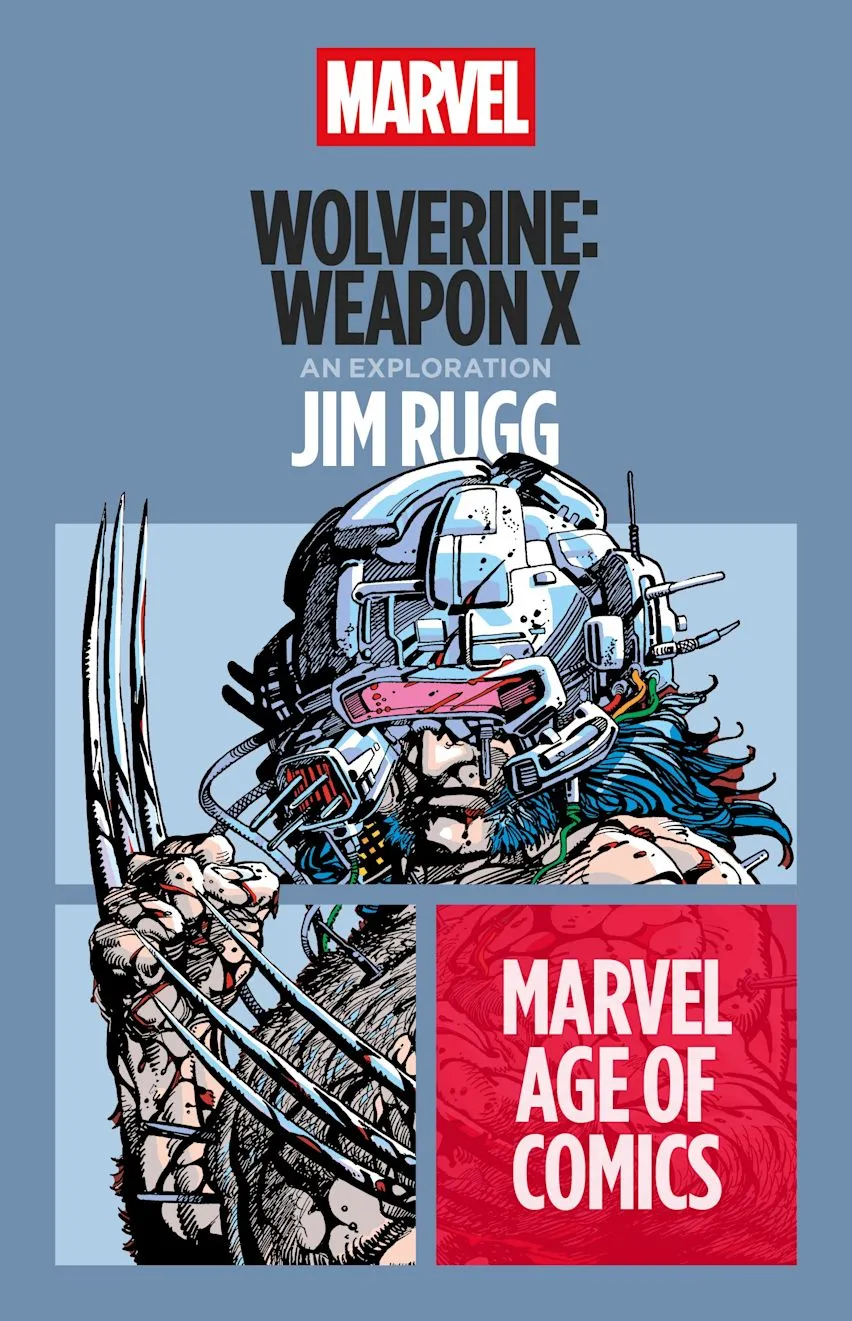
A Deep Dive Into One Of The Essential Wolverine Stories Of The Nineties — ‘The Marvel Age: Wolverine — Weapon X’ By Jim Rugg Reviewed
by Olly MacNamee
Jim Rugg’s The Marvel Age: Wolverine – Weapon X is another in a series of books from Bloomsbury Academic that takes a deep dive into a classic comic book story arc, this time looking back at the unconventional and extremely mature origin story of everyone’s favourite Canadian X-Men as presented in Marvel Comics Presents #72-#84. And, as Rugg mentions in his prologue, a comic that put him on the path to becoming a comic book artist himself.

And now, as an established artist, Rugg is the perfect person to not only give us a shot-by-shot review of each instalment, but some insightful commentary too, explaining the context in which Weapon X was allowed to thrive. That is to say, as he explains in the book, with the rise of the direct market and the ageing of comic book fans, by 1991, comics were growing up. And it’s good to hear this take on the maturing of comics, often put down to the likes of Watchmen, The Dark Knight Returns and Maus. Indeed, it was the establishment of these comic book stores that probably allowed these comics to be produced, just like Weapon X.
But, as well as a recount of the original serialised storyline, we get Chris Claremont’s reported thoughts on this development, as well as important chapters on Barry Windsor-Smith himself, and a short chapter discussing and dissecting the overt violence in the book. All explained perfectly well when seen through the eyes of a fellow artist. Rugg concludes that this origin story is not only a masterclass in boundary-pushing storytelling, but Wolverine is one of the few heroes we see getting both physically and psychologically tortured, resulting in an attempt to dehumanise Wolverine. A perennial theme of any X-Men comic, but never done so graphically and maturely before. Rugg recognises that superhero stories “rarely focus on the traumatic receipts of the violence … to see a favourite character reduced to a state of helplessness and subjected to gruesome experiments is not the same as the cartoony violence of Looney Tunes or Arnold Schwarzenegger.” A dark and violent origin that has seeped its way into continuity because of how great a story it is.

Windsor-Smith was an artist who did not like the Marvel method, so he came up with something new, something fresh, and something gutsy with his narrative and artist’s approach to Wolverine — Weapon X. And Rugg captures every aspect of what makes this storyline such a contemporary classic in a way that will entertain comic book fans and educate, without coming across as another stuffy academic book dissecting superheroes.
The Marvel Age: Wolverine — Weapon X is out now from Bloomsbury Academic

