
Adult Animation Revolution: Chatting With The Team Behind ‘Gemma’
by Tito W. James
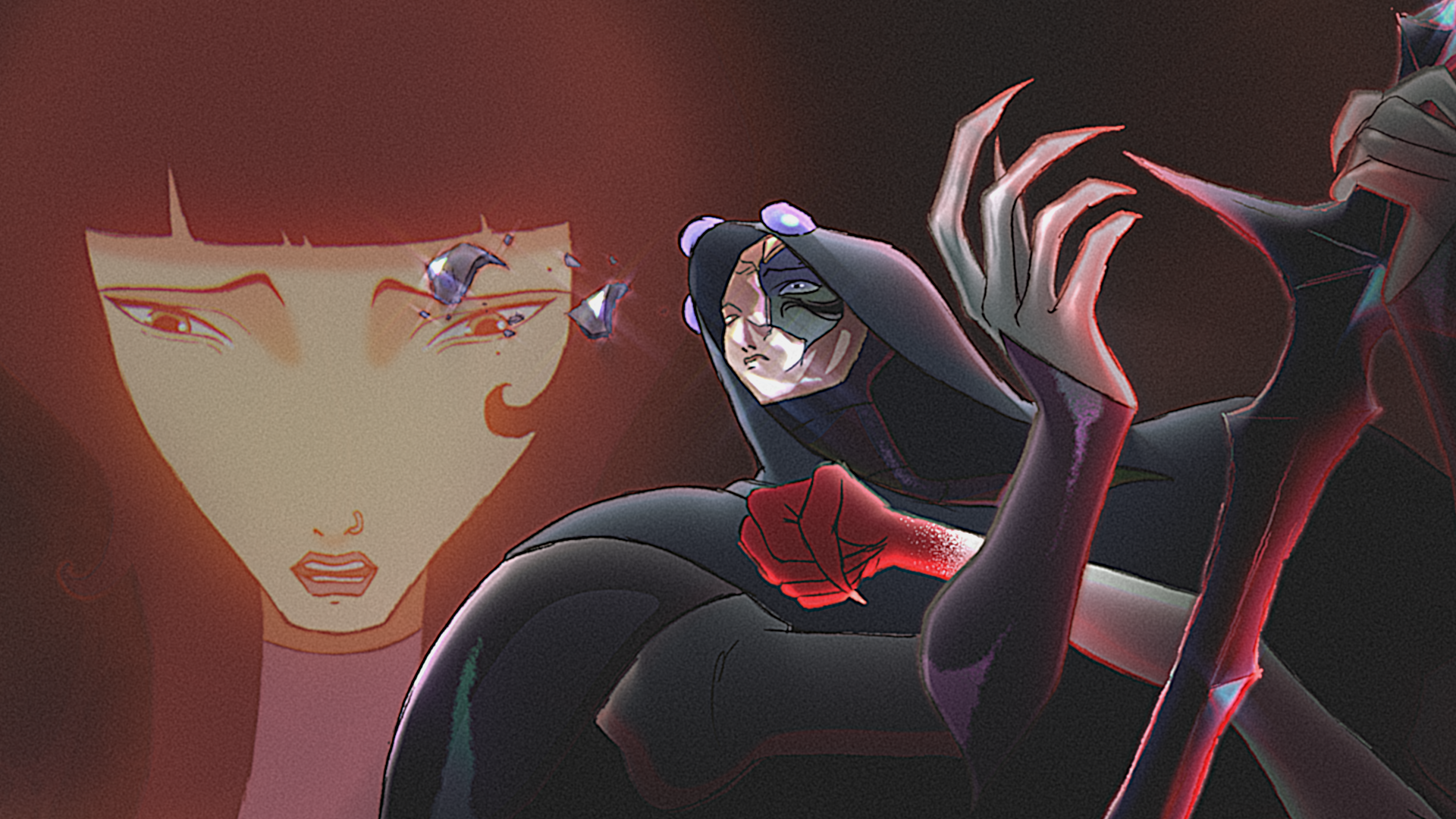
In Gemma, we follow two young women, the title character and Amber, as they grow closer on a date. However, their growing intimacy throws Gemma into a surreal internal struggle.
We had the opportunity to chat with the creative team behind Gemma which includes: Louise Trichet, Carla Bernard, Dex Rubio, Shuangyan, and Lisa Bugnon. The creative team also plans to release an artbook for Gemma via Kickstarter soon.
Tito W. James: What was the inspiration for this project? Were there any personal experiences you wanted to explore in a fantastic setting?
Carla Bernard: Yes, this is very personal to me, and it was a bit of a challenge to put so many vulnerable emotions on the table. But I also realized that the more personal the story is, the more people can relate to it!
I’m scared of many things, but I’m even more afraid of being trapped in my fears and staying stuck. This story is also a reminder for me to not fall into those illusions.
Throughout those experiences, I also found myself feeling guilty for being so anxious and antagonising those emotions, which really affected my mind and body negatively. That’s why I wanted to convey the fact that fear isn’t all bad, in fact, she’s essential to us and can sometimes lead us to what we truly desire.
As for the fantastical environment, my biggest phobias are actually the human body and organs haha! I just found it funny and symbolic to set the whole film into my biggest fear and portraying it as a place I would kinda like to visit. It’s cathartic in a way.

James: Can you take us through the process of making an animated short? How do you know when you have the right idea, and then how can you grow that idea into a film?
Bernard: About the story, this is something that slowly developed in the back of my mind for some years now, and evolved as I experienced life. To me, a good idea is something that we keep coming back to, passionately.
We explored many ideas, erased, came back and then erased again … but we went a bit too far in this process and lost the spark we had in our very first ideas. That’s why, at some point, we came back to our very first moodboards and impressions about the movie.
I think sometimes, the rawness of the first ideas are the most authentic and personal, and that was one of our priorities with this movie.

James: What are some of your artistic influences for this project? Is there a particular anime series or movie director you like?
Bernard: We had dark fantasy as a reference, ’80s, weird vibes, a bit gross but glittery and of course the drama! The main first inspirations were Poor Things (Yorgos Lanthimos), Revolutionary Girl Utena (Kunihiko Ikuhara), Excalibur (John Boorman) and Suspiria (Dario Argento). Also, basically all the gothic fairy tales we could find and dramatic Japanese animes like Vampire Hunter D and Angel’s Egg illustrated by the amazing Yoshitaka Amano. For the 3D, we loved the work of Ida Lissner. And for the atmosphere, the music of Marina Herlop really installed this peculiar universe in my mind while I was still developing this story.

James: We are seeing more LGBTQ+ themes and characters explored in animation and in fantastic genre fiction. Are there any challenges or opportunities in exploring this same-sex romance?
Bernard: There was this question that was asked to us a lot while we were writing the scenario: Is Gemma so conflicted because it’s a lesbian relationship? We all wanted the story not to portray lesbianism as the issue here. Of course, some people will interpret it like this, according to their personal experiences. I think a lot of [women loving women] media are already treating this subject, and I think normalizing more lesbian relationships by not seeing homosexuality as the main issue could, maybe, progressively have a positive influence on internalized homophobia. But writing about lesbian couples wasn’t more complex than writing about heterosexual ones. In fact, it was easier because I prefer talking about what I know.

James: Many people in critical circles ignore fight scenes as artistic expression and just think of it as “noise.” There is a lot of complex artistry and action in Gemma. In your opinion, what makes an action scene or an action film artistic?
Bernard: The fight in our movie is directly connected to Gemma’s feelings and her romantic connection with Amber. Plus, we incorporated a lot of metaphors within the choreography of the battle. I think that’s why even people who don’t like fight scenes can find something there that might speak to them.
To me, what makes an action scene interesting is the emotional impact it can have on the viewer: what are the stakes and the meaning of this? The tension? What are the characters feeling, and why are they doing it? Also, to me, having something original about it, either in the way it’s portrayed or the way they fight … It might be more captivating than classical fight scenes. I think it also depends a lot on people’s tastes.

James: What would you like to see from the indie animation world in the next five years?
Bernard: I personally think it’s a bit sad to see that a lot of content nowadays is very similar to one another. There’s a lot of trends in art styles, and I think we sometimes are a bit afraid of stepping out of the defined “good taste” and trying more personal and “crazy” ideas. Especially in bigger productions, but also in indie animation. I think we should try new stuff in general and experiment more instead of smoothing everything down!
James: In America, it’s still too rare to see animation being taken seriously as a mature form of artistic expression. If you had to advocate for animation’s potential as an artistic medium, what would you say?
Bernard: As I said for the previous question, I think animation is just another way of trying new things and sometimes pushing visuals out of “classical paths.”
Dex Rubio: I would like to add that I feel animation is slowly escaping the “just for kids” box it’s been trapped in for years. I think it’s important to note how relevant this is for society, how adults discovering brand new worlds and content they can relate to can be healing, especially for those older generations that often felt that their emotions weren’t displayed with such emotion and imagination in live action. And, of course, with the current AI trends we feel like it’s more relevant than ever to include and fight for human-made art made for everyone.
As a final note, the team would love to thank everyone for their endless support. We hope the audience can find a small bit of comfort and take this piece of us everywhere they go. Life is too short to let fear control what we can or can’t do; let desire guide your path with no need to hide behind a mask.
I’d like to thank the team behind Gemma for taking the time to do this in-depth interview.
