
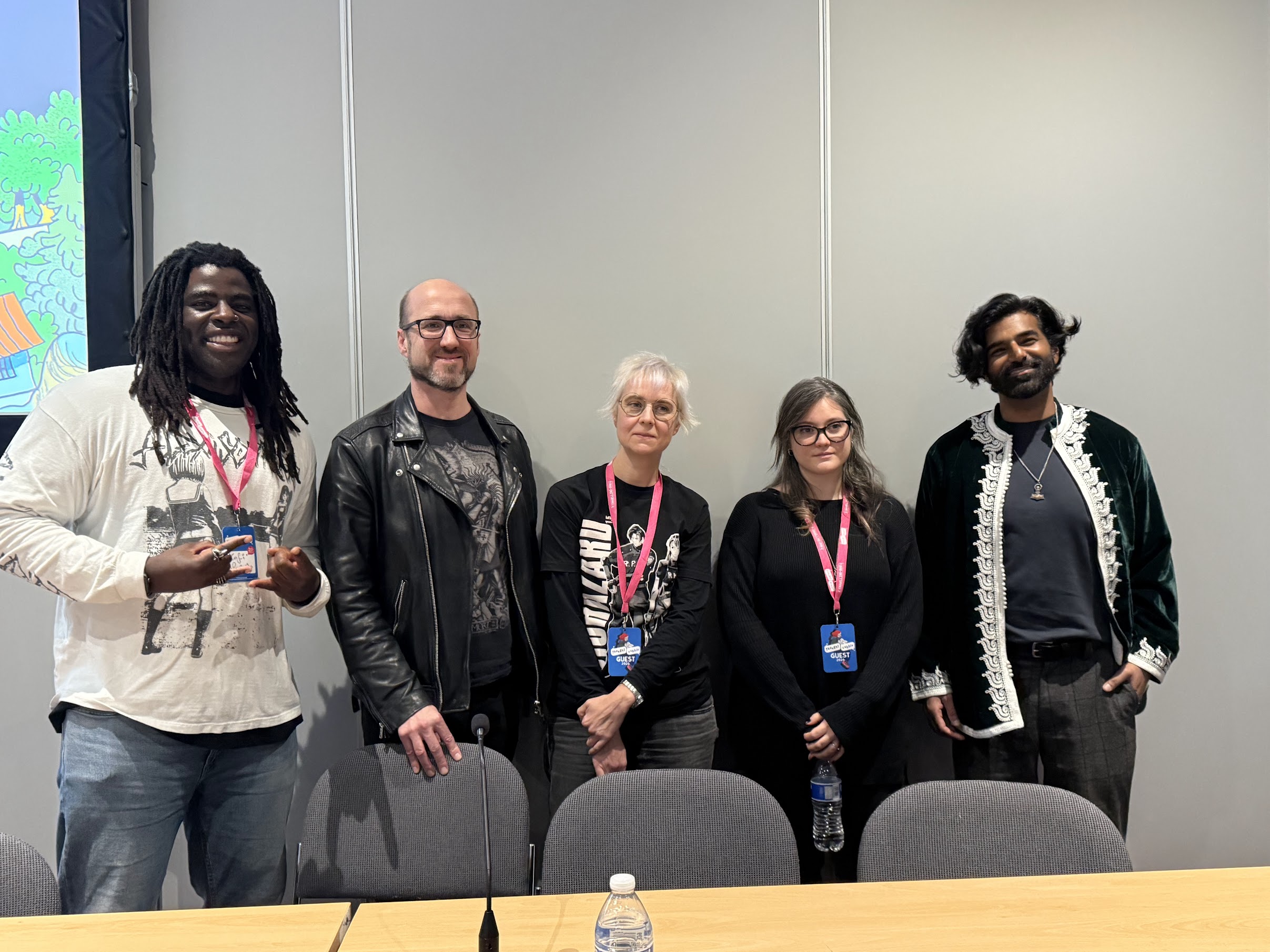
Thought Bubble 2026: Myths That Shaped Comics Panel
by Olly MacNamee
Host: Kofi Smiler
Guests: Kieron Gillen, Mohsen Ashraf, Emma Ríos, Erica D’Urso
DISCLAIMER: Olly MacNamee admits to having had a heavier night than planned on the Saturday at the Old Swan Hotel bar, so he may have missed some of the more subtle conversation points, but he thinks he did pretty well considering, as well as including his own thoughts on this subject matter too. But he’ll let you decide…

Discussing Pantheon, Mohsen Ashraf had studied Scandinavian mythology in college. In doing this, he recognised that the various pantheons of the past have a lot of similarities. A good example of this is how the Romans appropriated the Greek myths, renaming them. Hence, his Pantheon comic takes mythological characters from several different myths and creates his own superhero team of sorts.
Kieron Gillen added to this by recognising the power of myths and how different cultures throughout time have often taken the myths from other cultures and countries and made them their own. Or forced their myths on other cultures. Just look what the Romans did to us Brits in bringing the Roman Catholic Church to our shores and how that transformed not only our country but huge parts of the world, especially when us Brits went forth across the waves and colonised the globe, and in doing so, forced our religion onto other cultures, where it still sticks to this day.
In the past, Ashraf discusses, it was the poets, the bards, the storytellers that owned mythologies and held them live on through the ages, firstly through oral tradition, then later on the printed page. It is, after all, through works such as The Poetic Edda and The Odyssey that we know about the past. For example, he uses the Native American myths as a reference, moving through five different realms. He links this to the migration made from Asia into the Americas, and how these people would have moved through different landscapes. In that way, Native American religions tell the history of the Native Americans as they journeyed through the Pangea before the world split into continents.

Relating this to comics, Ashraf pointed to Batman and Superman, who have both been rebooted and retooled so many times, in just a few decades, so why wouldn’t myths lend themselves to reinvention? Which they do.
Gillen discusses how a lot of his work is about exploring the concept of celebrity and art, particularly in The Wicked and Divine (aka WickDiv). He didn’t necessarily believe he was a celebrity, but recognised his status within the comic book space. But if he were walking down the road, no one would recognise him. In WickDiv, he explored the idea of an artist becoming a celebrity and the cost of celebrity. I suppose artists don’t start off as celebrities, or even wanting to be a celebrity, but it happens.

Gods and myths can also tell the story of human evolution and movement. It illustrates how myths have changed and grown apart as people migrated across the globe, and also the reason why there are so many similarities and overlaps. For example, Jesus and Mithras share the same birthday, showing how myths beg, borrow and steal from other sources as they evolve. And in reading these stories, it relates to the struggles humanity go through. Myths can therefore be unifying: when you understand the myths and religions of others, you begin to understand the people and cultures who worship them.
Now, while a lot of these concepts aren’t anything new or groundbreaking, this panel was certainly a more academic in nature one than most. With Joseph Campbell’s name came up a few times, as one would expect. So, for anyone interested in this fascinating and philosophical subject, why not start with Campbell?


