
Commentary: The Effect Of VR On Storytelling
by Frank Martin

Storytellers are always intrigued by new technological innovations. The advent of a new technology means a new avenue that can explore different and interesting ways to tell a tale. Virtual Reality technology is no different. The ways in which VR can be utilized are limited only by the storyteller’s creativity. First and foremost, though, VR is a gaming technology. This leads it straight toward gaming philosophies. Specifically: the question as to whether or not a video game is a game first and a story second or the other way around.
Of course, there is no one right answer. Every game is different and has to decide for itself whether or not it puts play as it’s most important function or story. Some games, such as Pong or Tetris, are just that. Other games put the gameplay element secondary to having an expansive world with drama unfolding on the player’s whim. These games want their players to put themselves in the character’s shoes and experience their journey first hand in a way a novel or movie wouldn’t allow. Currently, VR focuses on the former. It puts the experience front and center so that players can be in awe of what is possible of rather than engaging in a work of art as a story.
However, it’s only a matter of time before this changes. Once the novelty of VR fades and the technology becomes less a fad and more a staple of the gaming industry, storytellers will enter the space and start to utilize it as a true medium rather than just a tool. Writers and creators will be able to tell fleshed out tales in a true immersive universe. It will be a truly interesting time as VR has the possibility of being one of the most dominant forms of storytelling.
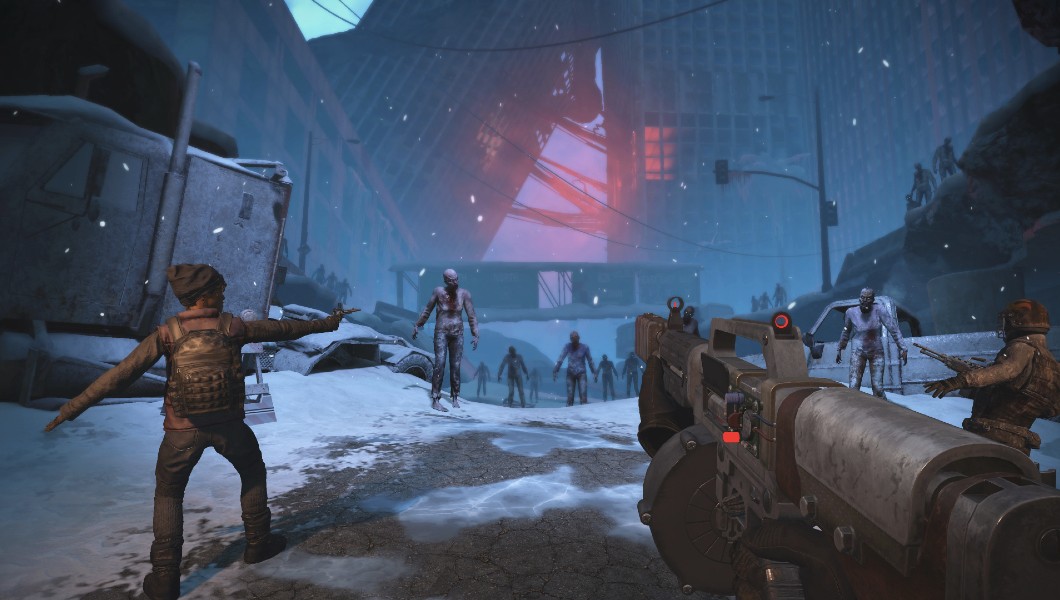
Image from After The Fall by Vertigo Games.

